The 2D champion that outsold PlayStation in Japan — undone in the West by one word: "$299."
About the Sega Saturn
The Sega Saturn launched in Japan on November 22, 1994 — the same holiday season as the PlayStation. It carried the weight of Sega's arcade legacy on its shoulders: Virtua Fighter, Sega Rally, and Daytona USA defined what a 32-bit console could deliver. In Japan, the Saturn outsold the PlayStation through 1996 and became the platform that shaped an era — 2D fighting games, sprawling RPGs, and a dedicated fanbase that never forgot it. In North America and Europe, a surprise early launch and a $399 price tag made the fight far harder to win.
At E3 1995, Sony's Steve Race said one word: '$299.' Sega's $399 price tag never recovered.
On May 11, 1995, at the first Electronic Entertainment Expo, Sega of America CEO Tom Kalinske announced the immediate retail release of the Sega Saturn in North America for $399. Minutes later, Sony Computer Entertainment of America president Steve Race walked onto the same stage and said a single word into the microphone: '$299.' The audience — retail buyers, journalists, developers — responded immediately. It is one of the most analysed moments in gaming trade show history. The Saturn had launched in Japan on November 22, 1994, and outsold the PlayStation through 1995 in Japan — a machine built for arcade precision, its dual-CPU architecture delivering 2D sprite performance no contemporary rival could match. It carried Virtua Fighter, Sega Rally, and an extraordinary library of 2D fighting games, visual novels, and RPGs that its most devoted players still return to. What Steve Race's word removed was not the machine's quality. It was its price story. At $100 more, the Saturn needed to win every other argument. In many of them, it did. The market did not care.
Design Characteristics
Form & Feel
The Sega Saturn is a black console — or white in the Japanese model 1 variant — with a top-loading CD-ROM bay and a smooth, rounded rectangular form factor. It is heavier than it looks: at 1.1 kg, the dual-CPU architecture demanded a substantial internal frame. The original Japanese Saturn controller is a six-button pad derived directly from the Mega Drive / Genesis controller — optimised for 2D fighting games, with a generous d-pad and a layout that fighting game players immediately trusted. In 1996, Sega released the 3D Control Pad (the analogue controller) specifically for Nights into Dreams, adding an analogue thumbstick and shoulder triggers to serve a new era of 3D game design. The console's power button and volume dial are located on the top panel alongside the CD bay, giving it an industrial quality that distinguished it from the PlayStation's more domestic profile.
Era & Context
The World It Was Born Into
In 1994, Sega was riding the high of the Mega Drive / Genesis era — a decade-end challenger that had genuinely threatened Nintendo's dominance and built a brand identity on being the harder, faster, more attitude-driven alternative. The Model 2 arcade board, which powered Virtua Fighter 2, Sega Rally Championship, and Daytona USA, had set expectations for what 32-bit home hardware should deliver. The Saturn launched carrying the promise that arcades would come home. At the same time, the fifth console generation was defining what the word "gaming" meant to a new generation: 3D polygonal graphics, CD-quality audio, cinematic storytelling. Sony entered this conversation with a machine and a marketing strategy explicitly designed for adults. Sega entered it with its arcade pedigree. Nintendo was two years away. The mid-1990s were Sega's best and final chance to become the dominant global console platform — and the Saturn was the machine they bet everything on.
Engineering
How It Was Built — and Why
The Saturn is powered by two Hitachi SH-2 32-bit RISC processors, each running at 28.6 MHz — a dual-CPU design that Sega adopted to meet the computational demands of texture-mapped 3D graphics. The architecture was conceived for 2D sprite performance: eight dedicated processors handle different rendering tasks simultaneously, including a 32-bit RISC VDP1 (Video Display Processor) for sprites and textured polygons, and a VDP2 for scrolling backgrounds and layer compositing. The result was hardware that could render 2D sprites with unmatched smoothness — far superior to the PlayStation for 2D fighting games and shooters. The weakness lay in 3D: the dual-CPU architecture was notoriously difficult to program for 3D polygon-heavy games, and most third-party developers never fully exploited its potential. Internal backup memory (32KB battery-backed SRAM) was built in from launch — meaning saves did not require a separate memory card, a practical advantage over the PlayStation that was often overlooked. The CD-ROM drive ran at 2× speed, and the console shipped with a universal voltage power supply for international compatibility.
Design Philosophy
The Belief Behind the Machine
"The arcade is the measure of all things — bring it home."
Sega's philosophy with the Saturn was, at its core, a belief that the arcade was the measure of all things. The Model 2 board — the hardware that ran Virtua Fighter 2, Daytona USA, and Sega Rally Championship in arcades — set the standard, and the Saturn was built to bring that standard home. For Sega, this was not merely a commercial strategy; it was a statement about what games were supposed to feel like. Arcade games were alive in a way that home games were not: they demanded physical presence, public performance, quarter commitment. The Saturn's mission was to capture that feeling — the weight of a confirmed throw in Virtua Fighter, the squeal of tyres in Sega Rally — and let players hold it in their hands at home. The secondary mission was Japan. The Saturn was deeply attuned to Japanese gaming culture in a way that no other 32-bit console was: its library of visual novels, 2D RPGs, and anime-adjacent games spoke to an audience that the PlayStation, with its Western-facing ambitions, did not fully serve. Titles like Sakura Wars, Grandia, and Princess Crown found their audiences almost exclusively on Saturn. The machine that Sega built to win the world ended up being the machine that won the hearts of Japan.
Birth Story
How the Sega Saturn Was Born
A Season That Rewrote the Industry
In November and December 1994, two consoles launched that would define the next decade of gaming. Sega launched the Saturn in Japan on November 22, 1994 — one day before Sony launched the PlayStation. Both machines sold out on launch day. Nintendo was still a year away from its next hardware. The question of who would own the 32-bit generation was genuinely open. No one in the industry had yet seen what a $299 announcement from Steve Race, twelve words at E3, would do to that question.
The Architecture Problem
The Saturn's engineers chose a dual-processor design — two Hitachi SH-2 CPUs working in parallel, supported by two dedicated graphics chips (VDP1 and VDP2). In two dimensions, the Saturn was extraordinary: sprite handling and 2D polygon work that could run Sega's arcade titles with near-perfect fidelity. But in three dimensions — where the PlayStation was building its market — the architecture was counterintuitive. Developers described techniques that felt backward: quads instead of triangles, approaches that rewarded specialists who understood the hardware deeply but punished anyone who tried to work the way they worked on other machines.
The E3 Ambush
On May 11, 1995, at the first Electronic Entertainment Expo in Los Angeles, Sega announced a $399 US price for the Saturn — and that it was already on sale in a surprise four-city launch. The room absorbed this. Then Sony's Steve Race walked to the microphone, said '$299,' and left. The room erupted. The Saturn's US launch had been undermined in twelve seconds. Sega had been outmaneuvered so cleanly that the moment became one of gaming's most retold stories — a masterclass in how a single well-placed number can undo a competitor's strategy.
What It Was in Japan
In Japan, the Saturn found what it could not find elsewhere: a devoted audience. Virtua Fighter 2 (1995) sold more than a million copies and turned the Saturn into the platform of choice for serious fighting game players. Nights into Dreams (1996) was a collaboration between Yuji Naka and a team that wanted to make something that felt like flight in a dream. Panzer Dragoon Saga (1998) — four discs, a hundred hours, one of the most acclaimed RPGs ever made — sold approximately 100,000 copies worldwide. The Saturn's Japanese library is a monument to games that found small but devoted audiences who remember them as defining experiences.
A Legacy Written in Rarity
By 1998, the Saturn was finished as a commercial platform. Sony had won. The Dreamcast was already in development. But what the Saturn's years had produced — Guardian Heroes, Dragon Force, Bulk Slash, Radiant Silvergun, Dungeons and Magic, the entire Panzer Dragoon series — represented some of the most technically and artistically ambitious work of the fifth generation. Many of these titles were never re-released or ported, making original Saturn cartridges among the most sought-after collector items in the hobby. A machine that was technically brilliant in the wrong dimension at the wrong time had, in producing what it produced, earned a kind of immortality that market share cannot grant.
The Standard It Set
The Sega Saturn is remembered differently by different people. Fighting game enthusiasts remember it as the platform that brought arcade-perfect 2D combat into the home. JRPG collectors remember Panzer Dragoon Saga. Sega fans remember Nights into Dreams. What unites these memories is a machine that committed fully to what it was good at, even as the market moved away from it. That commitment — to craft, to a specific kind of game, to the players who cared — is the Saturn's quiet argument. That the best version of something is still worth building, even when the audience is small.
Reflection
What Lasts
Panzer Dragoon Saga was released in January 1998. It was four discs long, required approximately 40 hours to complete, and was developed by Sega's Team Andromeda over three years. The reviewers who played it called it one of the greatest RPGs ever made. It sold approximately 35,000 copies in Japan and perhaps 100,000 worldwide — modest numbers even for an era before games routinely achieved millions.
Today, original copies of Panzer Dragoon Saga sell for several hundred dollars. The people who played it describe the experience with a specificity that suggests it left something permanent. A game that almost no one experienced at the time has, by the quality of those experiences, earned a kind of immortality.
"The best version of something is worth building, even when the audience is small."
The Saturn was technically brilliant in the wrong dimension at the wrong time. Its 2D performance was extraordinary — arcade-perfect versions of Sega's fighters, the remarkable Radiant Silvergun, Guardian Heroes, Dragon Force. But 3D was where the market was going, and the Saturn's architecture made 3D difficult in a way the PlayStation's did not.
What the Saturn produced in those years — the concentrated excellence, the dedication to an audience that cared deeply about a specific kind of game — is the case that quality of experience is not the same as scale of experience. Panzer Dragoon Saga is proof that a game can matter to the thousand people who played it in ways that have nothing to do with the millions who didn't.
Five Things From a Beautiful Defeat
A surprise launch that turned stores against it, a single word from Sony that undid it, two CPUs that tormented developers, a cartridge that made it the king of 2D fighting, and a split fate across the Pacific. Five stories from the Sega Saturn.
Its surprise launch turned stores against it
At E3 in May 1995, Sega tried to ambush Sony by putting the Saturn on shelves that very day — four months before the September date everyone expected. It backfired. Only a handful of chains had stock; major retailers like Walmart and Best Buy had been kept in the dark, and an angry KB Toys refused to carry the Saturn at all. Sega beat Sony to market by a season and lost the shelf space it needed to matter.
One word from Sony undid it: "$299"
Sega priced the Saturn at $399. Minutes after its surprise launch announcement at that same 1995 E3, Sony's Steve Race walked to the podium, said a single number — "$299" — and walked off. The PlayStation had undercut the Saturn by a hundred dollars in one breath. The room understood instantly. It is still remembered as one of the great mic-drops in the history of the industry.
Two brains made it a nightmare to build for
To render a 3D world, Sega gave the Saturn two main CPUs — and surrounded them with six more processors. On paper it was powerful. In practice it was punishing: most developers could coax only about one and a half times a single CPU's speed out of the pair, because making two brains share one job is genuinely hard. Sony's single, friendly chip won the developers Sega needed. The Saturn was brilliant at 2D and forever fighting its own hardware in 3D.
A cartridge made it the king of 2D fighters
When 2D fighting games grew too big for the Saturn's memory, Sega's answer was to plug more in: a RAM expansion cartridge that slotted into the back. X-Men vs. Street Fighter shipped with a 4 MB cart and would not run without it — but with it, the Saturn could throw four huge sprite characters on screen at once, arcade-perfect, with no slowdown. The PlayStation versions had to drop the tag-team entirely because they couldn't fit four fighters in memory. The cart, sadly, was a Japan-only thing.
It thrived in Japan and sank in the West
In Japan the Saturn did well — its strengths in 2D fighting games and Japanese role-playing games matched what local players wanted, and it sold respectably for years. In North America and Europe the botched launch, the high price, and the shortage of games it could run well were fatal. The same console was a steady success on one side of the world and a cautionary tale on the other.
Before You BuyWhat to watch for, so you don't regret it
The Sega Saturn is a compelling collector's machine with one of the finest 2D libraries ever assembled. Before purchasing, a few hardware-specific questions will save significant frustration — the CD drive and internal battery are the first things to verify.
Full buying guide →Caring for One You OwnKeeping a vintage machine running
The Sega Saturn was manufactured between 1994 and 2000. At over thirty years old, both its CD-ROM drive and electrolytic capacitors have outlived their designed service life. The good news: the Saturn's failure points are well-documented, and most can be addressed.
What ages inside a Sega Saturn
- CD-ROM laser assemblyLaser output weakens with age and use, causing discs to load slowly, stutter, or fail entirely. Tracking and focus calibration drift as the sled mechanism ages. The laser assembly is the Saturn's most common single point of failure.
- Electrolytic capacitorsCapacitors on the main board, power supply board, CD drive board, and I/O board degrade over time. Leaked electrolyte corrodes board traces and can cause permanent damage if left untreated. All four boards benefit from inspection in units that have not been serviced.
- PRAM battery (internal clock)The internal CR2032 battery maintains the real-time clock. Discharged batteries cause date and time to reset on every power-on — a minor inconvenience but a reliable indicator that replacement is overdue.
- Expansion cartridge slot contactsThe cartridge slot contacts oxidise over time. Expansion RAM and Action Replay cartridges that are inserted and removed repeatedly accelerate contact wear.
What you can do yourself
- External and ventilation cleaningWipe the body with a cloth dampened in diluted neutral detergent. Use compressed air to clear dust from the ventilation slots and controller / expansion port openings. Dust accumulation increases internal temperature and accelerates component aging.
- CD-ROM lens cleaningApply high-purity isopropyl alcohol (99%+) to a cotton swab and gently clean the laser lens with circular motions from centre outward. Do not apply pressure. Cleaning alone will not restore a failing laser, but it removes surface contamination that can make a marginal laser behave worse.
- PRAM battery replacementThe internal CR2032 is a standard user-replaceable battery. On most Saturns it sits behind a clip-on access panel on the back of the console, so no full teardown is needed to reach it. Replace every five to seven years as preventive maintenance. The swap takes only a few minutes.
When to call a specialist
The Saturn's most significant repairs require soldering.
- Full capacitor replacement (recapping)All electrolytic capacitors across the main board, power supply, CD drive board, and I/O board should be replaced with 105°C-rated low-ESR equivalents. Electrolyte leakage reaching board traces causes irreversible damage; early replacement prevents it.
- CD-ROM drive replacementWhen laser calibration no longer restores disc reading, the drive assembly itself may need replacement. Compatible drive units are becoming harder to source; address optical drive issues sooner rather than later.
The Sounds and Images of an Era
The Sega Saturn defined what arcade perfection at home could mean. These videos capture the console as it was — on television, at launch, in the shops.
Segata Sanshiro CM Collection (English Subtitles)
Sega Saturn Japanese Launch CM (Nov 22, 1994)
Sega Saturn CM Collection 1994-1995
When I open an early gray Saturn, it looks like someone shipped the prototype — wiring everywhere, parts sitting where they landed. It is the shape of a company that added a second processor in a hurry and bolted on off-the-shelf parts that were never meant to sit together. The later models settle into a calm, ordered layout — the same clean thinking that would become the Dreamcast. Strangely, the rushed early one has the stronger pickup; on my bench it is the tidy white Saturn whose lens gives out first.
Representative Games
A handful of titles that define this console — each with a shop owner's note, collector's guide, maintenance tips, and memory prompts. The complete library is one click away.
 Uncommon
 Sega Saturn
Silhouette Mirage
シルエットミラージュ
Treasure's 1997 Sega Saturn action game introduced a polarity mechanic that would later become the foundation for Ikarug…
Read more →
Sega Saturn
Virtua Cop 2
バーチャコップ2
Virtua Cop 2 reached Japanese arcades in September 1995. Wataru Kawashima directed it inside Sega AM2, with Yu Suzuki as…
Read more →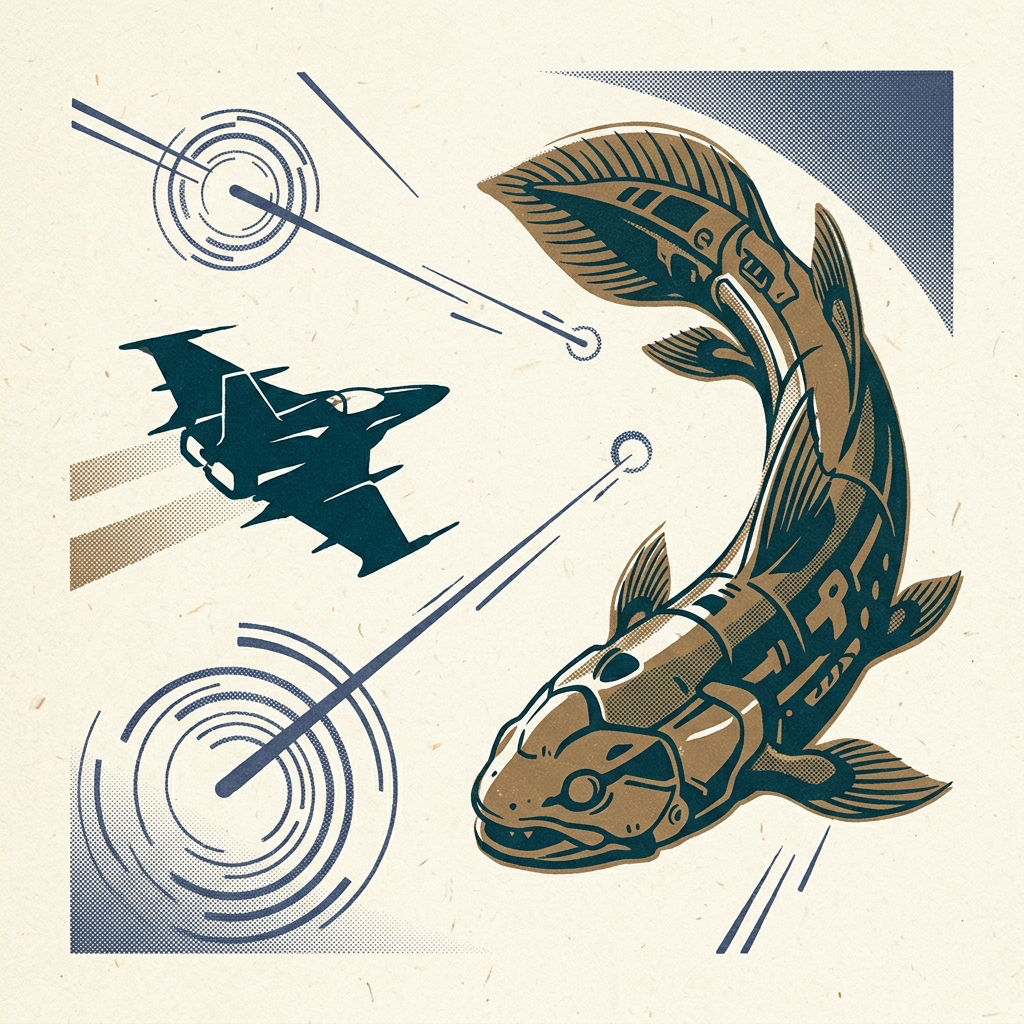 Uncommon ▶
 Sega Saturn
Darius Gaiden
ダライアス外伝
Darius Gaiden is the 1994 horizontal shoot'em up developed by Taito, known for its fish-themed mechanical bosses, multip…
Read more →Saturn Titles Worth Your Time
Three games that earned the Saturn its reputation among serious collectors — each documented with historical context, maintenance notes, and what to watch for before buying.
- Darius Gaiden Taito's branching-path shooter arrived on Saturn with arranged music unavailable anywhere else. The definitive version of a celebrated series — and one of the finest 2D shooters the console received.
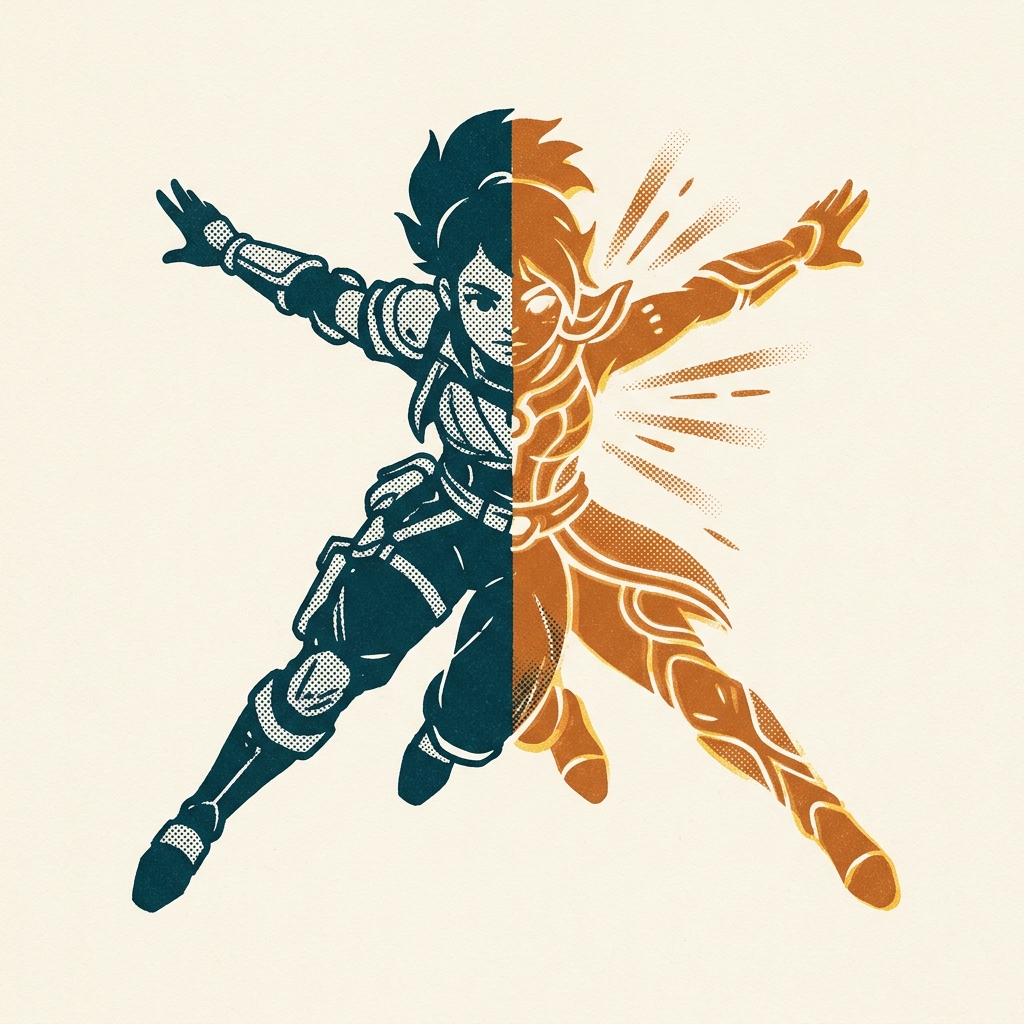
- Silhouette Mirage Treasure designed a world split into two properties — Silhouette and Mirage — and built every mechanic around that duality. An action game that required you to think about what you were attacking before you attacked it.
- Virtua Cop 2 Sega AM2's light-gun sequel introduced branching routes determined by where you aimed. The Saturn version required the Virtua Gun peripheral and delivered arcade-quality play at home — a demonstration of what the hardware could do.
Sega Saturn — Quick Answers
- When did the Sega Saturn come out?
- The Sega Saturn was released in Japan on November 22, 1994, in North America on May 11, 1995, and in Europe on July 8, 1995.
- What is the Sega Saturn's release date?
- The Saturn launched first in Japan on November 22, 1994 at ¥44,800, where it was a strong success. Its North American launch was a surprise — Sega announced it shipping that same day, May 11, 1995, months ahead of schedule.
- Why did the Sega Saturn struggle in the West?
- The surprise early US launch caught retailers and developers off guard, the dual-CPU hardware was notoriously hard to program, and it was outsold by the cheaper, developer-friendly PlayStation. The Saturn nonetheless remained popular in Japan.
- When was the Sega Saturn discontinued?
- Sega discontinued the Saturn in the West in 1998 to focus on the Dreamcast, while it continued in Japan into 2000.
- Is the Sega Saturn region locked?
- Yes. The Sega Saturn is region-locked: Japanese, North American, and PAL discs and consoles are not officially cross-compatible without a modchip or region-conversion cartridge.
- What sound chip does the Sega Saturn use?
- The Saturn's audio is handled by the SCSP (Saturn Custom Sound Processor), a Yamaha chip also known as the YMF292. It offers 32 sound channels that can each run as FM synthesis or PCM sample playback at up to 44.1 kHz, plus a built-in DSP for reverb and other effects. A dedicated Motorola 68EC000 processor drives the SCSP, keeping audio work off the Saturn's two main SH-2 CPUs.
Explore the Saturn World
The studios
The Saturn was Sega's machine, and many of its finest games came from studios working at the edge of 2D craft and early 3D.
Deeper cuts
The Saturn's library is full of titles that never travelled far beyond Japan. A few worth knowing: