For years, I believed I was wrong to love this
For a long time, somewhere inside me, I believed that games had done more harm than good. That the hours I spent as a boy in front of a screen were hours I had stolen from a better life. I carried that quiet shame for years.
I was wrong. I only understood how wrong the day I started repairing these machines by hand — opening them, cleaning them, coaxing a thirty-year-old console back to life. Holding each one, I began to feel what was really inside them: the joy of the people who played them, and the care of the people who built them. They were never just toys. They were never a waste. There was warmth in them.
The day I understood that, I wanted to build a place that could prove it. This museum is that place.
My father opened a small shop
In 1986, my father opened a small used-game shop in Toyohashi, Aichi. It was never only a store. Around six in the evening, when work let out and school let out, people would drift in — and they stayed, talking about this and that, until we closed at eight. For those two hours, the shop was something for them to lean on. A place to come back to.
I was a middle-schooler then. I never really joined the circle; I watched it from the edge of the room. I couldn't have explained it at the time. But I remember the feeling clearly: people who share the same joy, gathering like this — there is something good in it. This must be what an anchor for the heart looks like.
My father never called it a business strategy. He called it belonging to the neighborhood. I didn't know it yet, but I was learning what a shop is really for.
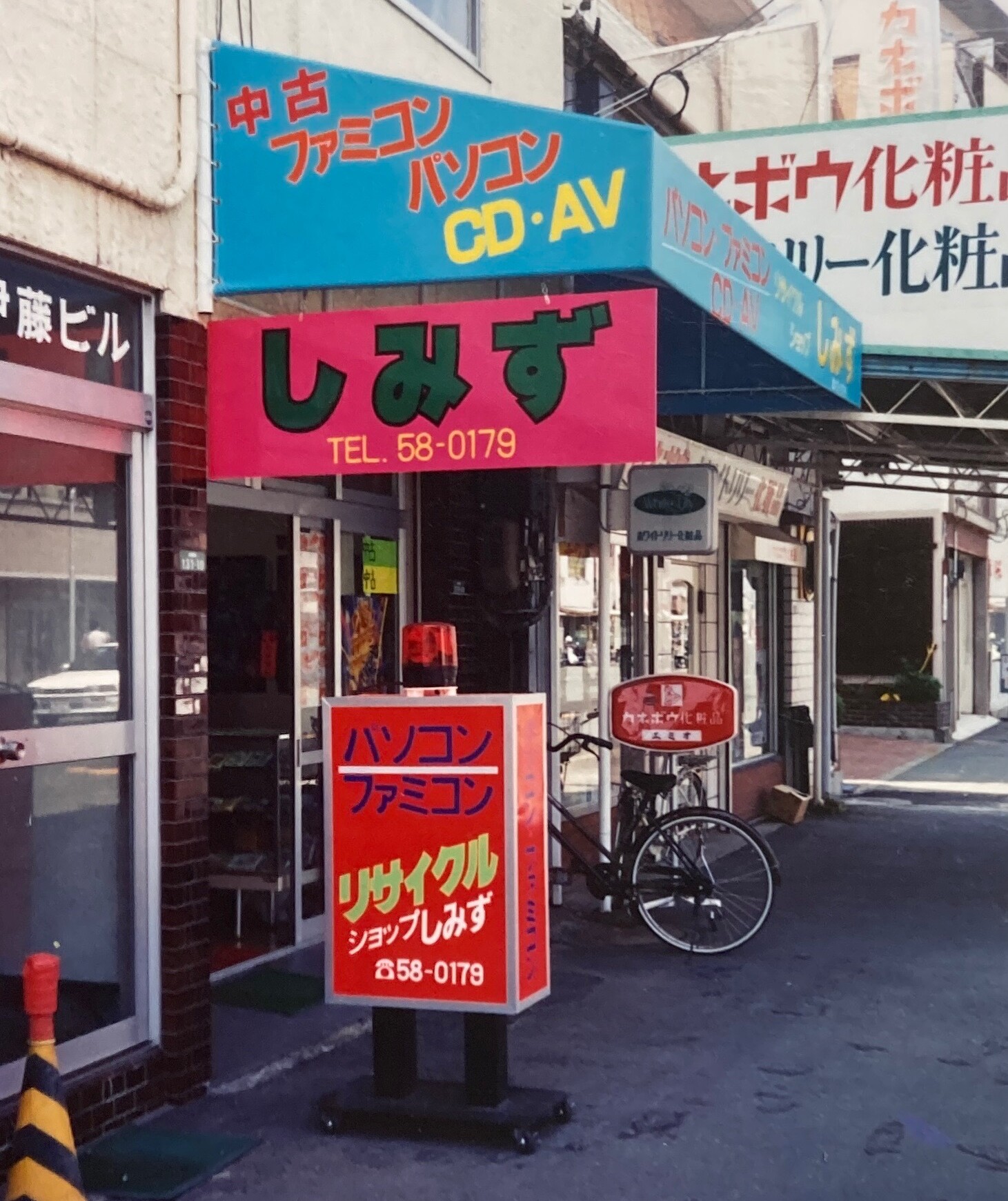
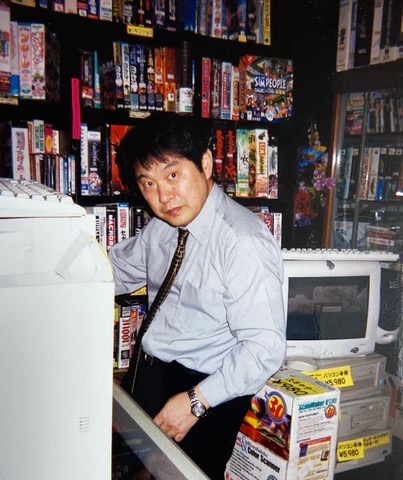
Then the years passed, and the shop closed
Time moved. The neighborhood changed. The room that had been my whole childhood was gone. But the consoles and cartridges kept accumulating — in boxes, in closets, in the corners of memory.
When I began selling them online, I thought I was only clearing out old inventory. It turned out to be something else entirely.
The same hands. The whole world.
Today I clean each console by hand, test every button and every disc drive, and pack each one with the same care my father showed the children who walked into his shop. Then I ship them — to Germany, Brazil, Australia, the UK, the United States, Canada, and dozens of other places.
More than 1,750 people have left reviews saying the machine arrived exactly as described. One hundred percent positive. I don't keep that number for pride. I keep it because it is the inheritance my father handed me without ever saying the word.
Self-shot photo to be added
What I am really shipping
I started to notice something in the messages people sent me. They didn't only write "great condition." They wrote things like:
"This was the console my brother and I played before he moved abroad."
"I searched for this for fifteen years. My hands were shaking when I opened the box."
Those messages taught me the truth of this work. I am not shipping hardware. I am shipping a memory — a piece of someone's past, a bridge back to something that mattered.
Why I am really doing this
"Not just a database. I want to put soul into this — to share the struggles, the strategies, and the memories, and to deliver the strength for tomorrow to people all over the world."
People sometimes ask why a man who repairs old game consoles for a living would spend his nights building a museum that sells nothing. Here is the honest answer. There is more than one.
First — because I owe it to the boy I used to be. That boy believed his hours in front of the screen were wasted hours. He grew up half-ashamed of the thing he loved most. I cannot go back and tell him he was wrong. But I can build a place that says it out loud, for every other boy and girl who ever felt the same: it was never a waste. There was something real in there. This museum is the apology I owe my younger self — and the proof I wish someone had handed me back then.
Second — because my father ran a shop that was never only a shop. It was where the neighborhood belonged. When his shop closed, that room disappeared from the world. I am not trying to reopen his store. I am trying to rebuild that room — large enough this time to hold someone in Brazil and someone in Finland in the same place, at the same hour. The boy at the edge of that room is building it now.
Third — because I learned what I am actually carrying. For years I thought I sold hardware. Then the messages came. I understood that a console is a key, and behind it is a door to a day someone thought they had lost. If that is what passes through my hands, it deserves more than a price tag. It deserves a place that remembers it.
Fourth — because this whole world is a treasure house of stories, and the people who lit its first fires are still here. Many of the men and women who built the dawn of this industry are still alive; their memories are still within reach. That will not stay true forever. I have come to believe — with a certainty I cannot argue myself out of — that to record this now, the vivid, living moment when Japan, and these machines, and the people who made them were truly shining; to keep a record of that culture before it fades — will matter to the world. Not only to collectors. To anyone, anywhere, who needs proof that ordinary people once made something extraordinary. I won't pretend I'm the right man for it. I don't have the knowledge yet. I can't do anything grand. But I can polish one page, and then the next, and not stop. That is the whole of what I'm promising.
And last — the deepest one of all — because we are not alone, and almost no one builds the place where you can feel it. Somewhere right now, a stranger is holding the same memory you are: a summer, a sibling beside you, a controller passed back and forth, a feeling you thought was only yours. You will probably never meet them. But if even once you read their words here and think "yes — that was me too," then for that moment the distance between two human beings, on opposite sides of the earth, becomes nothing. That is the strength for tomorrow I keep talking about. Not advice. Not nostalgia. The plain, quiet proof that you were never the only one.
That is why this museum exists. Not to sell you a console. To hand you back something you didn't know you'd lost — and to let you see that someone, somewhere, kept it too. We are not alone. That is the only thing this museum was ever trying to prove.
The craft we will not cut
There is a Japanese word, monozukuri (ものづくり) — usually translated as "craftsmanship." But it carries something harder to translate: the belief that the thing you make should deserve to exist. That whoever receives it should feel, without being told, that it was made with care.
We do not describe a condition we have not verified. We do not sell what we have not held. When we say a machine was cleaned and tested, that is exactly what it means. That is what we try to put into every box — and what we hope this museum puts into every page.
My father's dream, and an open door
My father dreamed of opening many shops, all across Japan. In the shape he first imagined it, that dream never quite came true.
The games he left behind have grown few now. A handful remain. And one by one, those last cartridges and consoles still find their way out of Toyohashi — not to many shops across Japan, but to homes across the whole world. Germany. Brazil. Finland. Places my father never named.
I think he would have liked that. A dream he once measured in towns, answered instead in countries. I believe it is a joyful thing — that the games my father kept have taken wing into the world, and are landing in the hands of people who will love them.
The same hands that cleaned them in his shop clean them still. If you would ever like to give one of them a home, there is a small shop in Toyohashi. The door is open whenever you like.