Colour at last — built to keep the entire Game Boy library alive.
About the Game Boy Color
The Game Boy Color launched in Japan on 21 October 1998 — a colour display upgrade to the nine-year-old Game Boy that kept Nintendo's entire handheld library alive. Its Sharp SM83 CPU could run at double speed, its TFT screen displayed 32,768 colours with up to 56 on screen simultaneously, and every original Game Boy cartridge still worked. Developed in just ten months to beat SNK's WonderSwan to market, the Game Boy Color was less a new machine than a promise kept: the games you already owned, now in colour. Pokémon Gold and Silver — released in Japan in November 1999 — sold 23 million copies and became the best-selling games on the platform. The Game Boy Color sold alongside the Game Boy Advance from 2001 until 2003.
Pokémon Gold and Silver sold 23 million copies on this 'transitional' hardware. Transitions aren't always small.
The Game Boy Color launched in Japan on October 21, 1998, developed in around ten months — accelerated by the competitive threat of the WonderSwan, Gunpei Yokoi's post-Nintendo handheld. The press called it a transitional device: not quite the next generation, backward compatible with the entire original Game Boy library of more than 600 titles. Satoshi Tajiri's Pokémon Gold and Silver shipped on the Game Boy Color in November 2000. They sold 23 million copies — more than the original Pokémon Red and Green sold across both Japan and North America. The Game Boy Color doubled the CPU speed of its predecessor, rendered a palette of 32,768 colors with 56 on screen simultaneously, and added infrared communication between units. It was manufactured alongside the Game Boy Advance until 2003. The platform that the market called transitional sold more Pokémon than any device before it. That word — transitional — describes where something stands in a sequence. It says nothing about its weight.
— inspired by Satoshi Tajiri
Design Characteristics
Form & Feel
The Game Boy Color is slightly larger than the Game Boy Pocket — its predecessor in the compact handheld line — but fits in a single hand with the same ease. The front face is dominated by the screen: a 2.32-inch TFT colour LCD, noticeably brighter and more vivid than the original Game Boy's monochrome display. The D-pad, A and B buttons, Select and Start are identically placed to the original Game Boy, a deliberate continuity that let returning players pick up the device without relearning. At the top of the unit sits the infrared communications port — two discrete diodes (one for transmitting, one for receiving) allowing wireless line-of-sight data exchange with other Game Boy Colors at up to 2 metres. Nintendo launched the Game Boy Color in five initial colours: Grape (purple), Teal, Kiwi (yellow-green), Dandelion (yellow), and Berry (red). The cartridge system used three formats: original grey Game Boy cartridges (backward-compatible), dual-compatible black cartridges (would play on both Game Boy and Game Boy Color), and clear/transparent GBC-exclusive cartridges that would not run on older hardware. This colour-coded tray system told players at a glance what would play where — a rare example of industrial design communicating a technical compatibility matrix without a manual.
Era & Context
The World It Was Born Into
The late 1990s was the era of colour — and Game Boy was the last major holdout. The Sega Game Gear (1990) and Atari Lynx (1989) had offered colour handheld gaming years earlier, but both had failed against Game Boy's combination of library, battery life, and price. By 1997, the handheld market was a Nintendo monopoly, and the primary challenge was not competition but irrelevance — the rising PlayStation culture belonged to home consoles and teenagers, not pocket games and children. SNK's Neo Geo Pocket — launching in Japan in October 1998, the same week as the Game Boy Color — attempted to bring its arcade fighting pedigree to the handheld space. It arrived monochrome and was immediately overshadowed by the colourful Game Boy Color. Bandai's WonderSwan, designed by Gunpei Yokoi for launch in March 1999, offered a smaller single-AA-battery device that positioned itself as more adult and more affordable. At its peak, the WonderSwan captured roughly 8% of the Japanese handheld market — a meaningful dent, not a challenge. The Game Boy Color's ultimate insurance was its software library. When Pokémon Gold and Silver launched in Japan in November 1999 and sold 1.6 million copies in the first three days, the debate about handheld market leadership was over.
Engineering
How It Was Built — and Why
The Game Boy Color's processor is the Sharp SM83 — the same CPU that powered the original Game Boy, but with a critical upgrade: a "double-speed mode" that ran the chip at 8.388608 MHz instead of the standard 4.194304 MHz. Games targeting the Game Boy Color could request double speed via a hardware register write; games not making the request ran at standard speed, maintaining backward compatibility. The display is a 160×144 pixel TFT LCD capable of displaying 32,768 distinct colours, with hardware support for 56 simultaneous colours on screen. For original Game Boy games — which had no colour data — the Game Boy Color's bootstrap ROM included colour palettes for over 90 specific titles, applying pre-mapped colours based on the cartridge's game code. For unrecognised titles, players could choose from 12 system palettes at startup by holding button combinations; one palette replicated the original four-shade green monochrome. RAM was quadrupled from 8 KB (original Game Boy) to 32 KB, plus an additional 16 KB of video RAM. The infrared port was implemented as two separate diodes — a 940 nm infrared LED transmitter and a phototransistor receiver — capable of sending data at approximately 262 kbit/s with a range of up to 2 metres at close to 180° viewing angle. The battery requirement was two AA cells providing approximately 10 hours of play — similar to the original Game Boy and far superior to the Sega Game Gear's 6 AA cells and 3–4 hours.
Design Philosophy
The Belief Behind the Machine
"The games you already love — now in colour."
Nintendo made a choice in 1998 that contradicted every instinct of a technology company: they built a machine that was deliberately less powerful than what they could build, because protecting what already existed mattered more than anything new. The Game Boy Color was not the cutting-edge handheld the R&D team had been developing. It was a precise, calculated compromise — every design decision weighed against the question: will this run the games already in players' hands? Backward compatibility was not a feature; it was the foundation. This decision had a paradox at its heart. By refusing to break with the past, Nintendo made the Game Boy Color stronger than any fully new platform could have been at launch. The 100 million Game Boy cartridges already sold became the Game Boy Color's software library on day one. Pokémon Red and Blue — the games that had made Game Boy culturally dominant — worked perfectly, now with colour palettes applied automatically. And when Pokémon Gold and Silver arrived in November 1999 as the first proper colour Pokémon games — running only on Game Boy Color and Game Boy Advance — they demonstrated that the old commitment and new ambition could coexist. The Game Boy Color was the machine that taught Nintendo a lesson they would apply again and again: the size of the installed base is not a limitation to be overcome. It is the most powerful competitive moat in the industry.
Birth Story
How the Game Boy Color Was Born
Between Generations
By 1997, the Game Boy was approaching its ninth year in production. The original hardware — the same 4 MHz Z80-based processor, the same green monochrome display — was unchanged from 1989. Gunpei Yokoi's Virtual Boy had failed commercially in 1995; the Game Boy Pocket (1996) had refreshed the form factor without upgrading the technology. Meanwhile, Bandai had launched the WonderSwan, Sega's Game Gear had demonstrated that colour was achievable in a handheld, and the Game Boy Color needed to answer a simple question: what comes next, before the Game Boy Advance is ready?
The Shadow of Its Creator
The Game Boy Color was developed in the shadow of tragedy. Gunpei Yokoi — the inventor of the original Game Boy, the creator of the Game & Watch, the man who built the foundation of handheld gaming at Nintendo — died on October 4, 1997, struck by a car on a motorway in Japan after a minor accident. He was 56. The machine that carried his invention into its colour era launched twelve months later, on October 21, 1998. Yokoi would never see it.
A Measured Step
The Game Boy Color's engineering was deliberately conservative. Its Z80 processor ran at 8 MHz — double the original — and the screen displayed full colour from a palette of 32,768. Complete backward compatibility with the original Game Boy library was preserved: every game that ran on the original Game Boy ran on the Color. This was not the leap that the Game Boy Advance would be; it was a bridge. Nintendo understood that 119 million Game Boy owners represented an installed base worth protecting, and that the transition needed to be gradual.
The Pokémon Bridge
The Game Boy Color arrived at the perfect moment to become the platform for Pokémon Gold and Silver (1999). These games — the second generation of the Pokémon series — were designed specifically to work across both the original Game Boy and the Color hardware, with Color-specific enhancements when played on the newer machine. Released on the same day as the Color in Japan, Gold and Silver drove adoption of the new hardware at a rate that no marketing campaign could have replicated. The Pokémon ecosystem had become the most effective distribution channel for Nintendo's portable hardware.
The Bridge That Held
The Game Boy Color sold approximately 49 million units — modest compared to the original Game Boy's 119 million, but a respectable total for a platform explicitly designed as a transitional step. The Game Boy Advance arrived in 2001, finally delivering the colour portable hardware that competitors had offered years earlier, with the game library and third-party support that made the difference. The Color's two and a half years on the market had kept the ecosystem alive, maintained the audience, and demonstrated that the Game Boy family's loyalty extended across hardware generations.
Reflection
What Lasts
Gunpei Yokoi died on October 4, 1997. He was 56 years old. He had been struck by a car on a motorway in Japan after a minor traffic accident. The Game Boy Color — the first colour version of the machine he had spent a decade designing — launched one year later, on October 21, 1998. He did not see it.
Yokoi's philosophy — which he called 'lateral thinking with withered technology' — was the principle that defined the Game Boy. Not the newest components, not the most impressive specifications: the right components for the job, chosen to serve the people who would actually use the machine. The green monochrome screen that competitors mocked became the reason the Game Boy outlasted all of them. The four AA batteries that provided four hours of play became the reason children could take it everywhere.
"The correct specification is the one that works where the user actually is."
The Game Boy Color carried that philosophy into a new era. It was not the most powerful handheld of its time — the WonderSwan Color and Sega's Game Gear had offered colour earlier. It was the handheld with the library that mattered, the backward compatibility that protected the investment of 119 million existing owners, and the timing to arrive alongside Pokémon Gold and Silver.
Yokoi never knew how long his invention would last. The machine he designed in the 1980s, with technology he could have replaced, was still being manufactured in 2003 — eighteen years after he first proposed it. Some things are built to outlast their makers. The Game Boy was one of them.
Did You Know
26 Games Supported the Infrared Port
The Game Boy Color featured an infrared port hidden beneath the opaque black strip at the top of the unit, containing two diodes for sending and receiving IR signals. At least 26 games utilized this feature for wireless, line-of-sight communication, including Pokémon Gold/Silver/Crystal for Mystery Gift exchanges, and Pokémon Trading Card Game for sending card data. Despite this, the feature remained niche and was dropped entirely from the later Game Boy Advance line.
Before You BuyWhat to watch for, so you don't regret it
The Game Boy Color is among the most straightforward Game Boy models to collect. Hardware is widely available, backward compatibility with the full original Game Boy library makes the software pool enormous, and common failure modes are well-understood and typically repairable.
Full buying guide →Caring for One You OwnKeeping a vintage machine running
The Game Boy Color is one of the more durable Game Boy models. Its main risks are battery-related corrosion and LCD degradation — both largely avoidable with attentive storage habits.
What ages inside a Game Boy Color
- Battery terminal corrosionAA batteries left in the unit discharge and can leak, corroding the battery compartment terminals and the PCB beneath them. Battery leakage is the most preventable cause of board damage in all Game Boy models.
- LCD panel degradationDot loss, vertical line artifacts, and brightness unevenness develop in the original LCD over decades of storage. The GBC LCD is considered less robust than the Game Boy Pocket's; line issues are common in units stored for extended periods.
- Button rubber membrane fatigueThe rubber membranes under the A, B, Start, and Select buttons lose their elasticity and tactile response with heavy use. Worn membranes produce buttons that require excessive pressure or do not register at all.
- Cartridge slot contact oxidationThe edge connector that accepts GBC and original Game Boy cartridges oxidises over time. Oxidised contacts cause games to fail to load or to run with graphical corruption.
What you can do yourself
- Remove batteries before storageRemove batteries whenever the unit will be stored for more than a few weeks. This is the single most effective action for preventing corrosion damage. Never leave alkaline batteries installed during long-term storage.
- Battery terminal cleaningLight terminal oxidation (white powder deposits) is removable with a cotton swab and isopropyl alcohol. Allow to dry fully before reinserting batteries. Deeply corroded or collapsed terminals require replacement.
- Cartridge contact cleaningClean GBC and original Game Boy cartridge edge contacts with isopropyl alcohol on a cotton swab. Contact oxidation accounts for the majority of games failing to load — cleaning the cartridge, not the console slot, resolves most cases.
- External cleaningWipe the shell with a slightly damp cloth. Avoid harsh solvents on the translucent colour variants, which can craze the plastic. Clean the screen lens with a microfibre cloth.
When to call a specialist
The GBC's most significant repairs require soldering or case modification.
- IPS LCD replacementIPS LCD replacement modules provide a bright, clear image that resolves dot-loss and line problems. Installation requires trimming the shell opening and is not reversible without the original panel. A widely performed and well-documented mod.
- Battery terminal and board repairSevere battery leakage can corrode board traces beneath the battery compartment. Trace repair, terminal replacement, and board cleaning require soldering skills. Inspect for corrosion before assuming a non-responsive unit is unrepairable.
The Sounds and Images of an Era
The Game Boy Color defined what portable gaming looked like at the turn of the millennium. These videos capture the console as it was — on television, at launch, in the shops.
Game Boy Color CM
Game Boy Color CM Collection 1998-1999
Pokemon Gold & Silver CM
Red and the clear shell reach my bench more than any other colour, and they nearly always need the same two things. The screen comes out first: on this machine the display ribbon is glued to the board rather than soldered, and after twenty-odd years the adhesive gives up a column at a time. Heat brings it back for a while. It never holds, so I fit a new one. Then I open the battery compartment. Nintendo built this handheld around a reflective Sharp panel with no backlight, and two AA cells ran it for about twenty hours — you never had to think about power, so nobody ever took the batteries out. That is why I find the leak. Sometimes it stopped at the terminals. Sometimes it reached the board, and then there is nothing I can do.
Representative Games
A handful of titles that define this console — each with a shop owner's note, collector's guide, maintenance tips, and memory prompts. The complete library is one click away.
Game Boy Color
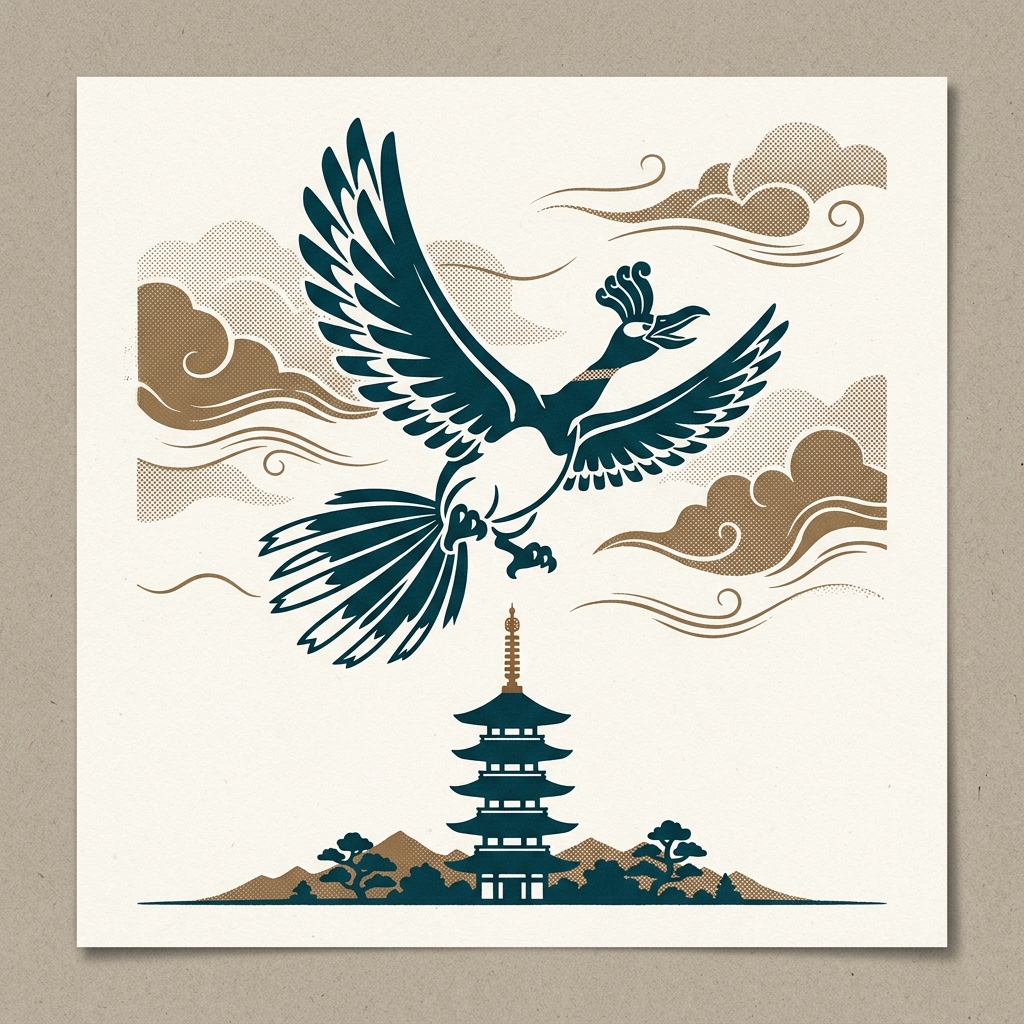
Pokémon Gold Version / Silver Version
ポケットモンスター 金・銀
Pokémon Gold and Silver are the definitive Game Boy Color games — the titles that proved the platform could sustain the …
Read more → Uncommon
 Game Boy Color
The Legend of Zelda: Oracle of Seasons
ゼルダの伝説 ふしぎの木の実 大地の章
The Legend of Zelda: Oracle of Seasons is one of two interconnected Game Boy Color adventures released simultaneously in…
Read more →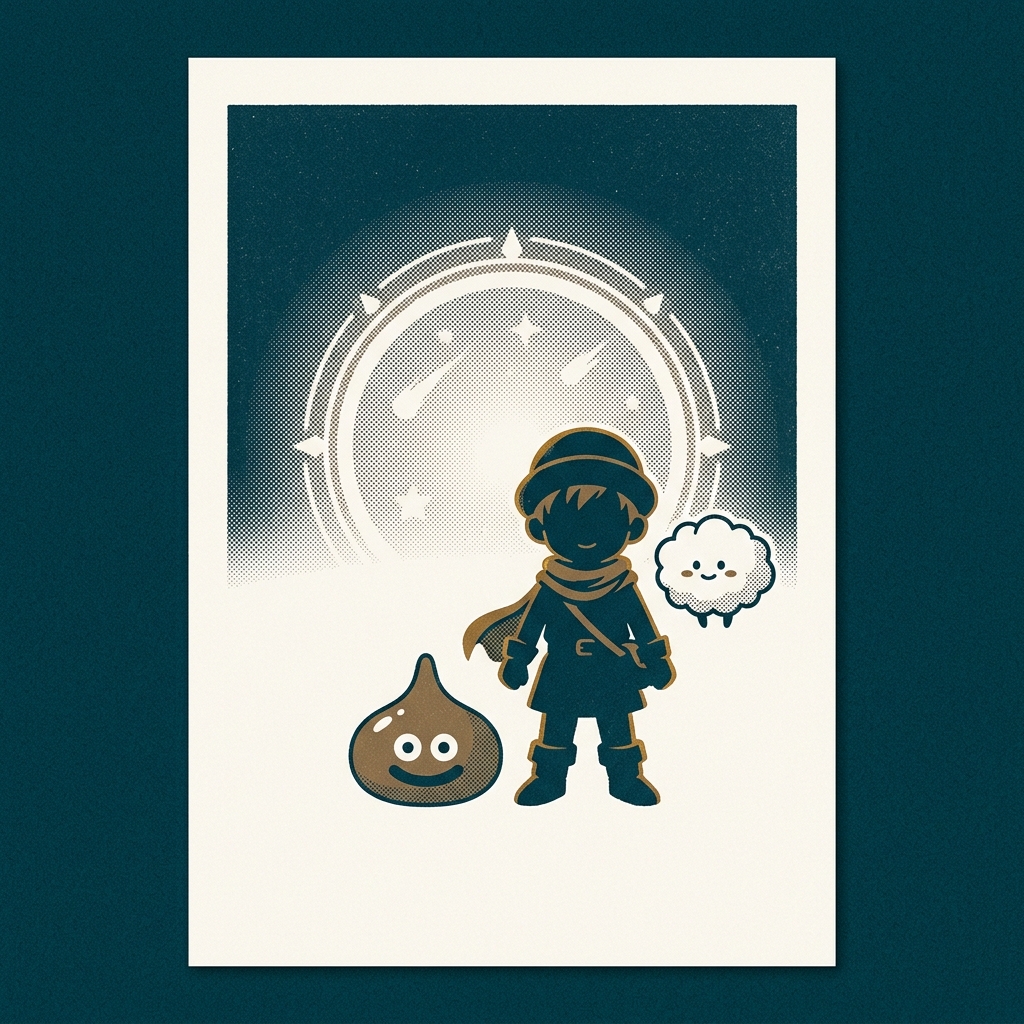 Uncommon
 Game Boy Color
Dragon Warrior Monsters
ドラゴンクエストモンスターズ テリーのワンダーランド
Dragon Warrior Monsters — known in Japan as Dragon Quest Monsters: Terry's Wonderland — is a monster-collecting RPG rele…
Read more →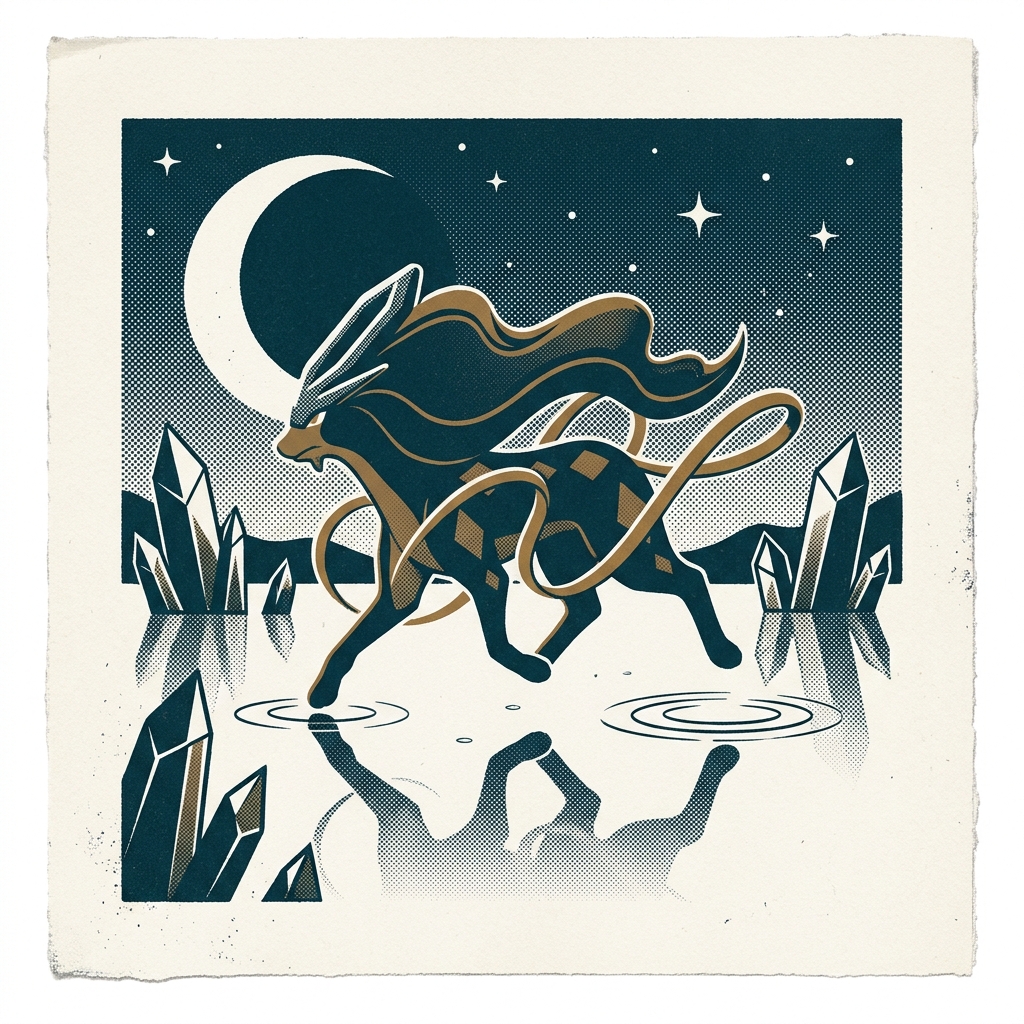 Uncommon
 Game Boy Color
Pokémon Crystal Version
ポケットモンスター クリスタルバージョン
Pokémon Crystal is the third and final entry in the second generation of the Pokémon series — an enhanced version of Gol…
Read more → Very Rare
 Game Boy Color
Shantae
シャンティ
Shantae is the game that proved the Game Boy Color still had undiscovered depths three years into its lifespan. Develope…
Read more →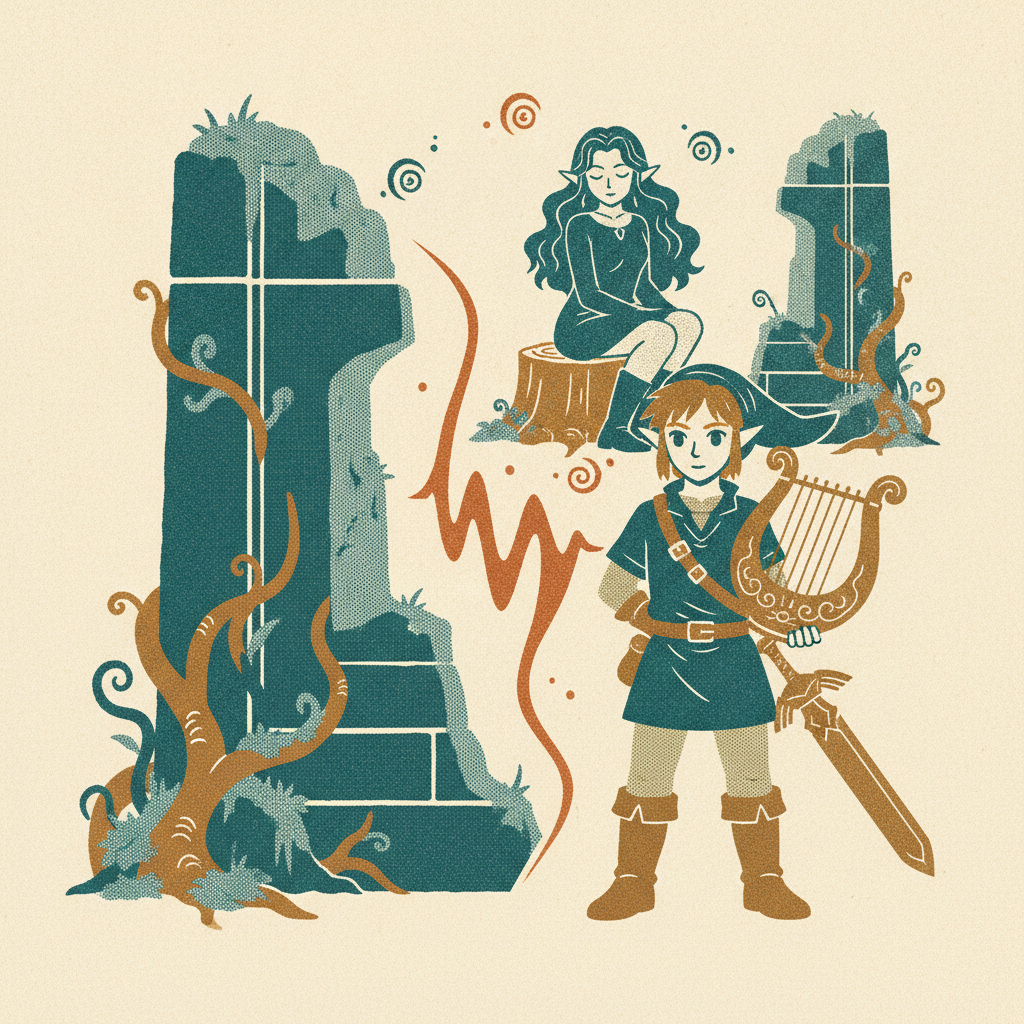 Uncommon
 Game Boy Color
The Legend of Zelda: Oracle of Ages
ゼルダの伝説 ふしぎの木の実 時空の章
The Legend of Zelda: Oracle of Ages (2001) is a Game Boy Color action-adventure developed by Capcom's Flagship team. Ora…
Read more →A Game Boy Color Title Worth Your Time
A title that reveals what the Game Boy Color could carry beyond its expected ceiling — documented with regional notes and collector context.
Game Boy Color — Quick Answers
- When did the Game Boy Color come out?
- The Game Boy Color was released in Japan on October 21, 1998, and in North America on November 18, 1998.
- What is the Game Boy Color's release date?
- The Game Boy Color launched in Japan on October 21, 1998 at ¥8,900. It added a colour screen and a faster processor while staying compatible with the original 1989 Game Boy library.
- Can the Game Boy Color play original Game Boy games?
- Yes. The Game Boy Color is fully backward compatible — it plays the entire original Game Boy library, and many of those grey cartridges gain a colour palette when played on it.
- Is the Game Boy Color region free?
- Yes. Like the original Game Boy, Game Boy Color cartridges are region-free — a Japanese cartridge plays on a North American or European system and vice versa, with no region lock.
Explore the Game Boy Color World
The Game Boy family
The Game Boy Color sits between the original and the Advance — one unbroken handheld line from Nintendo that ran for over a decade.
Deeper cuts
The Color library pushed the little handheld further than anyone expected:
Questions people actually ask about the Game Boy Color
Tell it apart
People often meet Game Boy Color under another name, or mistake it for the machine beside it. These pages exist to settle that.