Nintendo's first 64-bit console — and its last to use cartridges.
About the Nintendo 64
The Nintendo 64 launched in Japan on June 23, 1996, arriving two years after both the PlayStation (1994) and the Sega Saturn (1994). In an industry moving decisively toward CD-ROM, Nintendo chose to stay with cartridges — and built the first home console controller with an analogue stick at its centre. The machine that gave the world Super Mario 64, Ocarina of Time, and GoldenEye 007 also gave it a new language for three-dimensional play.
They chose the cartridge. The world chose the disc. History proved both right.
In 1996, when CD-ROM drives had become the standard medium for every other platform, Nintendo chose the cartridge for the Nintendo 64. The decision was logical. Cartridges load instantly, survive drops, and cannot be copied with a consumer CD burner. The 64 MB cartridge ceiling was real, but most N64 games never approached it — and for games that did, Nintendo offered a 64 MB expansion. The consequence no one fully anticipated was the cost. N64 cartridge production cost roughly three times more per unit than a CD-ROM. Square Enix, whose Final Fantasy VII required three CDs, chose the PlayStation. So did Konami, Capcom, and others. The exclusives that moved the system — Super Mario 64, The Legend of Zelda: Ocarina of Time, GoldenEye 007 — remain among the most studied pieces of interactive design in history. Mario 64 created the vocabulary of 3D platforming from scratch. Ocarina of Time invented Z-targeting, still present in every subsequent Zelda title. The platform that lost the third-party war left behind a canon of first-party games that the platform that won it is still trying to equal.
Design Characteristics
Form & Feel
The Nintendo 64 controller is one of the most unusual input devices in gaming history — and one of the most intentional. Its three-pronged shape was designed around a single premise: some games require two hands on a D-pad, others require a thumb on an analogue stick. Rather than force a compromise, Nintendo built a controller that was effectively two controllers in one. Hold the left and centre prongs: left thumb on the analogue Control Stick, right thumb on the face buttons. Hold the left and right prongs: left thumb on the D-pad, right thumb on the face buttons — traditional 2D mode. The Control Stick itself is a digital encoder that reads movement via a spinning chopper wheel and photodiode — not a true analogue potentiometer. The Z trigger on the underside of the centre prong was the first trigger button on the underside of a home console controller. The Expansion Pak slot on the base accepted a memory expansion unit that doubled RAM from 4 MB to 8 MB, enabling enhanced versions of select games. A second slot accepted the Rumble Pak — first bundled with Star Fox 64 in 1997 — the first force-feedback device on a home console. The console itself was available in charcoal black at launch, with a full palette of colours to follow: jungle green, fire orange, ice blue, watermelon red, and a translucent "funtastic" series.
Era & Context
The World It Was Born Into
The mid-1990s were the most transformative years in gaming history. CD-ROM had changed everything: PlayStation could hold 660 MB per disc to the N64 cartridge's maximum of 64 MB. Publishers could suddenly fit full orchestral scores, voiced dialogue, full-motion video cut-scenes — content that cartridges physically could not accommodate. Square's decision to develop Final Fantasy VII for PlayStation rather than Nintendo 64 was the most public articulation of this tension: Hironobu Sakaguchi cited cartridge capacity limitations directly. The gaming audience was also changing. The PlayStation was marketed with edge and irony — aimed at teenagers and young adults who considered themselves too sophisticated for "Nintendo." In North America, Sega had spent years positioning "Genesis does what Nintendon't" in the public consciousness. Nintendo's image was simultaneously its greatest asset and its most exploited liability. The N64 entered this environment as a machine of conviction: no CD-ROM, no DVD player, no multimedia ambitions — just games, running without load times, on hardware co-designed with Silicon Graphics.
Engineering
How It Was Built — and Why
The Nintendo 64's CPU is the NEC VR4300, a 64-bit MIPS R4300i processor running at 93.75 MHz — built around the same architecture as Silicon Graphics' own workstations. Its GPU is the Reality Coprocessor (RCP), a 62.5 MHz chip co-developed with SGI, divided internally into two components: the Reality Signal Processor (RSP), which handles geometry, lighting, and audio, and the Reality Display Processor (RDP), which renders the final rasterised frame. The system carries 4 MB of Rambus RDRAM — a high-bandwidth memory format chosen specifically for its data-transfer speed rather than its storage volume. The Expansion Pak raises this to 8 MB. The RCP's real-time texture filtering and anti-aliasing capability — uncommon in consumer hardware of the era — gave N64 games a visual softness that some loved and others found blurry. Cartridge access time is effectively zero; the game code loads into RAM at boot, not on demand. This is the reason Ocarina of Time's transition between rooms is instantaneous, while PlayStation's disc-based games of the same era displayed loading screens. Nintendo's own engineers described the cartridge decision explicitly: Hiroshi Yamauchi stated that "having no loading time is a great advantage" and that customers who experienced it agreed. The trade-off — cartridge costs two to five times the price of a CD-ROM to manufacture — was passed directly to consumers. An average N64 game retailed at $59.99 in North America, compared to PlayStation's $39.99.
Design Philosophy
The Belief Behind the Machine
"The game starts the moment you press the button."
Nintendo's choice to stay with cartridges for the N64 was not technical conservatism — it was a hierarchy of values. Load time, to Nintendo, was not an acceptable trade-off for storage capacity. A child picks up the controller and plays; they do not wait. This belief was stated directly by Hiroshi Yamauchi and borne out in the hardware's design. The analogue Control Stick was the other expression of this philosophy. Nintendo recognised that 3D games were coming, and that the existing D-pad — perfect for two-dimensional movement — was inadequate for navigating a 3D world. Rather than adapting existing controls, they invented a new one: an analogue stick centred in a three-pronged controller, designed specifically for the hand position required to play 3D games. Super Mario 64 was not made to fit the hardware; the hardware was, in part, designed around the needs of Super Mario 64. This is a reversal of the usual relationship between game and console — the software drove the form of the input device. The result was a machine that sold thirty-three million units, was outsold two-to-one by PlayStation, and yet produced a greater concentration of perfect-score games than any console before it. Ocarina of Time is still the highest-rated game in recorded review history. The N64 lost the market. It may have won the century.
Birth Story
How the Nintendo 64 Was Born
The Silicon Graphics Partnership
In 1993, Nintendo announced a partnership with Silicon Graphics, the company whose workstations had produced the computer-generated imagery in Jurassic Park. The hardware that emerged from this partnership — the Reality Immersion Technology processor, better known as the MIPS R4300i — gave the Nintendo 64 its name. 64-bit processing, in 1993, was the frontier of computing. The partnership sent a message: Nintendo was building the most powerful home console that technology could produce.
The Cartridge Decision
Nintendo's most consequential pre-launch decision was also its most debated: the Nintendo 64 would use cartridges, not CD-ROM. The reasoning was legitimate — cartridges offered faster load times and were harder to pirate, advantages that mattered in the competitive landscape of 1996. The costs were also real: less storage per game, higher manufacturing cost per unit, and — crucially — the departure of Square, whose Final Fantasy VII became one of the most important games of the generation, exclusively on PlayStation. The cartridge decision is the context in which all of the Nintendo 64's third-party library must be understood.
June 23, 1996
The Nintendo 64 launched in Japan on June 23, 1996, with Super Mario 64 as its signature title. The launch-day stock of 300,000 units sold out. In North America, the September 29, 1996 launch sold 500,000 units in the first three days. The hardware was expensive — ¥25,000 in Japan, $199 in North America — but the software justified the price: Super Mario 64 was not an evolution of Mario but a reinvention of what games in three dimensions could be.
Super Mario 64: Inventing 3D Grammar
Super Mario 64 did not simply bring Mario into three dimensions. It invented the grammar that 3D games would use for the next decade: the analog stick for variable-speed movement, the camera as a controllable element rather than a fixed frame, the open-world hub structure that rewarded exploration before obligation. Every 3D platform game built after 1996 operates in a framework that Super Mario 64 established. Shigeru Miyamoto's team had no precedent to follow — they built the vocabulary from scratch, and they built it so well that it has never been replaced.
Ocarina of Time and the Analog Controller
In November 1998, The Legend of Zelda: Ocarina of Time arrived. It is consistently ranked among the greatest games ever made. GoldenEye 007 (1997) had already established that first-person shooters could work on a console controller — a configuration that seemed impossible until it worked. Star Fox 64 (1997) returned the series to rail-shooter form with rumble pack feedback, the first time physical sensation had been integrated into a home console game. The Nintendo 64's controller — strange-looking, three-pronged — contained the analog stick that made all of this possible.
The Library That Matters
The Nintendo 64 released approximately 387 games in North America — fewer than any major competitor of its generation. But within that compact library: Super Mario 64, The Legend of Zelda: Ocarina of Time, GoldenEye 007, Mario Kart 64, Super Smash Bros., Banjo-Kazooie, Star Fox 64, Wave Race 64, F-Zero X, Donkey Kong 64. The machine's ratio of landmark titles to total releases may be the highest in the history of the medium. The Nintendo 64 did not win its generation by sales; it won it by the specific gravity of what it produced.
Reflection
What Lasts
Shigeru Miyamoto has been asked, many times, how he designed Super Mario 64. His answers describe a process of learning by failure: months spent making Mario move in three dimensions before any level was designed, testing the feel of running and jumping and stopping until it was right, building a camera system that had never existed before because there was no precedent to copy. The game shipped in June 1996 and was recognised immediately as something that had not existed in the world before it.
The vocabulary that Super Mario 64 established — the analog stick for variable-speed movement, the player-controlled camera, the hub world that rewarded exploration before obligation — is still the vocabulary of 3D games. Every 3D platform game made after 1996 operates in a framework that Miyamoto's team built from nothing.
"We did not know how 3D games should work. We had to find out."
The Legend of Zelda: Ocarina of Time arrived two years later, in November 1998. It is consistently ranked among the greatest games ever made — not just of its era but of any era. GoldenEye 007 established that first-person shooters could work on a controller, a configuration that seemed impossible until it worked. Super Smash Bros. invented a genre. Mario Kart 64 refined one.
The Nintendo 64's library is small — 387 games in North America. But the ratio of its landmark titles to its total releases is perhaps the highest in the history of the medium. The machine did not win by quantity. It won by the permanent importance of what it produced — and by the fact that what it produced still does not have an expiry date.
Five Things the Nintendo 64 Changed (or Lost)
A joystick that taught the world to move, the first controller that shook, a grip nobody could agree on, a gamble that cost it Final Fantasy, and a disk drive almost no one bought. Five stories from Nintendo's first 3D machine.
Its joystick taught a generation to move in 3D
When Nintendo built a console for 3D, it faced a problem no mainstream pad had solved: how do you walk in any direction, gently or quickly, with a thumb? The N64 controller's analog stick was the answer, and Super Mario 64 was designed hand-in-hand with it — the lightest push made Mario tiptoe, a full push made him run. It brought analog control into the living-room mainstream, and within a few years every console controller had a stick of its own.
It put the shake in your hands first
The first time a game console made the controller itself tremble was the N64. The Rumble Pak, released in April 1997 and first bundled with Star Fox 64, plugged into the back of the controller and spun a small motor on two AAA batteries to shake the pad in time with the action. Players felt the recoil, the crash, the footstep. Within a single console generation, vibration had become something every controller was expected to do.
Nobody could agree how to hold it
The N64 controller has three prongs, and you only ever held two of them. The unusual "M" shape was a bridge between two eras: grip the left and centre prongs to reach the D-pad for older 2D-style games, or the centre and right to put your thumb on the new analog stick for 3D. It was a controller built for a moment when nobody yet knew how a 3D game should be held — so Nintendo built one that could be held both ways.
Sticking with cartridges cost it Final Fantasy
Nintendo kept cartridges for the N64 when its rivals moved to CDs. Cartridges loaded almost instantly and resisted piracy, but they held a fraction of what a disc could — and that limit had a price. Final Fantasy VII would have needed dozens of cartridges' worth of space, so Square took it, and the whole series, to Sony's PlayStation. Enix followed with Dragon Quest. The fast-loading machine won speed and lost the role-playing games that defined a generation in Japan.
There was a disk drive almost no one bought
Nintendo had not given up on disks entirely. The 64DD, a magnetic disk drive that clipped under the console, was announced in 1995 as a way to add storage, writable saves, and online features. It was delayed for years, and by the time it arrived in Japan in December 1999 its format was already outdated. It was never released outside Japan and sold only around 15,000 units — one of Nintendo's quietest commercial failures.
Before You BuyWhat to watch for, so you don't regret it
The Nintendo 64 had no major hardware redesign during its production life, but regional differences and board revisions affect video output quality, modification compatibility, and a few reliability factors worth knowing before you buy.
Full buying guide →Caring for One You OwnKeeping a vintage machine running
The Nintendo 64 uses cartridges rather than optical media, which removes the laser as a failure point. Its most common problems relate to connector oxidation and solder joint aging — both addressable with the right tools and patience.
What ages inside a Nintendo 64
- Cartridge connector pinsThe edge connector that accepts N64 cartridges oxidises over decades. Oxidation on either the cartridge or the console pins produces the black screen that is the N64's most common symptom. In most cases this is cleanable, not a hardware failure.
- Multi-out AV port solder jointsThe AV output port is mounted to the board with solder joints that crack under physical stress over time — from insertion and removal of cables and from normal handling. Cracked joints cause intermittent or completely absent video and audio output.
- Internal electrolytic capacitorsCapacitors on the main board and in the power circuit age over time. Capacitor-related failure is less common in the N64 than in optical drive-based consoles, but units showing audio distortion or instability warrant inspection.
- Expansion Pak slot contactsThe memory expansion port contacts oxidise, particularly if the Pak has been removed and reinserted repeatedly. Contact cleaning restores reliable operation in most cases.
What you can do yourself
- Cartridge slot cleaningApply isopropyl alcohol (70%+) to a cotton swab and wipe the cartridge slot pin contacts. Cleaning an N64 cartridge's edge contacts with the same method resolves the majority of black-screen incidents.
- Expansion Pak reseatingRemove the Jumper Pak or Expansion Pak and clean the slot contacts with isopropyl alcohol before reseating firmly. A marginal connection can cause instability in titles that rely on the expansion memory.
- Port and ventilation cleaningClean controller ports, the cartridge slot opening, and ventilation grilles with compressed air. Accumulated dust increases internal temperatures and stresses aging components.
- Power switch contact cleaningIf power is unreliable at switch-on, cleaning the power switch contacts with isopropyl alcohol restores reliable operation in most cases.
When to call a specialist
The N64's most common hardware repairs are straightforward for an experienced solderer.
- Multi-out AV port resolderingReflowing the solder joints on the multi-out AV connector restores reliable video and audio output when intermittent signal points here. The fix is durable and inexpensive. Requires board access and soldering skills.
- Main board capacitor replacementIf audio distortion or board instability persists after connector cleaning, electrolytic capacitor replacement on the main board is the next step. A full N64 recap is less involved than equivalent work on optical drive consoles.
- RGB modificationInstallation of an RGB or HDMI modification board (UltraHDMI, N64Digital, Tim Worthington mod) provides significantly improved image quality on modern displays. Board revision compatibility must be confirmed before purchase of the mod board. Installation is soldering work.
The Sounds and Images of an Era
The Nintendo 64 defined an era of 3D play. These videos capture the machine as it was — on television, at startup, in the shops.
Console CM
Software Commercials 1996-1997
N64 Rumble The Buzz You Feel Today — Feature
So many Nintendo 64 controllers are brought to me broken. Or rather — to put it precisely — it isn't that they broke; it's that the analog stick wears itself down. Everyone tilted and ground at it, lost in the game, so it could hardly be otherwise. Mending them, I remember those days — back then the 64 always seemed to stand in the PlayStation's shadow, half a step behind.
If I'm honest, I was already on my way to growing up, and I couldn't find a single game on the 64 that felt as though it were made for me; its brightness, in the end, was aimed at children. Sony did precisely the opposite. They lined up game after game for hearts a little older — for that age that longs to stretch toward adulthood — and, as if to declare that games were no longer only for children, they lifted the whole market up with them.
But what was truly masterful was how they drew the powerful makers onto their side, one after another. CD-ROMs were far cheaper and faster to make than cartridges, and unlike Nintendo with its tight restrictions, Sony built a system kind to the people who made the games. To that pull, even Square — the makers of Final Fantasy — left Nintendo for the PlayStation. Dragon Quest, Final Fantasy, all of it crossing over; names that had stood beside Nintendo for as long as I could remember, departing one by one. Sony, raised in the world of home electronics, had read both the human heart and the current of the times — and that fathomless power, I think, I felt for the first time back then.
Representative Games
A handful of titles that define this console — each with a shop owner's note, collector's guide, maintenance tips, and memory prompts. The complete library is one click away.
 ▶
▶ Nintendo 64
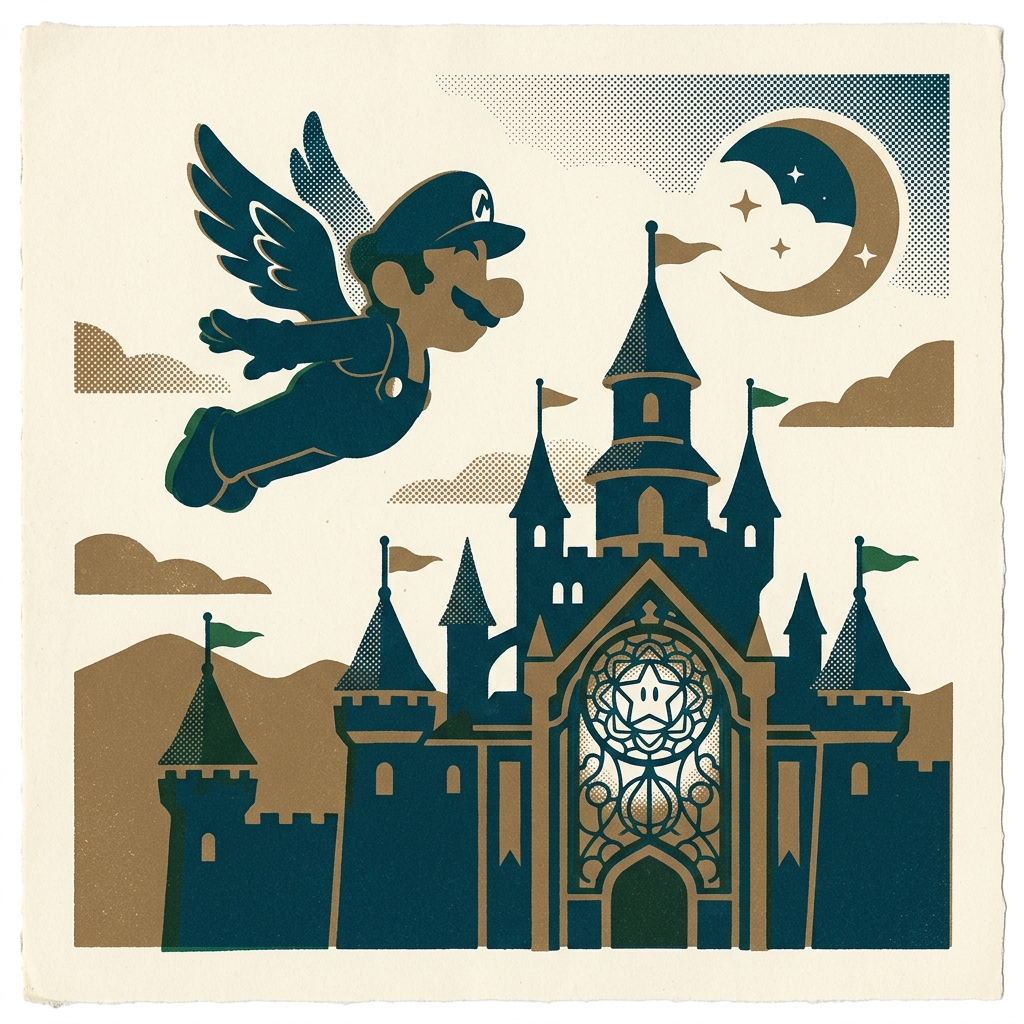
Super Mario 64
スーパーマリオ64
Super Mario 64 was the Nintendo 64's Japanese launch title and one of the most consequential games ever made. It invente…
Read more → ▶
▶ Nintendo 64
The Legend of Zelda: Ocarina of Time
ゼルダの伝説 時のオカリナ
Ocarina of Time is the highest-rated game in recorded review history and the first Legend of Zelda title rendered in thr…
Read more →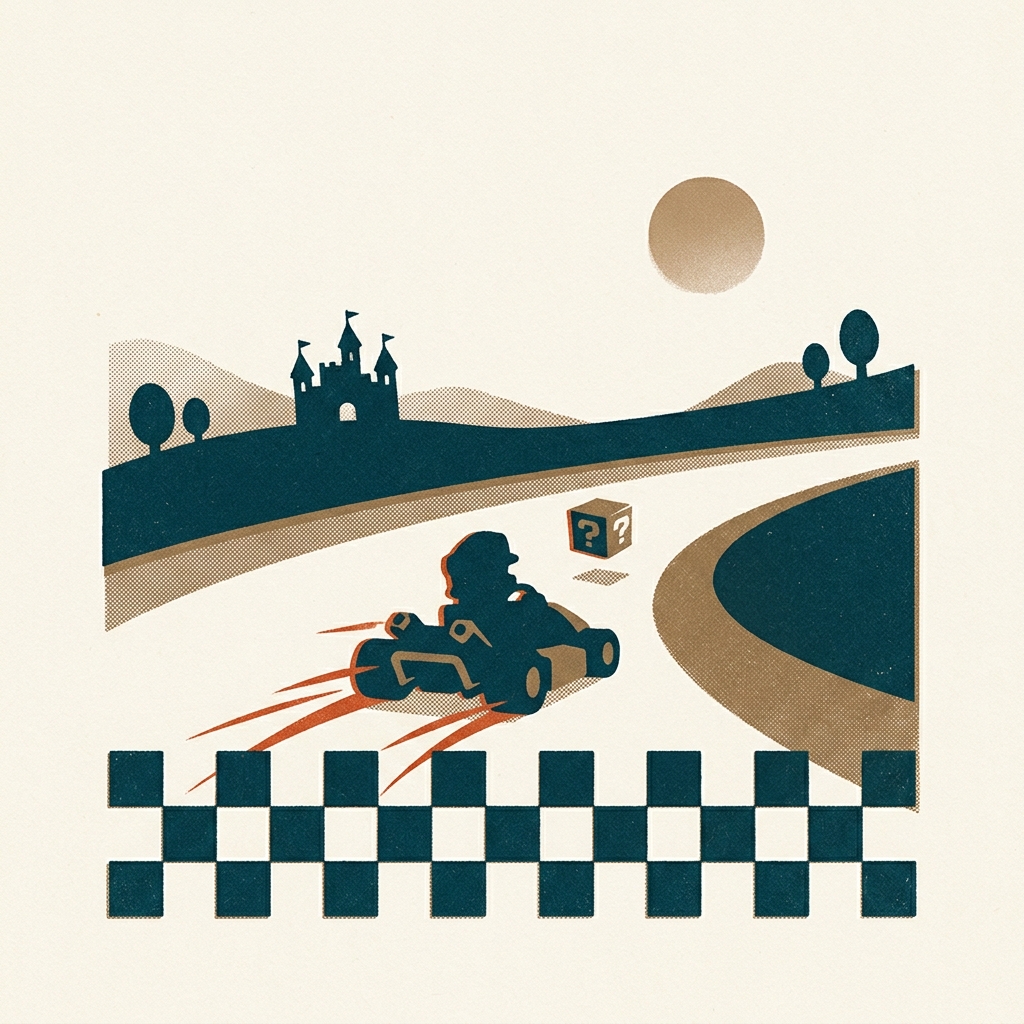 ▶
▶ Nintendo 64
Mario Kart 64
マリオカート64
Mario Kart 64 was the second entry in the Mario Kart series and the first to render its tracks in full 3D polygonal envi…
Read more →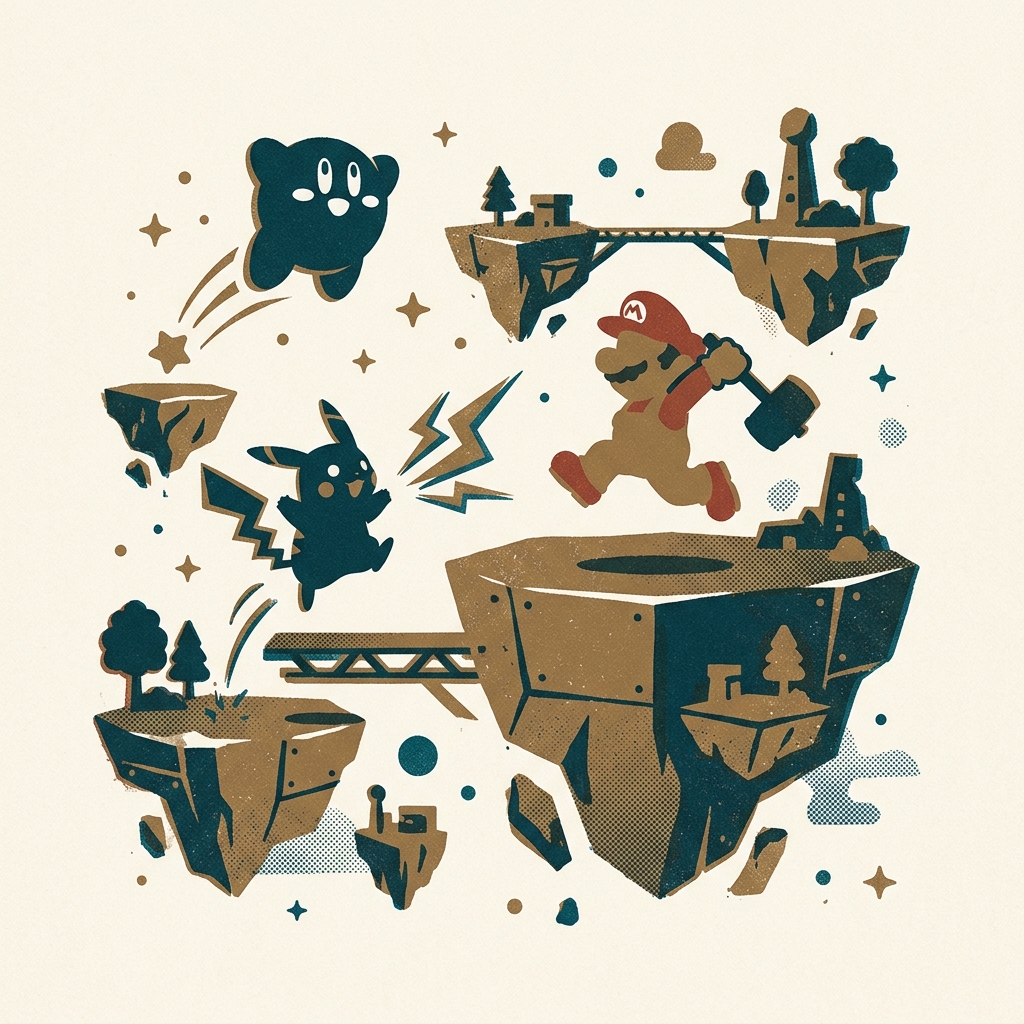 Uncommon ▶
 Nintendo 64
Super Smash Bros.
大乱闘スマッシュブラザーズ
Super Smash Bros. is the game that Masahiro Sakurai built in secret. Working without Nintendo's knowledge, Sakurai creat…
Read more → ▶
▶ Nintendo 64
Star Fox 64
スターフォックス64
Star Fox 64 was the first home console game to ship bundled with the Rumble Pak — the first force-feedback device for ho…
Read more →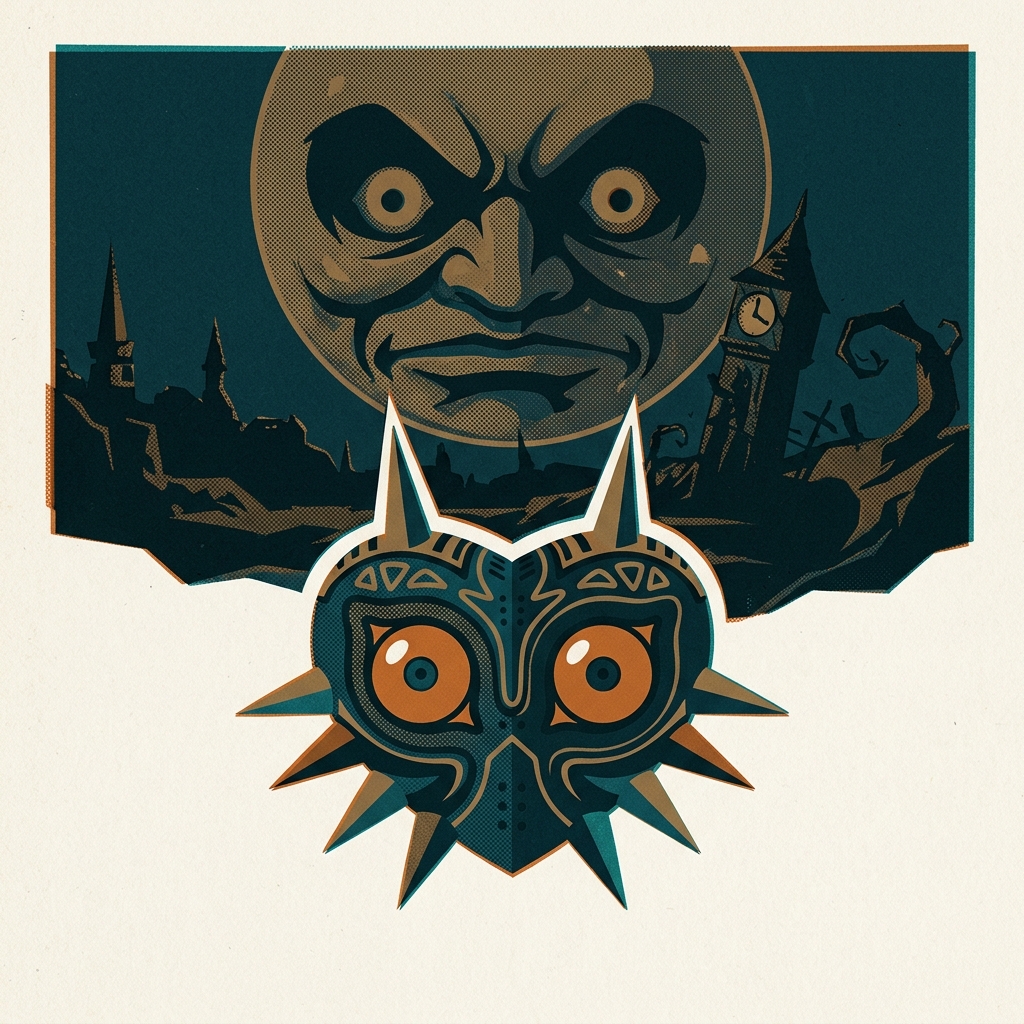 ▶
▶ Nintendo 64
The Legend of Zelda: Majora's Mask
ゼルダの伝説 ムジュラの仮面
Released in Japan on April 27, 2000, Majora's Mask was built on the engine of Ocarina of Time in just under 18 months — …
Read more →Nintendo 64 — Quick Answers
- When did the Nintendo 64 come out?
- The Nintendo 64 was released in Japan on June 23, 1996, in North America on September 29, 1996, and in Europe on March 1, 1997.
- What is the Nintendo 64's release date?
- The Nintendo 64 launched first in Japan on June 23, 1996 at ¥25,000. It was Nintendo’s first 64-bit console and its last home console to use cartridges.
- Why does the Nintendo 64 use cartridges instead of CDs?
- Nintendo chose cartridges over CD-ROM for near-instant load times, durability, and stronger copy protection. The trade-off was far less storage, which led some developers — most famously Square with Final Fantasy VII — to move to Sony’s disc-based PlayStation.
- When was the Nintendo 64 discontinued?
- Nintendo discontinued the Nintendo 64 in 2002, after the launch of its disc-based successor, the GameCube, in 2001.
- Is the Nintendo 64 region locked?
- Yes. The Nintendo 64 is region-locked: Japanese (NTSC-J), North American (NTSC-U), and European (PAL) cartridges and consoles are not cross-compatible without modification.
Explore the Nintendo 64 World
The studios
The Nintendo 64 carried 3D gaming into the home, led by Nintendo's own teams and a British studio that became the console's second pillar.
The engineer
The analog stick that gave the Nintendo 64 its freedom of movement in 3D came from one engineer's hand.
Deeper cuts
Beyond Mario and Zelda, the N64 holds experiments that still feel singular:
Questions people actually ask about the Nintendo 64
Tell it apart
People often meet Nintendo 64 under another name, or mistake it for the machine beside it. These pages exist to settle that.
Keeping it alive
A machine that still runs is worth more than a machine that once did.