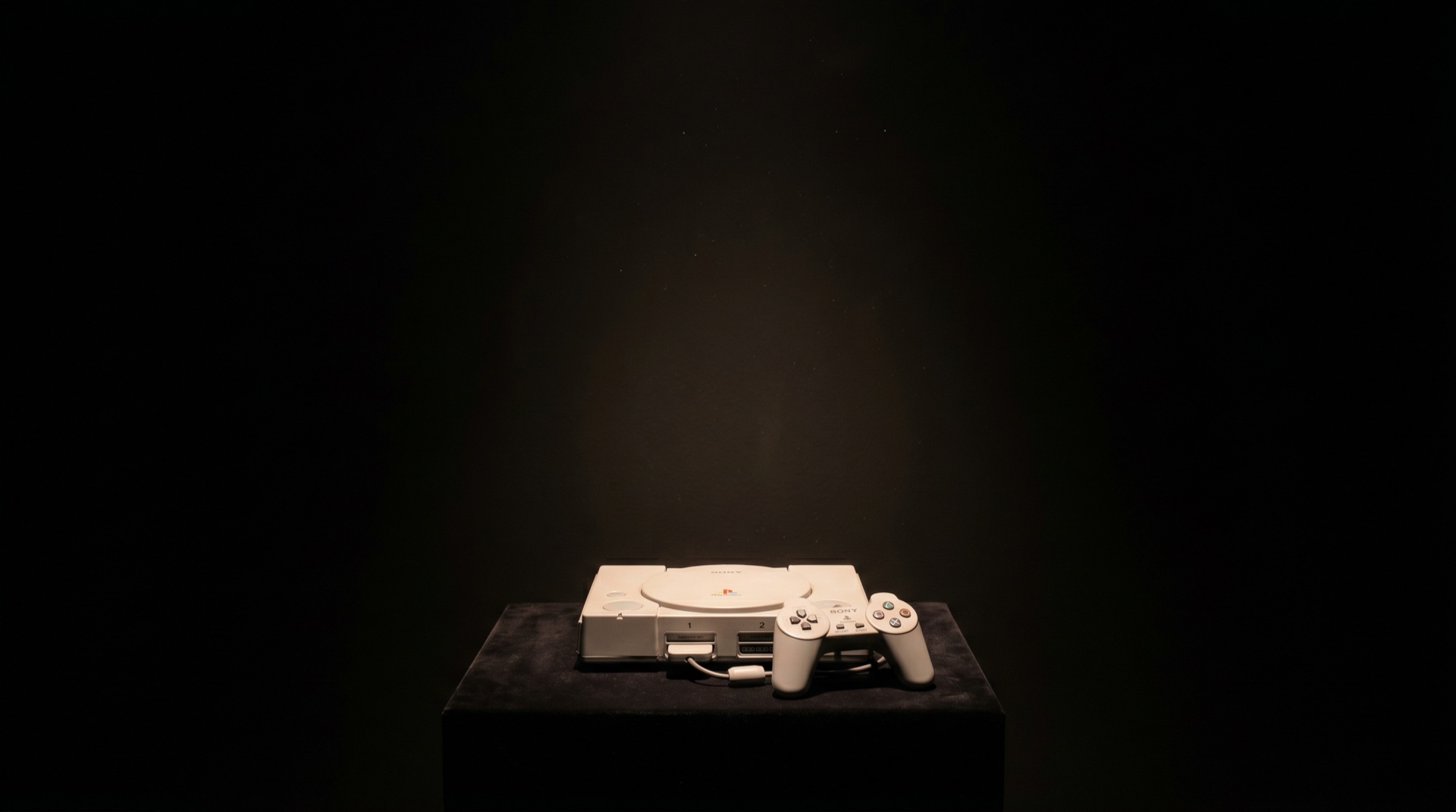
All photographs — genuine units from the Enjoy Game Japan inventory. Toyohashi, Japan.
Sony's first console — born from a failed Nintendo deal, the first machine ever to cross 100 million units.
About the PlayStation
The PlayStation launched in Japan on 3 December 1994, sold 100,000 units on its first day, and went on to sell over 102 million units worldwide — becoming the first console to cross the 100-million mark. Born from a failed partnership with Nintendo over a Super Famicom CD-ROM add-on, it was Sony's first game console and became the machine that shifted video games from a children's hobby into a mainstream adult culture. The console's CD-ROM format attracted a wave of ambitious third-party developers, including Square's Final Fantasy VII, Konami's Metal Gear Solid, Capcom's Resident Evil, and Naughty Dog's Crash Bandicoot — a software library that defined the fifth console generation.
The name came from a failed partnership. The machine came from a refusal to give up.
Ken Kutaragi, then an engineer at Sony, spent nights in 1988 secretly designing the sound chip inside the Super Famicom. Nintendo discovered the work and, rather than dismiss him, approved it after the fact — and agreed to a joint CD-ROM peripheral project. On June 15, 1991, a machine called the 'Play Station' was announced at CES in Chicago, bearing both logos. The next day, Nintendo announced a separate partnership with Philips. The original agreement ended overnight. What survived was Kutaragi's belief that Sony should make its own games console. He argued for it inside a company that made televisions and Walkmans and saw games as a toy market. He was nearly reassigned. By December 3, 1994, the PlayStation was in stores across Japan at 39,800 yen — and sold more than 100,000 units on the first day. Kutaragi's machine ultimately sold 102 million units worldwide, reshaping every subsequent console generation. The partnership that failed became, in his hands, permission to try something harder.
— inspired by Ken Kutaragi
Design Characteristics
Form & Feel
The original PlayStation is a grey, rounded rectangle — smooth curves rather than the angular cases common to consoles of the era. Its top surface carries a lid that lifts to reveal the CD-ROM drive: a top-loading tray with a spindle at the centre, no protective tray, just a bare disc sitting directly on the drive mechanism. This top-loading design made later disc-swap tricks possible but also led to the notorious disc-read errors of ageing units. The launch controller — SCPH-1010 — was a direct evolution of the Super Famicom gamepad: four face buttons (Triangle, Circle, Cross, Square), a D-pad, two shoulder buttons (L1, L2, R1, R2), Select and Start. The face buttons are colour-coded and shape-coded — green triangle, red circle, blue cross, pink square — an interface decision so enduring it remains on PlayStation controllers today. In April 1997, Sony introduced the Dual Analog Controller, adding two analogue sticks. By November 1997, the DualShock combined the analogue sticks with two vibration motors — one per handle — creating the rumble feedback that became synonymous with PlayStation gaming. The Memory Card — a small external module that saved game data — was required for saving, carrying 15 blocks of storage per card. In 2000, Sony released the PS one: a compact redesign roughly two-thirds the size of the original, white rather than grey, that outlasted the console's commercial peak by two years.
Era & Context
The World It Was Born Into
December 1994 was a pivotal month. The Sega Saturn launched on 22 November, the PlayStation one week later on 3 December. Two 32-bit CD-ROM consoles, same month, same market, same target audience — and Nintendo still two years away with the Nintendo 64. The era belonged, for the first time in the industry's short history, entirely to Sony and Sega. The mid-1990s were the years when gaming crossed an age barrier it had never fully crossed before. The PlayStation was marketed not to children but to teenagers and young adults — with edge, irony, and ambition. "Do Not Underestimate the Power of PlayStation" was the North American tagline. In Japan, the console was positioned as a cultural event: launch titles included Ridge Racer and Tekken, games that demonstrated what 3D on a consumer device could mean. Square's decision to develop Final Fantasy VII for PlayStation rather than Nintendo 64 was announced in January 1996 and sent a shockwave through the industry. Hironobu Sakaguchi, Final Fantasy's creator, cited the cartridge capacity limitation directly: the game required CD-ROM to realise its vision of pre-rendered FMV cutscenes and 3D environments at a retail price consumers would accept. If they had used cartridges, Sakaguchi noted, the retail price of FFVII would have exceeded ¥10,000. Square had even begged Nintendo to switch to CD-ROM; Nintendo refused. The day Final Fantasy VII was announced for PlayStation, the console's position in the fifth generation was decided.
Engineering
How It Was Built — and Why
The PlayStation's CPU is the MIPS R3000A — a 32-bit RISC processor running at 33.8688 MHz, derived from workstation technology. It is paired with 2 MB of main RAM and 1 MB of video RAM. The GPU — a custom Sony chip — could render 360,000 flat-shaded polygons per second, or 180,000 textured polygons per second, with hardware support for Gouraud shading, texture mapping, and semi-transparency effects. The geometry engine was kept separate from the main CPU as a dedicated co-processor (the GTE, or Geometry Transformation Engine), handling the mathematics of 3D coordinate transformation and perspective projection in hardware. The CD-ROM drive ran at 2× speed, giving a sustained data transfer rate of approximately 300 KB/s — slow by later standards, but transformative in 1994. Each game disc held up to 650 MB of data, compared to a maximum of 64 MB on a Nintendo 64 cartridge (and most N64 games used far less). This capacity made pre-rendered FMV cutscenes, full voice acting, and CD-quality audio feasible at consumer price points for the first time. Sony's developer documentation and SDK were unusually accessible: the company invested in making it easy for small teams to develop for the platform. This intentional openness — in contrast to Nintendo's tightly controlled licensing environment — attracted an enormous wave of third-party developers and was directly responsible for the breadth of the PlayStation's software library.
Design Philosophy
The Belief Behind the Machine
"Do not underestimate the power of PlayStation."
Sony's philosophy for the PlayStation was, at its core, a bet on stories. Not a bet on technical specifications, or on nostalgia, or on a family-friendly brand identity — a bet on the kind of experiences that only existed in narrative forms: cinema, novels, music. Ken Kutaragi's original vision was for a machine that could render "real" 3D in real time — and what that implied was a game world that looked believable, that could support a story, that could move its audience emotionally the way a film could. The CD-ROM was not just an engineering choice; it was a statement about what games could be. The 650 MB disc that powered Final Fantasy VII's four-disc story — the opera sequence, Aerith's death, the long slow ending — could not have existed on a cartridge. The PlayStation asked the question: what if games were art? And it answered by giving Square the storage capacity to make the question real. Sony also made a deliberate bet on the developer community. The decision to make documentation accessible, to price development kits at levels small studios could afford, to allow Sony's own studios to compete with third parties rather than receive preference — these were policy choices that said the platform would win through the quality of its software, not through exclusivity. The PlayStation sold 102 million units. The games it carried into 102 million living rooms — Final Fantasy VII, Metal Gear Solid, Resident Evil, Gran Turismo, Crash Bandicoot, Silent Hill, Castlevania: Symphony of the Night — are among the most analysed, revisited, and re-released titles in gaming history. Sony had made gaming a grown-up culture. It had never been the same since.
Birth Story
How the PlayStation Was Born
Born from Betrayal
The PlayStation was born from betrayal — or, depending on the perspective, a liberation. In the early 1990s, Sony had partnered with Nintendo to develop a CD-ROM add-on for the Super Famicom. Ken Kutaragi, a Sony engineer who had previously designed the sound chip inside the Super Famicom, drove the project internally. The partnership dissolved under disputed circumstances; Nintendo announced at CES 1991 that it would work with Philips instead — the day after Sony had proudly announced the joint 'Play Station' to the world. Kutaragi was humiliated. That humiliation became the engine of everything that followed.
Building the Machine
Sony, holding technology it had already developed, chose to build its own console. Kutaragi — over significant internal resistance at Sony, where many executives viewed game consoles as beneath the company — persisted, and the PlayStation became his project. Sony launched the PlayStation one week after Sega's Saturn in Japan, at ¥39,800 versus Saturn's ¥44,800, a ¥5,000 price advantage that proved decisive in Japan. In North America, Sony undercut the Saturn further — announcing a $299 price point on stage at E3 1995, directly following Sega's $399 announcement, in one of the most famous moments in gaming trade show history.
The Cambrian Explosion
What the PlayStation unleashed has been called a 'Cambrian Explosion' of gaming. The CD-ROM's massive capacity did not just give games more storage — it gave creators permission to think differently. Stories could now be 'experienced' rather than just 'beaten.' Pre-rendered CGI cutscenes, full voice acting, cinematic soundtracks: Final Fantasy VII arrived in 1997 across four discs, delivering an operatic story that left players genuinely astonished — 'when is this story ever going to end?' — in the best possible sense.
A Platform Built for Creators
Sony's approach to developers was equally transformative. Where Nintendo had operated a tightly controlled licensing environment, Sony made its SDK accessible and affordable for small studios. The result was an explosion of creative diversity: Konami's Metal Gear Solid elevated stealth gaming into pure narrative cinema; Capcom's Resident Evil invented survival horror; Polyphony Digital's Gran Turismo turned the love of cars into a meditative experience; NanaOn-Sha's PaRappa the Rapper invented the rhythm game genre entire.
The Living Room as Stage
The social dimension of this era is impossible to overstate. Tekken and its sequels turned living rooms into gathering places. After school, friends would crowd around a single television, each player with their 'exclusive character,' battling day after day without ever getting tired. Tekken 3 was perhaps the purest expression of this — a fighting game so deep in system, so generous in content, that it anchored friendships and defined afternoons for an entire generation.
The PlayStation 2: Three Secret Weapons
Sony's next move was equally calculated. The PlayStation 2 (2000) was built around three 'secret weapons' designed to guarantee dominance before the battle even began: a DVD player — a 'Trojan Horse' sending a state-of-the-art AV device into the living room disguised as a game console; full backward compatibility with all PlayStation software, carrying the loyalty of 100 million PS1 owners forward; and a strategy of exclusive killer software, most decisively Square's Final Fantasy series continuing exclusively on Sony hardware.
A Hundred Million Stories
The PlayStation console line ultimately became the first to surpass 100 million units sold — a milestone the original crossed at 102 million. The games it carried into those living rooms — Final Fantasy VII, Metal Gear Solid, Resident Evil, Gran Turismo, Silent Hill, Castlevania: Symphony of the Night, Crash Bandicoot, Tekken 3 — are among the most analysed, revisited, and re-released titles in all of gaming history. Kutaragi's machine had done what he set out to prove: that games were not a toy market. They were a storytelling medium, and they had a hundred million stories to tell.
Reflection
What Lasts
Ken Kutaragi was 32 years old when he watched Sony's CEO announce, at CES 1991, that Nintendo would be working with Philips instead. Sony had built the 'Play Station' CD-ROM add-on together with Nintendo, had proudly announced it the day before, and had been publicly humiliated by the cancellation. Kutaragi went back to Sony and, over significant internal resistance — many of the company's senior executives believed games were beneath Sony — spent four years building the machine that would prove them all wrong.
"Games are not a toy market. They are a storytelling medium."
The argument Kutaragi was making — before anyone had proven it — was that the combination of CD-ROM storage, accessible development tools, and mainstream distribution could turn gaming from a children's hobby into something adults engaged with seriously. He was right. Final Fantasy VII, Metal Gear Solid, Resident Evil, Silent Hill — these were not children's entertainment. They were stories that made adults feel things.
The PlayStation crossed 100 million units sold. The PlayStation 2 crossed 155 million. The games that those consoles carried into living rooms — the long, difficult, emotionally complicated stories that the CD-ROM's capacity had made possible — changed what people expected from entertainment entirely.
Kutaragi retired from Sony in 2007. The machine he built from humiliation had, by then, become the blueprint for an industry. Sometimes the most productive thing that can happen to a person is to be underestimated by the people they most want to impress.
Five Things About an Accidental Empire
The PlayStation began as a grudge, took Nintendo's biggest series, let amateurs make games, hid a handheld in a memory card, and became the first console ever to reach a hundred million. Five stories from the machine that grew up gaming.
It was born from a broken Nintendo deal
Sony entered the console business by accident — and by grudge. It had been building a CD add-on for Nintendo's Super Famicom when, at the 1991 CES, Nintendo publicly dropped Sony for Philips. Humiliated, Sony's leadership chose not to retreat but to build its own machine. The PlayStation that resulted, launched in 1994, would go on to outsell the company that spurned it. The name itself was a leftover: "Play Station" had been the working title of the cancelled Nintendo project.
It took Final Fantasy from Nintendo
For years, Final Fantasy belonged to Nintendo. That ended in 1996. Final Fantasy VII was so large that, on the cartridge-based Nintendo 64, it was estimated to need around thirty discs' worth of data; on a single CD-ROM, the PlayStation could simply hold it. Producer Hironobu Sakaguchi, frustrated by Nintendo's choice of cartridges, moved the series to Sony. Enix soon followed with Dragon Quest. Japan's two biggest role-playing series left Nintendo at once — a wound that took the company a generation to heal.
There was a black PlayStation for making your own games
In 1996 Sony did something unusual for a console maker: it let amateurs in. The Net Yaroze was a special black PlayStation, sold to hobbyists for around $750, that shipped without region lockout and with the tools to program your own games. Sony ran an online community where these home developers shared their creations and traded tips. A number of the people who learned there went on to careers in the industry.
Your memory card had its own screen
In 1999 Sony released the PocketStation in Japan: a memory card with a tiny monochrome screen, buttons, a clock, and infrared, all in the palm of your hand. Certain PlayStation games could download minigames onto it, which you then unplugged and played on the go — a small handheld hiding inside a save device. Nearly five million were sold before it was discontinued in 2002.
It was the first console to reach a hundred million
No game console of any kind had ever shipped a hundred million units. The PlayStation was the first. By December 2003, it and its smaller redesign, the PS one, had shipped 102.49 million between them — a scale reached in less than a decade by a machine its maker had built largely out of spite. The accident had become the industry's centre of gravity.
Before You BuyWhat to watch for, so you don't regret it
The original PlayStation went through two distinct design generations and many board revisions over its production life from 1994 to 2006. Knowing which model you are buying matters for reliability, video output options, and repairability.
Full buying guide →Caring for One You OwnKeeping a vintage machine running
The original PlayStation launched in 1994. Its optical drive is the component most affected by age — and the most common reason units fail in the used market today. Most other problems are preventable with attentive storage.
What ages inside a PlayStation
- CD-ROM laser diodeLaser output declines with age regardless of usage. At thirty years old, virtually all original PlayStation units have experienced some degree of laser degradation. The question is degree, not whether. Early symptoms are slow loading, audio dropout, and FMV stuttering. Full failure means the drive tray opens but discs are not recognised.
- Electrolytic capacitors (C550, C551, C705)Capacitors C550 and C551 on the main board near the display port, and C705 in the PS one's optical drive circuit, are known failure points. Degraded capacitors cause video distortion, disc read errors, and instability. These specific components have a high failure rate relative to the rest of the board.
- Disc tray belt and mechanismThe belt driving the disc tray loading mechanism stretches and loses tension over time. Symptoms include slow or incomplete disc tray operation. Belt replacement is inexpensive and a standard repair.
What you can do yourself
- Storage environmentKeep away from heat and humidity. UV light yellows the ABS plastic shell over time. Cover the unit or store in a case when not in use. Close the disc tray after use to prevent dust accumulation around the laser assembly.
- Regular visual inspectionBefore operating a used unit for the first time, visually inspect the power supply board through the ventilation holes for capacitor swelling or discolouration. If in doubt, leave the unit unpowered until the capacitors have been inspected.
- Disc handling and inspectionPersistent read errors on a known-good disc suggest laser degradation rather than disc damage. Inspect disc surfaces for scratches and clean from centre outward — never in circular motions — before concluding the laser is at fault.
When to call a specialist
The PlayStation's most common repairs require either a skilled hand on a potentiometer or a soldering iron.
- Laser output adjustmentA potentiometer on the optical drive board controls laser output. Calibrating it to the correct resistance range (approximately 900–950 Ω on most units) can restore disc reading in degrading lasers without full drive replacement. The adjustment is delicate: excessive output burns out the laser permanently. Specialist work is strongly recommended over self-adjustment.
- Laser assembly replacementWhen calibration no longer restores disc reading, the laser diode or complete optical drive needs replacement. Replacement assemblies are available; the correct part varies by unit revision.
- Capacitor replacementC550, C551, and C705 replacement requires soldering and board access. Addressing them before visible symptoms appear — particularly on units that have never been serviced — is the single most cost-effective preventive action.
The Sounds and Images of an Era
The PlayStation defined a generation of play. These videos capture the console as it was — on television, at launch, in the shops.
PlayStation TV CM — Episodes 1, 2 & 3
PlayStation CM Collection 1994–1995
PlayStation — Dark Exhibit
Goto Playstation Shape They Rejected — Feature
Sound Ps1 — Feature
The PlayStation was one astonishment after another. 3D games ran with a perfectly straight face, as if it were nothing at all. The medium had changed from the cartridge to the CD-ROM, and the storage leapt from a few megabytes to several hundred — suddenly everything seemed possible. But what I'll never forget is the day Dragon Quest appeared on the PlayStation instead of on a Nintendo machine. That was a genuine shock — as though a long-settled certainty were audibly shifting, and I happened to be watching that turn of an era as one of the players living through it. (Mind you, the game itself ran a little too long for me, and in the end I had to laugh.)
The years passed, and now I spend my days at the bench, mending disc consoles one after another. Working with my hands, I think it again and again: those old cartridges really were tough. Once the CD-ROM era came, the capacitors inside seem to have grown brittle, and the failures multiplied. In exchange for all that newness, there were things we quietly let go of — and faced with a dead circuit board, I cannot help but feel it.
Representative Games
A handful of titles that define this console — each with a shop owner's note, collector's guide, maintenance tips, and memory prompts. The complete library is one click away.
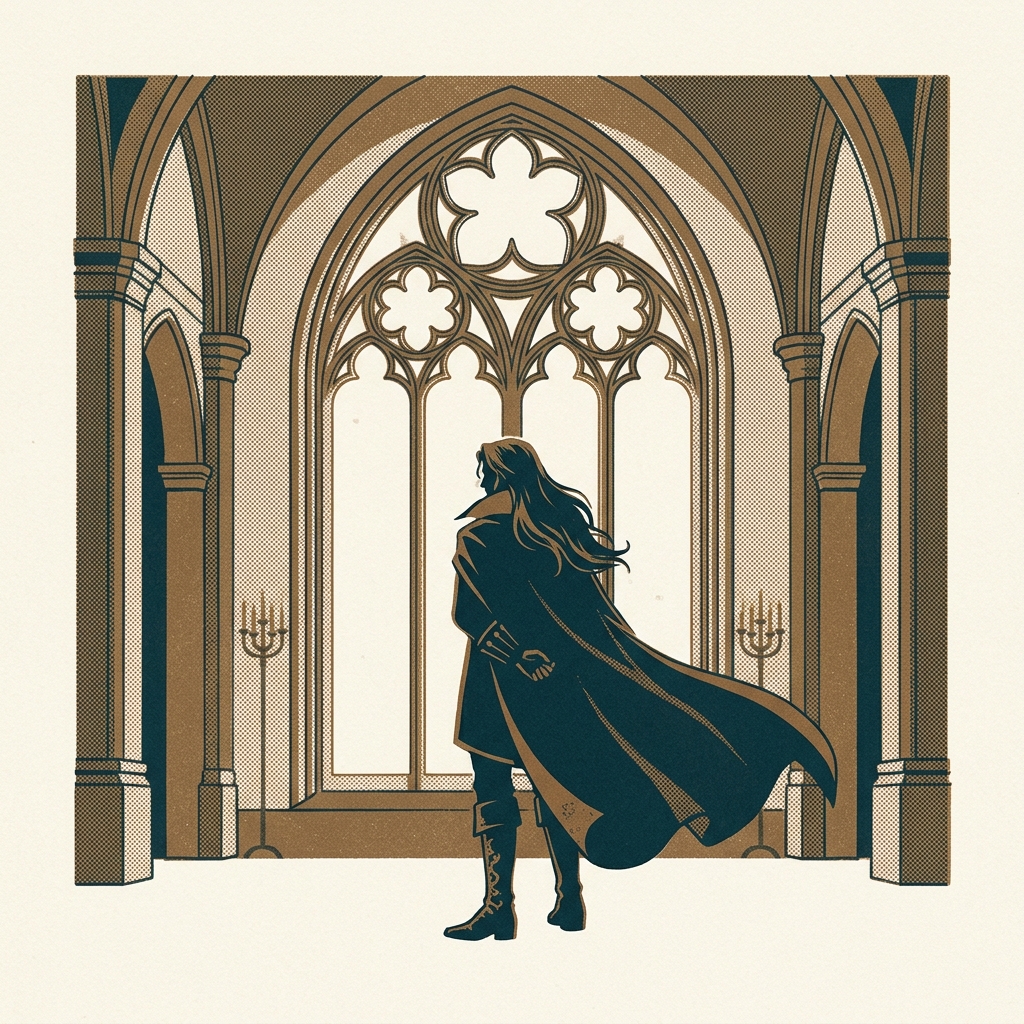 Uncommon
 PlayStation
Castlevania: Symphony of the Night
悪魔城ドラキュラX 月下の夜想曲
Released on March 20, 1997, Symphony of the Night transformed the Castlevania series by fusing the exploration-heavy des…
Read more →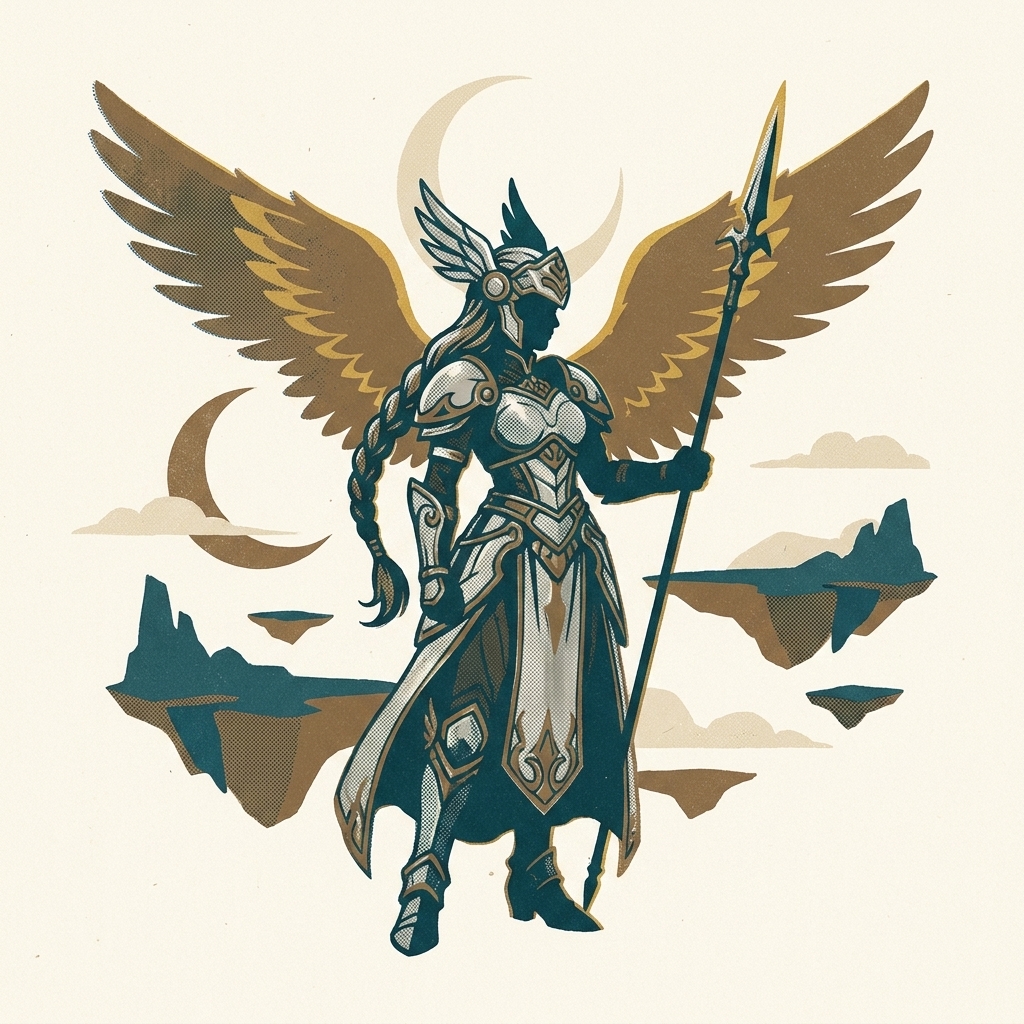 Uncommon ▶
 PlayStation
Valkyrie Profile
ヴァルキリープロファイル
Released in 1999, Valkyrie Profile placed players in the role of Lenneth, a Valkyrie collecting the souls of fallen warr…
Read more →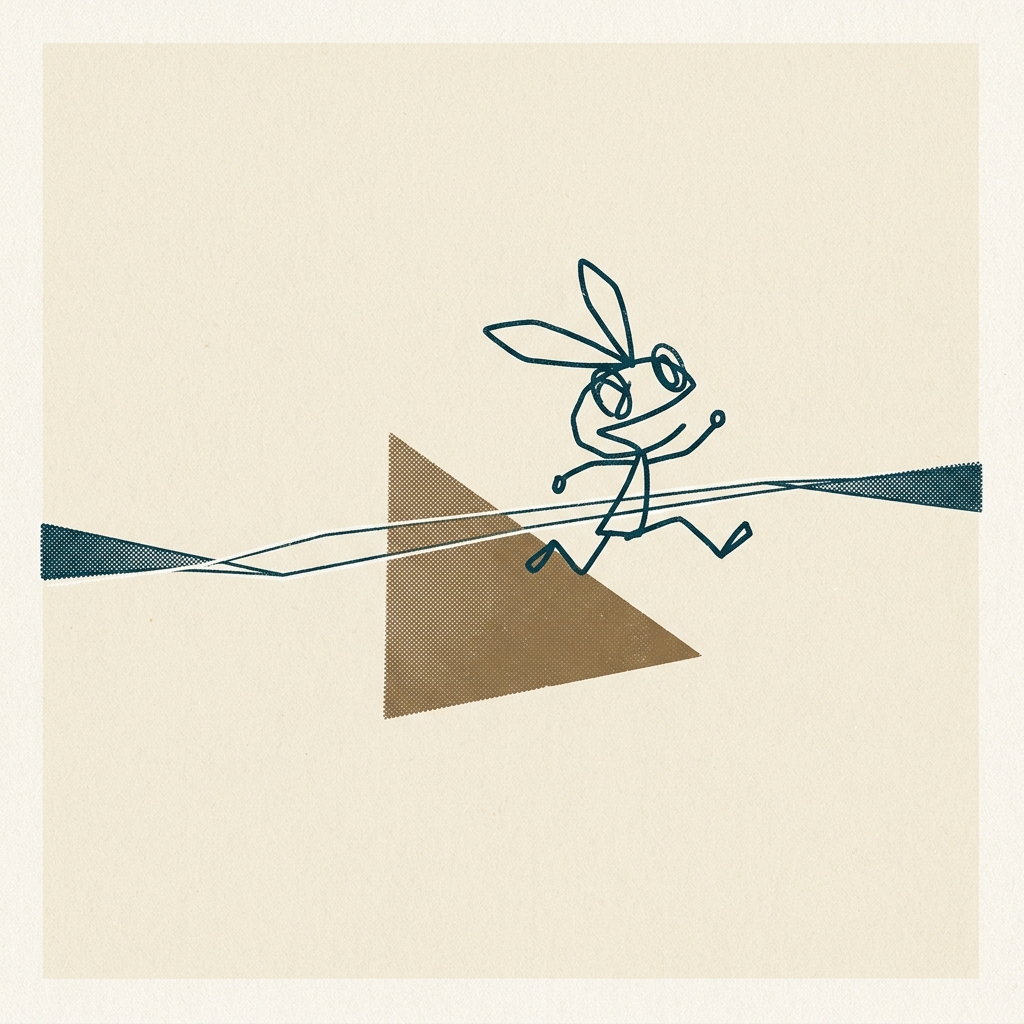 Rare ▶
 PlayStation
Vib-Ribbon
ビブリボン
Vib-Ribbon is one of the most formally inventive games ever released on PlayStation. Designed by Masaya Matsuura — creat…
Read more →PlayStation Titles Worth Your Time
Three PlayStation games that earned their place in the collector's canon — each documented with full historical context, condition notes, and what to verify before buying.
- Castlevania: Symphony of the Night Koji Igarashi inherited the director's chair mid-production and reinvented an action series as an open-world RPG. The genre it pioneered took two decades to get its own name. The Japanese PlayStation original remains the most sought-after version.
- Valkyrie Profile Tri-Ace built a side-scrolling RPG around a Norse mythology framework: Lenneth the Valkyrie collecting souls of the fallen for Ragnarok. Released in 1999, it arrived late enough in the PlayStation's life to be overlooked. Collectors who found it rarely forgot it.
- Vib-Ribbon NanaOn-Sha designed a rhythm game where the track was generated from music CDs you owned. The wireframe aesthetic was a technical solution that became an artistic identity. Never released in North America; the Japanese original is the only way to own it.
PlayStation — Quick Answers
- When did the PlayStation come out?
- The original Sony PlayStation was released in Japan on December 3, 1994, in North America on September 9, 1995, and in Europe on September 29, 1995.
- What is the original PlayStation's release date?
- The PlayStation (PS1) launched first in Japan on December 3, 1994 at ¥39,800. It was Sony’s first home console and the first to ship over 100 million units worldwide.
- How did the PlayStation begin?
- The PlayStation grew out of a failed CD-ROM partnership between Sony and Nintendo, which collapsed in 1991. Ken Kutaragi led Sony to turn the abandoned project into its own console — one that made CD-based games the industry standard.
- When was the PlayStation discontinued?
- Sony discontinued the original PlayStation line in 2006. Its slimmer 2000 redesign, the PSone, kept the platform selling for years alongside the PlayStation 2.
- Is the PlayStation region locked?
- Yes. The original PlayStation is region-locked: Japanese (NTSC-J), North American (NTSC-U), and European (PAL) discs and consoles are not cross-compatible without modification.
Explore the PlayStation World
The studios
The PlayStation turned the disc into the medium of the 32-bit era — and gave Japan's great studios room to grow ambitious.
Deeper cuts
Beyond the blockbusters, the PlayStation holds some of the era's most quietly daring games:
Questions people actually ask about the PlayStation
When it arrived
One machine, several dates. The one you remember depends on where you were standing.
Tell it apart
People often meet PlayStation under another name, or mistake it for the machine beside it. These pages exist to settle that.