composer
Keiji Yamagishi
山岸啓二
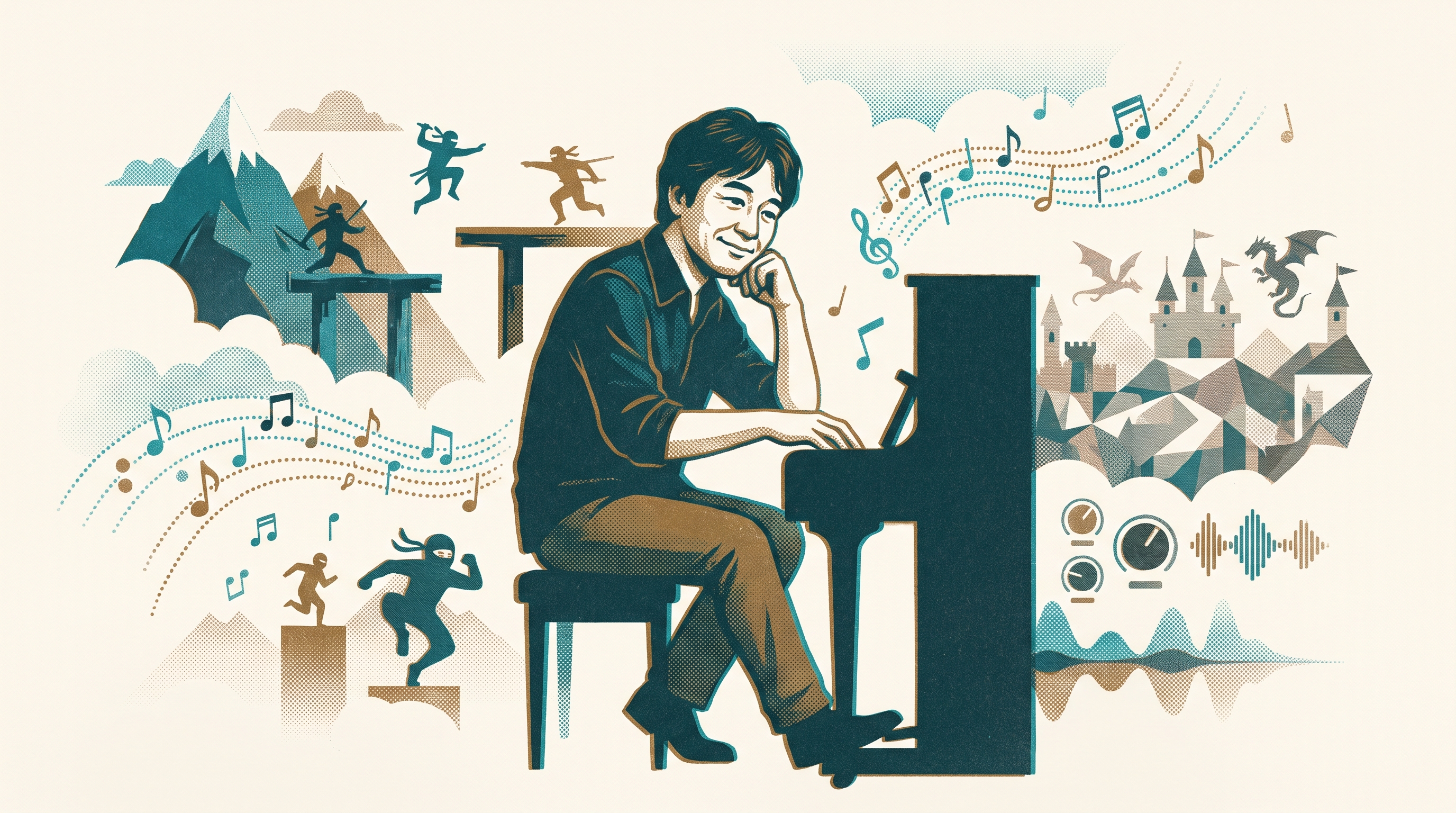
He wrote the sound driver himself and composed on it — when you build the instrument, you learn what songs it wants to sing.
About
Keiji Yamagishi is a Japanese video game music composer and sound programmer, widely recognized as a pioneer of chiptune music. He joined Tecmo in 1987 and composed for the company's NES titles until 1993, creating revered soundtracks for Ninja Gaiden (1988) and the Captain Tsubasa series (1988–1992). Beyond composing, Yamagishi programmed the sound driver used in most of Tecmo's NES games during his tenure. He has referred to Radia Senki: Reimeihen (1991) as his greatest NES composition. After leaving Tecmo in 1993, he joined Koei. In 2013 he joined the record label Brave Wave Productions, which specializes in the music of chiptune pioneers. He remains active in the chiptune scene today.
History
Keiji Yamagishi joined Tecmo in 1987 as a sound programmer and composer. The Japanese game industry had entered its golden age; the Famicom had become ubiquitous in living rooms across the country, and every title needed music. But Yamagishi did not arrive as a trained musician. He arrived as someone who could write code and who understood that the Famicom's sound chip — a Ricoh 2A03 with five audio channels — was not a recording device but a set of instructions waiting to be told how to behave. At Tecmo, Yamagishi did both jobs: he programmed the sound driver that would play the music, and then he composed the music that would run on it. Few people did both. It meant he could shape the tool to fit the song and shape the song to fit the tool.
His first major work was Ninja Gaiden, released in 1988 for the NES. The game was a fast, cinematic side-scroller, and the music needed to match its urgency. Yamagishi sampled drum sounds — kick and snare — and coaxed them into playback on the Famicom, a technique not yet common in NES music. He used delay, vibrato, and pitch bends to add weight and emotion. The opening theme became one of the most recognized pieces of 8-bit music, not because it was complex but because it felt like it belonged to something larger than the screen. Ninja Gaiden's soundtrack demonstrated that a five-channel sound chip could carry drama, tension, and momentum if the composer understood both the hardware and the moment.
Between 1988 and 1992, Yamagishi composed music for the Captain Tsubasa series on the NES. The games were adaptations of a beloved soccer manga, and they included non-interactive story sequences called 'Cinema Display' — static images with dialogue, music, and emotion. Yamagishi treated these moments seriously. He layered melodies, used dynamic shifts, and let the music carry the weight that the visuals and text could not. He later described the Captain Tsubasa work as an opportunity to explore what game music could do when it was allowed to stop being background and become foreground.
In 1991, Tecmo released Radia Senki: Reimeihen, a turn-based RPG for the Famicom. The game did not achieve commercial success, but Yamagishi has repeatedly identified its soundtrack as his finest work on the NES. The music was expansive, melodic, and emotionally varied — a full score for a world that few players would explore. It is a reminder that the value of a piece of music is not determined by the number of people who hear it, but by whether the creator believed it was worth making.
In 1993, Yamagishi left Tecmo and joined Koei. The transition marked the end of his NES era. After years away from music, he re-emerged in the 2010s as the global chiptune scene began to recognize the artistry of the composers who had worked within the constraints of early sound chips. In 2013, he joined Brave Wave Productions, a record label dedicated to preserving and promoting the work of chiptune pioneers. He began performing live, releasing solo albums, and speaking publicly about his creative process. The music he had made in small offices on outdated hardware had found a second life as a studied art form.
Yamagishi's career is a case study in the relationship between constraint and expression. He did not have an orchestra, a studio, or unlimited tracks. He had five channels, a sound driver he wrote himself, and the discipline to make those limitations speak. What he built was not just music — it was a proof that creativity does not wait for ideal conditions. It finds the edge of what is possible and pushes until the edge moves.
Timeline & Works
Career milestones and all 2 games in the museum they worked on — in the order they happened.
- 1987
Joins Tecmo as sound programmer and composer
Keiji Yamagishi joins Tecmo, where he will program the sound driver and compose music for the company's NES titles for the next six years.
people - 1988
Captain Tsubasa series begins
Yamagishi begins composing music for the Captain Tsubasa series on NES, treating the 'Cinema Display' story sequences as opportunities to explore music as foreground rather than background.
product - 1988
Ninja Gaiden — soundtrack becomes iconic
Yamagishi composes the music for Ninja Gaiden on the NES, using sampled drums and expressive techniques to create one of the most recognized 8-bit soundtracks. The opening theme becomes legendary.
product - 1988
- 1989
- 1991
Radia Senki: Reimeihen — personal masterpiece
Tecmo releases Radia Senki: Reimeihen, a Famicom RPG. Though the game does not achieve commercial success, Yamagishi refers to its soundtrack as his greatest NES composition — expansive, melodic, and emotionally varied.
product - 1993
Leaves Tecmo, joins Koei
Yamagishi leaves Tecmo after six years and joins Koei, marking the end of his NES era. He steps away from music composition for several years.
people - 2013
Joins Brave Wave Productions
Yamagishi joins Brave Wave Productions, a record label specializing in chiptune music. He returns to the public scene, performing live, releasing solo albums, and speaking about his creative process as the global chiptune renaissance takes hold.
milestone
Connections
- employed tecmo (1987–1993)
Yamagishi composed music and programmed the sound driver for most of Tecmo's NES titles during this period, including Ninja Gaiden and Captain Tsubasa series.
Also connected to
- Ryuichi Nitta co-created Ninja Gaiden
Explore the work
Each title has its own page — history, trivia, and collector's notes.
Rooms their games live in
Sources
- Keiji Yamagishi - Wikipedia — accessed 2026-06-21
- A Conversation with Keiji Yamagishi – Brave Wave — accessed 2026-06-21
- Interview: Ninja Gaiden composer Keiji Yamagishi — accessed 2026-06-21
- Keiji Yamagishi - Video Game Music Preservation Foundation Wiki — accessed 2026-06-21