composer
Noriyuki Iwadare
岩垂徳行
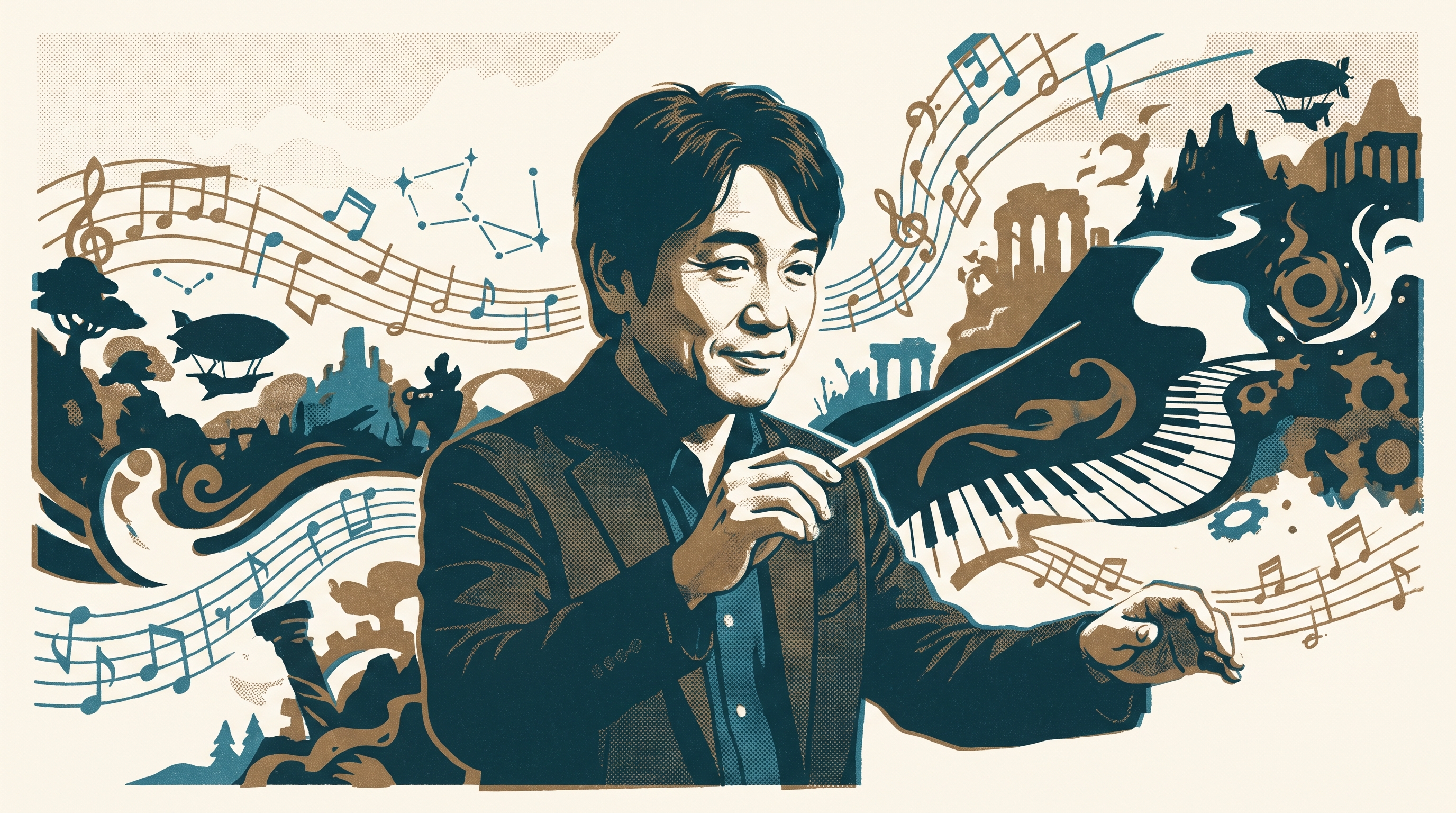
He wrote music for stories about journeys — because he believed the journey itself, not just the ending, should sound like it mattered.
About
Noriyuki Iwadare is a Japanese video game composer born April 28, 1964, in Matsumoto City, Nagano Prefecture. He is best known for his orchestral-style scores in role-playing games, notably the Lunar, Grandia, Langrisser, and Ace Attorney series. He co-founded the audio group Two Five in 1991 and became a freelance composer in 1993, working extensively with Game Arts and other studios. His work on Lunar: The Silver Star (1992) and Grandia (1997) pioneered emotionally resonant soundtracks that emphasized narrative depth, influencing the shift toward orchestral and melodic storytelling during the 1990s JRPG boom.
History
Noriyuki Iwadare was born on April 28, 1964, in Matsumoto City, Nagano Prefecture. He did not grow up with a home console. He has said in interviews that he did not even own a Famicom — a detail that stands out when you consider he became known for composing music for the very medium he had not spent his childhood playing. His path to game music did not come through gaming. It came through music itself, years of working in bands and teaching himself composition.
In the late 1980s, after years working on music for television programs, radio, and Tokyo Disney Resort, Iwadare entered the game industry through a company called CUBE. He worked on sound conversion and arrangement — not yet writing original scores, but learning the constraints of hardware. In 1991, he co-founded Two Five, an audio group specializing in game sound, alongside Kenichi Okuma and Isao Mizoguchi. The group worked with multiple studios, and Iwadare began to establish a reputation as a dependable composer at companies like Toaplan, Masaya, and Game Arts.
His breakout work arrived in 1992 with Lunar: The Silver Star for the Sega CD. The Sega CD offered CD-quality audio — a significant leap from cartridge-based sound chips — and Iwadare used it to write an orchestral, melodic soundtrack that matched the emotional arc of the story. The music did not simply accompany the game; it shaped how the journey felt. Towns had gentle, nostalgic themes. Battles had urgency without overwhelming the player. The ending carried weight because the music had built to it across twenty hours. Lunar became one of the defining JRPGs of the early 1990s, and the music was a central reason why. Iwadare has said most people who know him first became aware of his work through Lunar, and the music attracted attention not just in Japan but around the world.
In 1993, Iwadare left CUBE and became a freelance composer. The move gave him independence, but it also meant each project required proving his worth again. In 1997, he composed the soundtrack for Grandia, a Game Arts title for the Sega Saturn and later PlayStation. The project came to him by chance — he learned of the audition the night before it was held, wrote a song overnight, and was selected among five candidates. For Grandia, he immersed himself in folk music from across the world, studying the characteristics of different countries and regions, since the game's scenario involved traveling the world. The result was a soundtrack that felt simultaneously grounded and expansive, supporting a narrative about exploration and wonder. That same year, he received the Best Music Award for his work with Game Arts.
Iwadare left Two Five in 1997 and has worked as a solo freelance composer ever since. Over the following decades, he continued to compose for RPGs and other games, including multiple entries in the Langrisser series and later the Ace Attorney series. He has repeatedly expressed a dream of hearing his game music performed live by orchestras — a dream he has realized several times, including the Gyakuten Meets Orchestra concerts in Japan and an appearance as a guest at the 11th Japan Expo in Paris in 2010.
His career is a quiet argument that you do not need to have grown up playing games to understand what they need. What you need is to understand people — how music shapes what they feel across time, how a melody can make a journey matter. Iwadare's music carries a distinct quality: it treats the player's experience as something worth honoring. That quality, built over three decades, is why his work continues to be remembered not as background sound but as part of the story itself.
Timeline & Works
Career milestones and all 4 games in the museum they worked on — in the order they happened.
- 1964 04
Born in Matsumoto City
Noriyuki Iwadare was born in Matsumoto City, Nagano Prefecture, Japan. He grew up without a home game console and taught himself music through bands and composition.
people - 1991
Co-founded Two Five
Co-founded Two Five, an audio group specializing in game sound, with Kenichi Okuma and Isao Mizoguchi. Established reputation as dependable composer at Toaplan, Masaya, and Game Arts.
people - 1991
- 1992
Lunar: The Silver Star
Composed the orchestral soundtrack for Lunar: The Silver Star (Sega CD). The music shaped how the journey felt, with themes matching the story's emotional arc. Became one of the defining JRPGs of the early 1990s.
product - 1993
Became freelance composer
Left CUBE and began working as a freelance composer. The move gave independence but required proving his worth with each new project.
people - 1996
- 1997
Grandia and Best Music Award
Composed the soundtrack for Grandia (Sega Saturn / PlayStation) after learning of audition the night before, writing a song overnight. Studied folk music from across the world to match the global journey narrative. Received Best Music Award for work with Game Arts. Left Two Five the same year to work as solo freelance composer.
milestone - 1997
- 2000
- 2010
Guest at Japan Expo Paris
Appeared as special guest at the 11th Japan Expo in Paris, France. Represented the global reach of his game music work.
milestone
Connections
- collaborated with game-arts (1991–present)
Iwadare worked extensively with Game Arts as a freelance composer, notably on the Lunar and Grandia series. Received Best Music Award for his work with the studio in 1997.
Explore the work
Each title has its own page — history, trivia, and collector's notes.
Dreamcast · 2000
Grandia II
Game Arts moved to Dreamcast and brought the battle system with them. The story …
Sega Saturn · 1997
Grandia
The battle system where canceling an enemy's cast felt like outsmarting them. Ga…
Sega Saturn · 1996
Lunar: Silver Star Story Complete
Working Designs localized it with a cloth map and a felt figurine. The game warr…
PC Engine / TurboGrafx-16 · 1991
Parasol Stars: The Story of Bubble Bobble III
Bub and Bob traded their bubbles for umbrellas — and then found out that an umbr…
Rooms their games live in
Sources
- Noriyuki Iwadare - Wikipedia — accessed 2026-06-19
- "I Didn't Even Have A NES" Admits Lunar, Grandia And Langrisser Composer Noriyuki Iwadare — accessed 2026-06-19
- Composer Noriyuki Iwadare Interview - RPGamer — accessed 2026-06-19
- Sega Stars: Noriyuki Iwadare – Sega-16 — accessed 2026-06-19
- Noriyuki Iwadare - Video Game Music Preservation Foundation Wiki — accessed 2026-06-19