developer
Team Andromeda
チームアンドロメダ
Japan
About
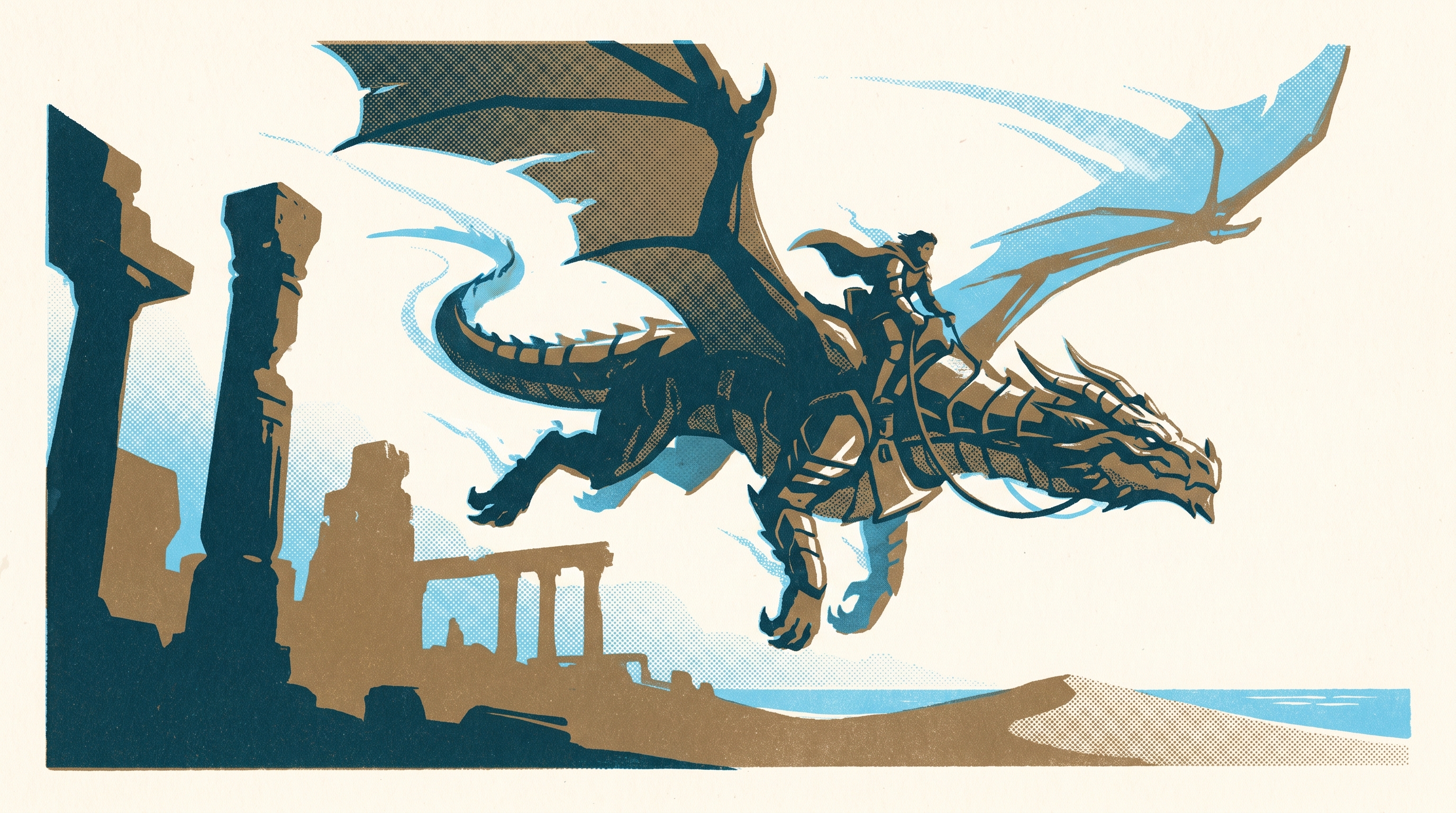
Team Andromeda was a Sega internal development team formed in early 1994, led by Yukio Futatsugi, responsible for the Panzer Dragoon trilogy on the Sega Saturn. Rather than using Sega's in-house development tools, the team built its own graphics library, mapping tools, and used SGI workstations with Softimage and OpenGL for 3D work. The team developed Panzer Dragoon (1995), Panzer Dragoon Zwei (1996), and Panzer Dragoon Saga (1998) — three of the most distinctive games in the Saturn library. Panzer Dragoon Saga, produced with a staff of approximately 40 and released in only 30,000 copies, is one of the rarest Sega Saturn games and is consistently cited as one of the greatest RPGs ever made. After Sega disbanded the team following the Saturn era, several members joined the new Sega studio Smilebit, where they continued working on the Panzer Dragoon franchise (Panzer Dragoon Orta, Xbox, 2002). Ryuta Ueda, a Team Andromeda member during the Zwei era, later worked as a lead artist on Jet Set Radio at Smilebit.
History
Team Andromeda was assembled by Sega in early 1994, led by director and game designer Yukio Futatsugi. The team's mandate was to create an original game for the Sega Saturn, Sega's upcoming 32-bit hardware. Futatsugi proposed the concept for Panzer Dragoon, a shooter set on a post-apocalyptic world populated by fused organic-mechanical creatures, and Sega approved the project and made him head of the newly formed team.
Rather than relying on Sega's official development infrastructure, Team Andromeda built its own. The team created its own graphics library and mapping tools, and conducted 3D work on Silicon Graphics workstations using OpenGL and Softimage — a professional 3D modeling package uncommon in game development at the time. This self-sufficiency allowed the team to achieve visual quality and a distinctive aesthetic that set Panzer Dragoon apart from other early Saturn games. The team worked independently of Sega's standard technical support pipelines.
Panzer Dragoon launched in March 1995 as a Saturn launch-window title. The game placed players on the back of a dragon in a rail-shooter framework, but the world design — organic bio-mechanical ruins, vast alien landscapes, and a mythology left largely unexplained — was unlike anything else in the Saturn library. Panzer Dragoon Zwei (January 1996) continued the story with a more developed system and greater narrative depth. The two games established the Panzer Dragoon series as the most visually and atmospherically distinctive original IP on the Saturn.
Panzer Dragoon Saga (1998) was the most ambitious project Team Andromeda attempted. Sega directed the team to produce an RPG to compete against Final Fantasy VII on PlayStation. The team split in two: roughly twenty members worked on Saga while another group continued with the Zwei engine on what became a cancelled fourth shooter. Saga staff numbered approximately forty at peak. The development was extraordinarily stressful; two staff members died during production, which Futatsugi publicly attributed to overwork. Sega produced Saga in an initial run of only 30,000 copies for Japan — a figure that almost immediately made the game rare — and the global release was similarly limited.
Panzer Dragoon Saga is consistently cited among the greatest RPGs ever produced, distinguished by its three-dimensional real-time combat system, its exceptional art direction — which extended the organic-mechanical aesthetic of the first two games into fully rendered 3D environments — and a narrative that achieved emotional resonance without conventional exposition. The limited production run means it commands significant prices among Saturn collectors. After the Saturn era ended, Sega disbanded Team Andromeda. Several members, including Futatsugi, moved to the new Sega studio Smilebit, which produced Panzer Dragoon Orta for the Xbox in 2002.
The games Team Andromeda created had long afterlives despite their scarcity. A remaster of Panzer Dragoon Orta was released in 2018 (Panzer Dragoon: Remake), and the original Panzer Dragoon was remade in 2020. Panzer Dragoon Saga remains one of the rarest games in Saturn's library, circulating in the second-hand market at prices that reflect the mismatch between its critical reputation and its production numbers. Team Andromeda's three titles represent one of the most concentrated achievements in Saturn game development — produced by a team that built its own tools, worked without standard support, and made games that looked and felt unlike anything else on the hardware.
Timeline & Works
Corporate milestones and all 3 games in the museum this studio developed — in the order they happened.
- 1994
Team Andromeda formed at Sega
Sega assembles Team Andromeda in early 1994 under Yukio Futatsugi to develop the Panzer Dragoon concept for the upcoming Saturn hardware.
founding - 1995
Panzer Dragoon — Saturn launch window
Panzer Dragoon launches in March 1995, delivering rail-shooting action and a bio-mechanical world aesthetic unlike anything else on the Saturn.
product - 1995
- 1996
Panzer Dragoon Zwei
Panzer Dragoon Zwei expands the first game's world and mechanics, further developing the franchise's distinctive aesthetic.
product - 1996
- 1998
Panzer Dragoon Saga — 30,000 copies, infinite reputation
Panzer Dragoon Saga launches with only 30,000 copies produced for Japan. Two staff members died during development. The game is consistently cited as one of the greatest RPGs ever made.
product - 1998
Team Andromeda disbanded
After Panzer Dragoon Saga, Sega disbands Team Andromeda. Many members move to the new studio Smilebit.
milestone - 1998
- 2002
Panzer Dragoon Orta — continuation at Smilebit
Former Team Andromeda members at Smilebit release Panzer Dragoon Orta for Xbox, continuing the franchise into the next generation.
product
Rooms their games live in
Sources
- Team Andromeda — Panzer Dragoon Wiki — accessed 2026-06-11
- Panzer Dragoon — Wikipedia — accessed 2026-06-11
- Panzer Dragoon Saga — Wikipedia — accessed 2026-06-11
- How Panzer Dragoon Defined The Sega Saturn Era — Kotaku — accessed 2026-06-11