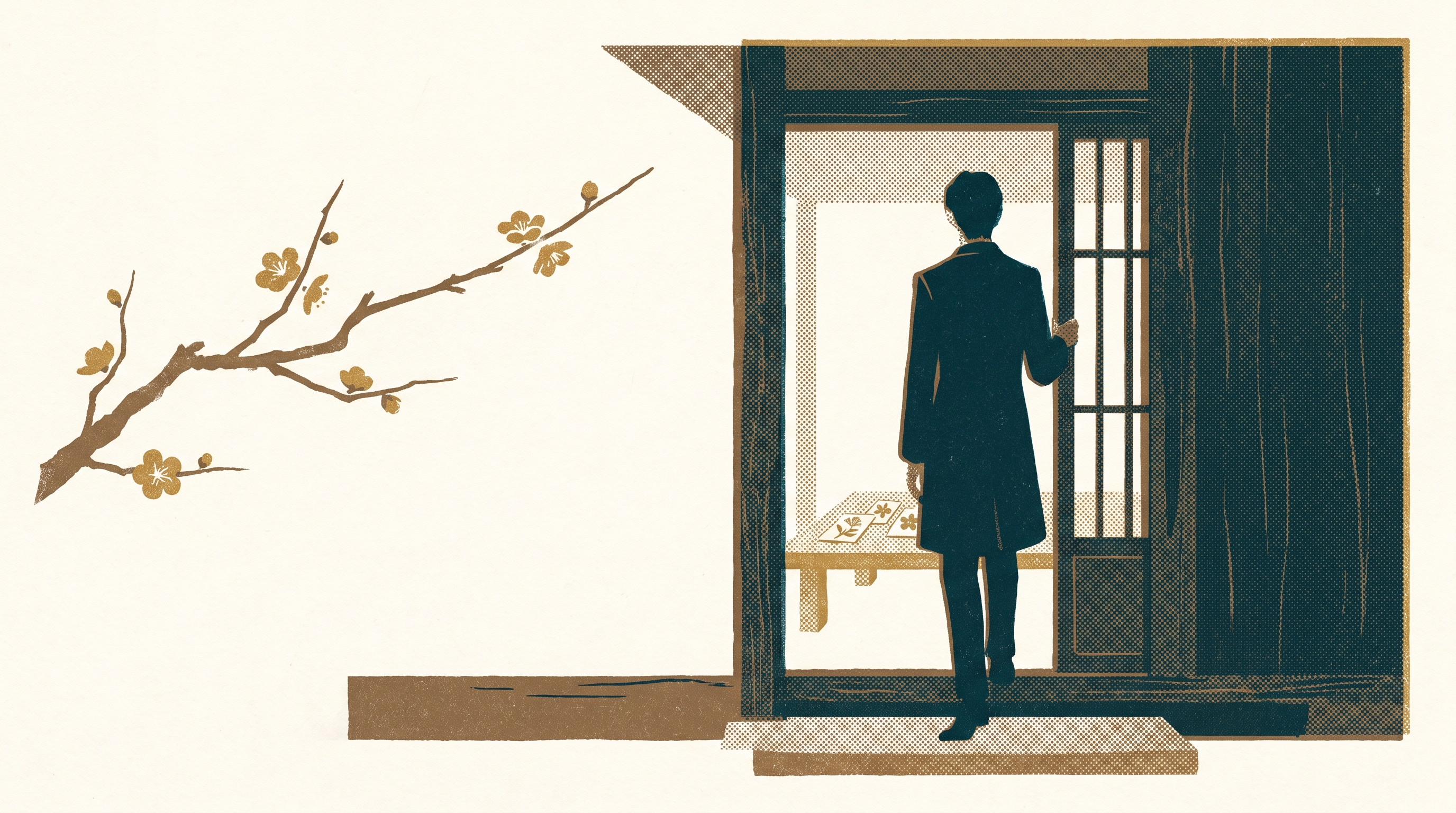
In the winter of 1948, Hiroshi Yamauchi was living in Tokyo. His grandfather had given him a house in Shibuya to use while he studied at Waseda University. He was twenty-one years old and, by most accounts, not studying very hard. He was doing what young men with some freedom and no pressing obligations tend to do. He was enjoying himself.
The news from Kyoto arrived in early February 1949. His grandfather, Sekiryo Yamauchi, had collapsed. He died on February 2, 1949. He was sixty-five years old. The company he had built — a small playing-card manufacturer called Nintendo — was suddenly without a president.
Sekiryo Yamauchi had run Nintendo for more than two decades after taking it over from his father-in-law, the founder Fusajiro Yamauchi. He had survived the wartime years, when playing cards were considered a luxury and the company had nearly nothing. He had held it together. And now he was gone, and the family line ran through Hiroshi — whose own father, Keshijiro, had abandoned the family in Hiroshi's childhood and was not coming back.
Between February and April, there is a gap in the record. Hiroshi Yamauchi remained in Tokyo for some weeks after his grandfather's death. What he thought during that time, what arrangements were made, what conversations happened — this is not documented. What is known is that he agreed to return. And that he set a condition before he did.
On April 25, 1949, Hiroshi Yamauchi became the third president of Nintendo. He was twenty-one years old. The date is recorded.
Before accepting, he had stated his terms. He was reported to have said, in effect: the only member of the Yamauchi family in this company will be me. All relatives currently employed at Nintendo were to be removed. The condition was accepted. The relatives left. Whether this was ambition, self-protection, or something else, the sources do not say. He was twenty-one years old when he said it.
Among the long-serving employees, a mood spread through the company. Some of them said — to each other, in the way people speak when they are uncertain — that Nintendo was finished. That a young man with no experience had been handed something he could not hold. One version of this story places it as an open comment. Another places it as a murmur. Either way, the company continued.
Hiroshi Yamauchi ran Nintendo for fifty-three years. In 1953, the company introduced Japan's first plastic playing cards. In 1965, he hired a maintenance worker named Gunpei Yokoi, who would go on to design the Game Boy. In 1977, he hired a graphic artist named Shigeru Miyamoto. In 1983, the Famicom was released. In 2002, he stepped down, naming Satoru Iwata as his successor. He was seventy-four years old when he left the building he had entered at twenty-one.
He died on September 19, 2013. He was eighty-five years old. The cause was pneumonia. His personal motto, which he cited in interviews across the years, came from a Chinese text of the Ming dynasty: 'In defeat, composure. In success, restraint.' He had carried it with him since long before anyone outside Kyoto had heard of Nintendo.