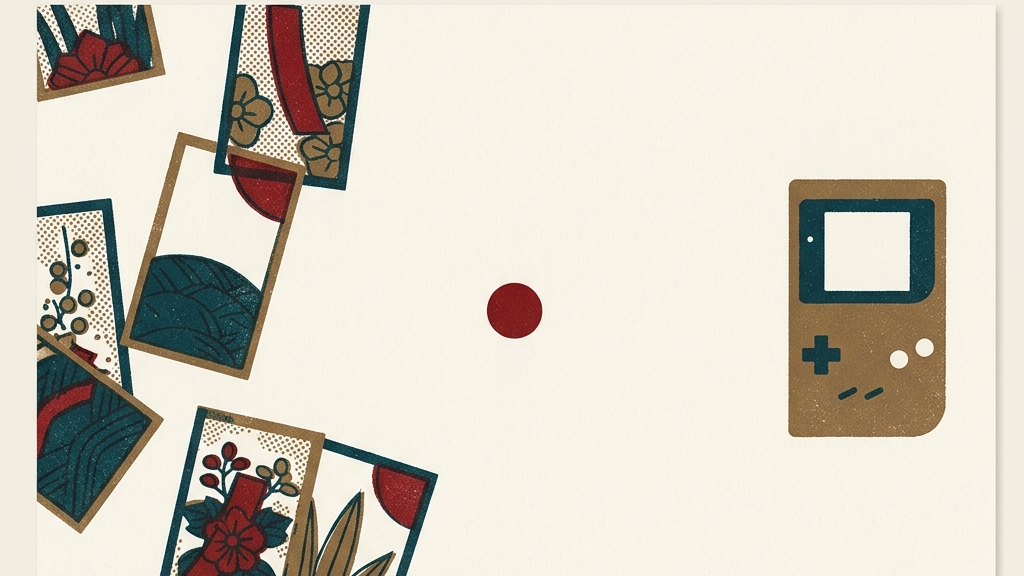
both
Nintendo
任天堂
Japan
About
Nintendo Co., Ltd. is a Japanese multinational video game company headquartered in Kyoto, Japan. Founded in 1889 as a playing card company, Nintendo entered the video game market in the 1970s. It is one of the world's largest video game companies by market capitalisation and has developed some of the best-selling video game consoles and franchises of all time.
History
Nintendo's origins trace back to September 23, 1889, when Fusajiro Yamauchi founded a small workshop in Shimogyo Ward, Kyoto, to manufacture hanafuda — traditional Japanese flower cards used in gambling games. The company was named Nintendo Koppai. Following the prohibition of many gambling formats in Japan in 1882, hanafuda remained legal, and demand for the cards was steady enough to sustain a modest craftsman operation. Yamauchi built his reputation on high-quality handmade cards, selling them to teahouses and through distributors across the Kansai region. By the early twentieth century the business had grown sufficiently to warrant expansion beyond its founding product.
In 1902 Nintendo Koppai became the first Japanese company to manufacture Western-style playing cards, opening a new commercial channel at a time when card games of European origin were gaining popularity in Japan. The move demonstrated the organizational flexibility that would later become a hallmark of the company. Fusajiro Yamauchi retired in 1929, and leadership passed to his son-in-law Sekiryo Kaneda — who subsequently took the Yamauchi surname — making him the second-generation president. A distribution subsidiary, Marufuku Co., Ltd., was established in 1947. In 1948 and 1949 Sekiryo Yamauchi suffered a stroke and was forced to retire; his grandson Hiroshi Yamauchi, then twenty-one years old and still enrolled at Waseda University, was recalled from his studies to inherit the company. On April 25, 1949, Hiroshi Yamauchi became the third president of Nintendo.
Under Hiroshi Yamauchi the company was renamed Nintendo Playing Card Co., Ltd. in 1951, and in 1953 it became the first Japanese manufacturer to produce plastic playing cards at scale, sharply reducing production costs and broadening the consumer market. In 1963 the company adopted its current name, Nintendo Co., Ltd., and began diversifying into toys. Two years later, in 1965, Gunpei Yokoi joined the company in a maintenance role on the playing-card production line. Yokoi's inventive curiosity attracted Yamauchi's attention; encouraged to develop products, he created the Ultra Hand in 1966, an extendable mechanical arm toy that sold in large numbers and prompted Nintendo to expand its Uji manufacturing facility in 1968. The Love Tester followed in 1969, performing well in both domestic and export markets and opening Nintendo's first sustained international sales channels.
Nintendo entered the electronic game hardware business in June 1977 with the Color TV-Game 6, a Pong-style home console produced in a joint venture with Mitsubishi Electric and incorporating a license from Magnavox. The Color TV-Game 15 followed in the same year; the two variants together sold more than three million units. It was for this product line that a young industrial design graduate named Shigeru Miyamoto, who had joined the company in 1977 as an apprentice in the planning department, received his first significant assignment: designing the casings for the Color TV-Game series. In April 1980 Nintendo of America was incorporated in New York City, with Minoru Arakawa — son-in-law of Hiroshi Yamauchi — serving as its first president. Later that same month, on April 28, 1980, Nintendo launched the Game & Watch, a series of handheld LCD games designed by Yokoi; the Ball unit was the first title, and the series ultimately sold approximately 43.4 million units across its run.
The Family Computer, known outside Japan as the Nintendo Entertainment System, was released in Japan on July 15, 1983, at a price of ¥14,800. It arrived in North American test markets in New York on October 18, 1985, with full national rollout during 1986 — sources differ on whether the nationwide launch was completed in February or September of that year. The NES revitalized a retail video game market that had contracted sharply in North America following the industry crash of 1983. The Famicom Disk System launched in Japan on February 21, 1986, alongside The Legend of Zelda. Combined worldwide sales of the Famicom and NES reached 61.91 million units. The Game Boy, designed by Yokoi and Satoru Okada, was released in Japan on April 21, 1989, and together with the Game Boy Color it accumulated 118.69 million units sold globally.
The Super Famicom launched in Japan on November 21, 1990 at ¥25,000, with its initial print of 300,000 units selling out within hours; it reached North America as the Super NES between August and September 1991. The Virtual Boy, developed by Yokoi's Research & Development 1 division, launched in Japan on July 21, 1995, but sold only approximately 770,000 units before being discontinued. Gunpei Yokoi left Nintendo in August 1996 after thirty-one years with the company; Nintendo's official position does not attribute his departure to the Virtual Boy's commercial failure. Yokoi died on October 4, 1997, in a traffic accident on the Hokuriku Expressway at the age of fifty-six. NINTENDO 64 launched in Japan on June 21, 1996, with its initial 300,000 units selling out immediately; cumulative sales reached 32.92 million units.
In May 2002 Hiroshi Yamauchi retired after fifty-three years as president, and Satoru Iwata became the fourth president — the first from outside the Yamauchi family. Under Iwata, Nintendo pursued what it called 'blue ocean' strategy: designing hardware and software for players who did not consider themselves gamers. The Nintendo DS launched in North America on November 21, 2004 — Nintendo's first hardware debut outside Japan — followed by Japan on December 2; cumulative sales reached 154 million units. The Wii launched in North America on November 19, 2006, selling 101.63 million units lifetime. The Nintendo 3DS (2011), Wii U (2012), and Nintendo Switch (2017) followed. The 3DS was reduced from $249.99 to $169.99 within six months of launch. The Wii U sold 13.56 million units, the lowest figure for any Nintendo home console. Iwata died on July 11, 2015, from a bile duct tumor at the age of fifty-five.
The Nintendo Switch, released simultaneously worldwide on March 3, 2017, became the fastest-selling console in Nintendo's history to that point, accumulating 150.86 million units as of December 31, 2024. Shuntaro Furukawa became the sixth president in June 2018. Nintendo Switch 2 launched globally on June 5, 2025, selling 3.5 million units in its first four days — the fastest opening for any Nintendo hardware — and reaching 17.37 million units by the end of December 2025. Hiroshi Yamauchi died on September 19, 2013, at the age of eighty-five. The company that began manufacturing flower cards in a Kyoto workshop in 1889 had, over the course of 136 years, become one of the defining creative forces in global interactive entertainment, with cumulative hardware sales spanning from playing cards to platforms that connected hundreds of millions of players worldwide.
The hardware Yamauchi built is still out there — original, tested, shipped from Japan.
Shop authentic Nintendo hardware on eBay →Timeline & Works
Corporate milestones and all 38 games in the museum this studio developed — in the order they happened.
- 1889 09
Nintendo Koppai founded in Kyoto
Fusajiro Yamauchi begins manufacturing hanafuda flower cards in Shimogyo Ward, Kyoto, on September 23, 1889.
founding - 1902
Japan's first Western playing card manufacturer
Nintendo Koppai becomes the first Japanese company to manufacture Western-style playing cards.
product - 1949 04
Hiroshi Yamauchi becomes third president
Hiroshi Yamauchi, aged twenty-one and still a Waseda University student, is recalled to lead the company after his grandfather Sekiryo Yamauchi suffers a stroke. He is formally appointed president on April 25, 1949.
leadership - 1963
Renamed Nintendo Co., Ltd.; enters toy market
The company adopts its current name, Nintendo Co., Ltd., and begins diversifying beyond playing cards into the broader toy industry.
corporate - 1966
Ultra Hand — first major toy hit
Gunpei Yokoi, who joined Nintendo in 1965 as a maintenance worker, develops the Ultra Hand extension toy, which becomes a major commercial success and establishes Nintendo's toy R&D capability.
product - 1977 06
Color TV-Game 6 — first home console
Nintendo releases the Color TV-Game 6 in Japan on June 1, 1977, in a joint venture with Mitsubishi Electric using a Magnavox license. The Color TV-Game 15 follows in the same year; combined sales exceed three million units.
hardware - 1980 04
Game & Watch launched; Nintendo of America founded
Nintendo of America is incorporated in Manhattan on April 23, 1980, with Minoru Arakawa as president. Five days later, on April 28, the Game & Watch Ball unit launches, beginning a handheld series that will sell 43.4 million units.
hardware - 1983 07
Family Computer (Famicom) launched in Japan
The Family Computer is released in Japan on July 15, 1983, at ¥14,800. Combined worldwide sales of the Famicom and NES reach 61.91 million units.
hardware - 1983
- 1983
- 1984
- 1985 10
NES launches in North America
The Nintendo Entertainment System begins test-market sales in New York on October 18, 1985, with nationwide rollout in 1986. It revitalizes a North American game market that had collapsed after the 1983 crash.
hardware - 1985
- 1985
- 1986
- 1986
- 1986
- 1986
- 1987
- 1987
- 1988
- 1988
- 1988
- 1988
- 1989 04
Game Boy launched in Japan
The Game Boy, designed by Gunpei Yokoi and Satoru Okada, launches in Japan on April 21, 1989. Together with the Game Boy Color it accumulates 118.69 million units sold worldwide.
hardware - 1989
- 1990 11
Super Famicom launched in Japan
The Super Famicom launches in Japan on November 21, 1990 at ¥25,000. Its initial print of 300,000 units sells out within hours. The Super NES arrives in North America in 1991.
hardware - 1990
- 1992
- 1992
- 1992
- 1993
- 1994
- 1994
- 1995
- 1995
- 1996 06
NINTENDO 64 launched in Japan
NINTENDO 64 launches in Japan on June 21, 1996. Its initial 300,000 units sell out on the first day. Cumulative sales reach 32.92 million units.
hardware - 1996
- 1996
- 1996
- 1998
- 1998
- 1999
- 2000
- 2000
- 2002 05
Satoru Iwata becomes fourth president
Hiroshi Yamauchi retires in May 2002 after fifty-three years as president. Satoru Iwata succeeds him as the fourth president, the first from outside the Yamauchi family.
leadership - 2003
- 2004 11
Nintendo DS launches in North America first
The Nintendo DS launches in North America on November 21, 2004 — Nintendo's first hardware debut outside Japan — followed by Japan on December 2. Cumulative sales reach 154 million units.
hardware - 2004
- 2006 11
Wii launches worldwide
Wii launches in North America on November 19, 2006, followed by Japan on December 2 and Europe on December 8. Lifetime sales reach 101.63 million units.
hardware - 2015 07
Satoru Iwata passes away
Satoru Iwata dies on July 11, 2015, from a bile duct tumor at the age of fifty-five.
leadership - 2017 03
Nintendo Switch launches worldwide
Nintendo Switch is released simultaneously worldwide on March 3, 2017, accumulating 150.86 million units as of December 31, 2024.
hardware - 2018 06
Shuntaro Furukawa becomes sixth president
Shuntaro Furukawa is appointed the sixth president of Nintendo in June 2018.
leadership - 2025 06
Nintendo Switch 2 launches globally
Nintendo Switch 2 launches worldwide on June 5, 2025, selling 3.5 million units in its first four days — the fastest opening for any Nintendo hardware — and reaching 17.37 million units by the end of December 2025.
hardware
Also developed (release year to be confirmed)
Hardware
- Color TV-Game 6 / 15 1977JP3M units
Nintendo's first home video game console, developed in joint venture with Mitsubishi Electric using a Magnavox license.
- Game & Watch 1980WW43.4M units
Handheld LCD game series designed by Gunpei Yokoi; the foundation of Nintendo's portable gaming legacy.
- Family Computer / Nintendo Entertainment System 1983JP61.91M units
- Famicom Disk System 1986JP
- Game Boy 1989WW
Game Boy + Game Boy Color combined: 118.69 million units worldwide.
- Super Famicom / Super NES 1990JP
- Virtual Boy 1995JP0.77M units
Stereoscopic 3D console developed by Gunpei Yokoi's R&D1; discontinued after roughly 770,000 units.
- NINTENDO 64 1996JP32.92M units
- Game Boy Color 1998WW
- Game Boy Advance 2001JP81.51M units
Combined lifetime sales across original, SP, and Micro models.
- Nintendo GameCube 2001JP21.7M units
- Nintendo DS 2004NA154M units
Nintendo's first hardware released in North America before Japan.
- Wii 2006NA101.63M units
- Nintendo 3DS 2011JP75M units
- Wii U 2012NA13.56M units
Lowest-selling Nintendo home console.
- Nintendo Switch 2017WW150.86M units
Cumulative units as of December 31, 2024.
- Nintendo Switch 2 2025WW17.37M units
Cumulative units as of December 2025; fastest-selling Nintendo hardware on launch (3.5 million in first four days).
Connections
- subsidiary nintendo-ead (1983–2015)
Nintendo Entertainment Analysis & Development, Nintendo's primary first-party software studio from 1983 to 2015, produced the majority of Nintendo's flagship franchises.
- subsidiary nintendo-rd1 (1969–2005)
Nintendo Research & Development 1, founded under Gunpei Yokoi, was responsible for the Game & Watch, Game Boy, and Virtual Boy hardware lines.
- subsidiary retro-studios (1998–present)
Nintendo co-founded Retro Studios in 1998 and fully acquired it in May 2002, making it a wholly-owned first-party studio. Subsequent output includes the Metroid Prime series and Donkey Kong Country Returns.
- publisher of hal-laboratory (1984–present)
HAL Laboratory has maintained a close publishing relationship with Nintendo since 1984, producing the Kirby and EarthBound series among others.
- publisher of game-freak (1996–present)
Nintendo has published the mainline Pokémon RPG series developed by Game Freak since the original Game Boy titles in 1996.
- employed shigeru-miyamoto (1977–present)
Shigeru Miyamoto joined Nintendo in 1977 and created or co-created Mario, The Legend of Zelda, Donkey Kong, Pikmin, and other foundational franchises.
- employed koji-kondo (1984–present)
Koji Kondo joined Nintendo in 1984 and composed the soundtracks for the Super Mario Bros. and The Legend of Zelda series, among many others.
- employed gunpei-yokoi (1965–1996)
Gunpei Yokoi worked at Nintendo from 1965 to 1996, designing the Ultra Hand, Game & Watch, Game Boy, and Virtual Boy, and mentoring a generation of Nintendo designers.
- employed hiroshi-yamauchi (1949–2002)
Hiroshi Yamauchi was Nintendo's third president, serving from 1949 to 2002. He transformed a hanafuda playing-card maker into the dominant force in home video games, and commanded the Famicom into existence in 1981 — without ever playing a video game himself.
- employed genyo-takeda (1972–present)
Genyo Takeda joined Nintendo in 1972 and led the company's home-console hardware for four decades. His battery-backed save memory is what let games remember the player.
- employed yoshiaki-koizumi
Yoshiaki Koizumi is a Nintendo director and producer. He wrote the scenario for The Legend of Zelda: Link's Awakening (1993) and later produced Super Mario Odyssey (2017), which was directed by Kenta Motokura.
- employed yoshio-sakamoto (1982–present)
Yoshio Sakamoto joined Nintendo in 1982 and served as director and producer on the Metroid series and WarioWare, among other titles.
- collaborated with satoshi-tajiri (1996–present)
Satoshi Tajiri created Pokémon at Game Freak; Nintendo has published and collaborated closely on the franchise since its 1996 Game Boy debut.
Also connected to
- Nintendo Entertainment Analysis & Development parent-child company relationship (1983–2015) (reverse)
- Nintendo Software Technology parent-child company relationship (1998–) (reverse)
Rooms their games live in
Sources
- Nintendo official company history — accessed 2026-05-23
- Nintendo — Wikipedia (English) — accessed 2026-05-23
- History of Nintendo — Wikipedia — accessed 2026-05-23
- 任天堂 — Wikipedia (日本語) — accessed 2026-05-23
- Hiroshi Yamauchi — Wikipedia — accessed 2026-05-23
- Gunpei Yokoi — Wikipedia — accessed 2026-05-23
- Shigeru Miyamoto — Wikipedia — accessed 2026-05-23
- Satoru Iwata — Wikipedia — accessed 2026-05-23
- Nintendo IR — Hardware and Software Sales Units — accessed 2026-05-23