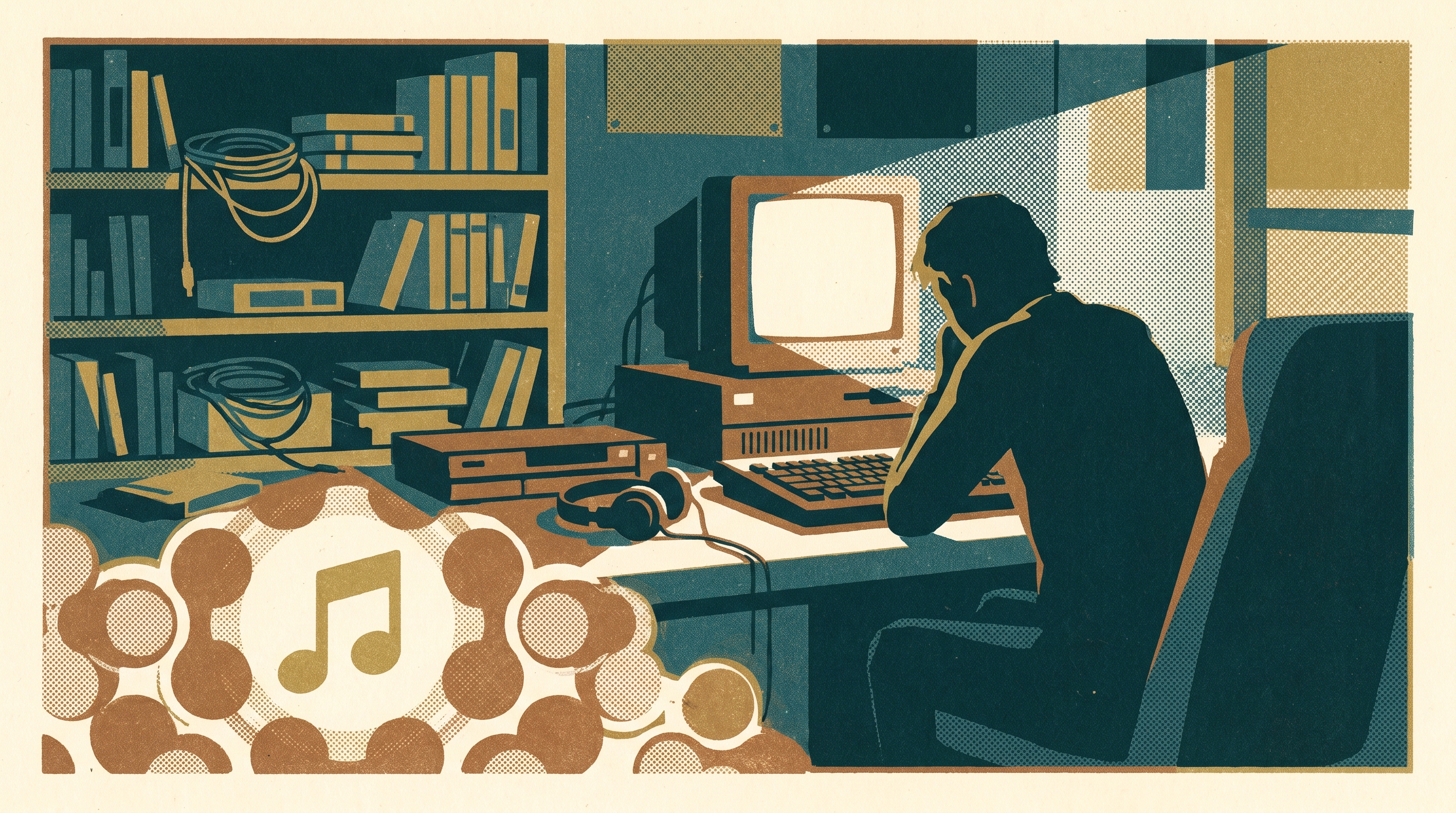
In 1992, a Game Boy game called X was released. It was a puzzle game — falling shapes, clearing lines, moving forward. There was a screen in the fourth mission where, if you did nothing for about forty seconds, a small melody played. Nineteen notes. Eight bars. Simple. Quiet. It was the first time anyone heard it.
Kazumi Totaka was born on August 23, 1967, in Tokyo. He studied music formally at Kunitachi College of Music, where he learned to play piano, vibraphone, guitar, and bass. He joined Nintendo in 1990, at age twenty-three, working as a sound composer for the Research & Development 1 Division. His first credited work was the soundtrack for X, released in 1992. That game was also the first place he left the melody.

Over the next thirty years, the same nineteen-note song appeared again and again — hidden in the games Totaka worked on. It was in Mario Paint, where clicking the letter O in the title screen triggered it. It was in The Legend of Zelda: Link's Awakening, audible if you waited long enough on a certain screen in Richard's Villa. It was in Pikmin 2, buried in a sound test menu. It was in Luigi's Mansion, faint on an in-game radio. It was in Animal Crossing: New Horizons, where K.K. Slider would hum it if you requested it.
The melody became known as 'Totaka's Song.' Players began hunting for it in every game he touched. Some found it quickly. Some took years. Some games, people are still searching. The song itself remained constant — never elaborated on, never varied, never explained. Just nineteen notes, left somewhere, waiting.
Totaka did not only compose music. While working on Yoshi's Story in 1997, he recorded the voice samples that would become Yoshi's voice — the small chirps and calls that players now recognize instantly. Those sounds have been used in dozens of games since. He also voiced Captain Olimar in the Pikmin series. He directed Wii Music in 2008. He became the sound director for the entire Animal Crossing series, overseeing how music moved through time and seasons and player actions in a world where silence is as important as sound.

In a 2020 interview about Animal Crossing: New Horizons, Totaka explained how he approached music for the series. The goal was not to dominate the player's attention, but to sit beside it. The music changes by the hour — different arrangements for morning, afternoon, evening. It is designed to be heard over and over without becoming intrusive. 'The music is there to support the player's life in the game,' he said. 'It should feel natural.'
Totaka never announced when he placed his song in a game. He never confirmed all the locations. He never explained why he started doing it, or whether he still does. The melody is not signed. It does not draw attention to itself. You only hear it if you are patient, or lucky, or looking for it. And once you know it is there, you start listening differently. You start wondering — is it in this one? Did I miss it?
The question the melody asks is not 'Did you find me?' It is quieter than that. It asks: in the thing you are making right now — the work no one else will see the same way you do — is there a part of it that is only yours? Not for recognition. Not to be discovered. Just because it matters to you that it is there.