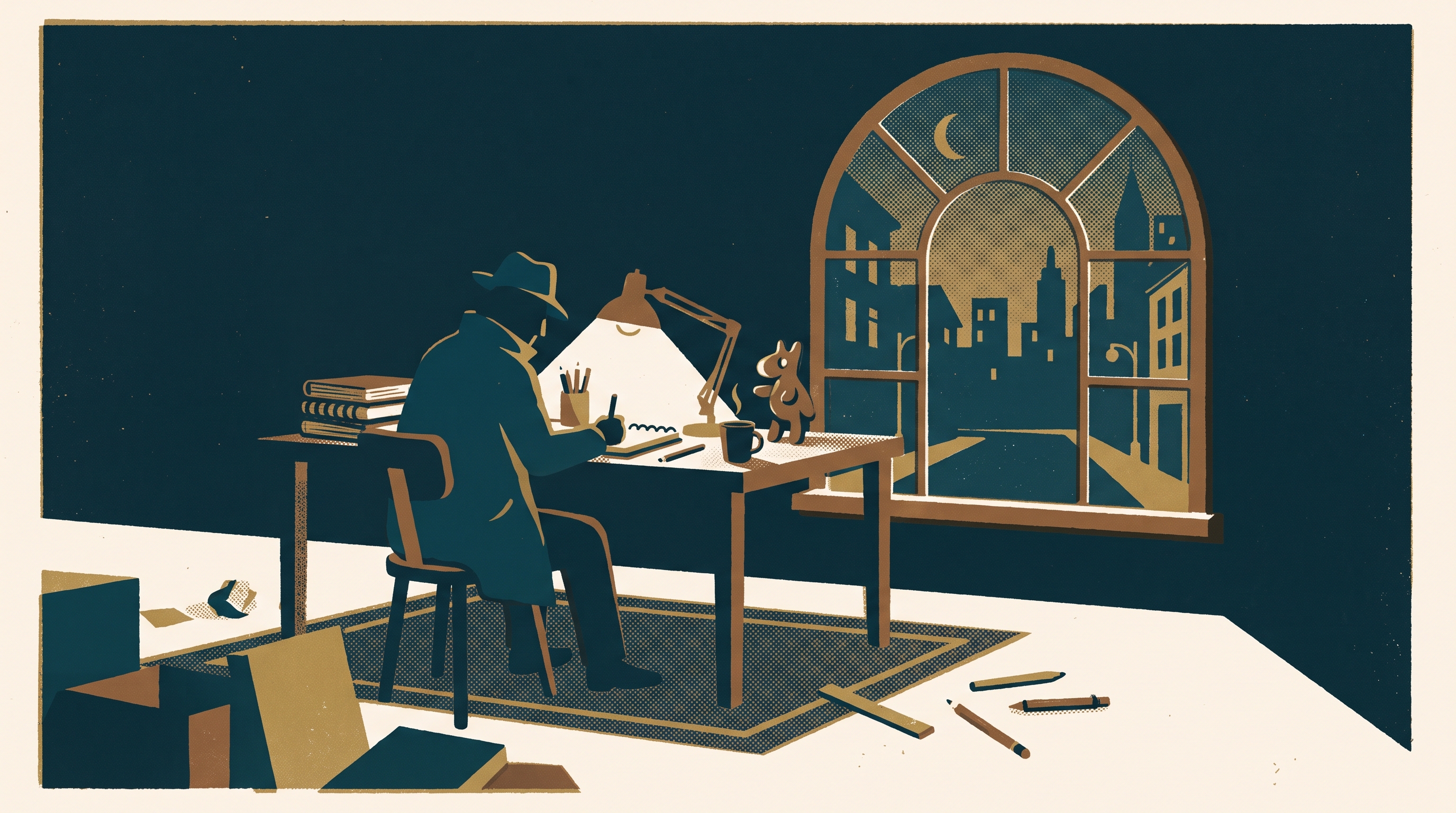
In 1981, a teenage illustrator named Ken Sugimori walked into a dōjinshi shop in Tokyo and saw a hand-stapled magazine about arcade games. It was called Game Freak. It was fourteen pages long and sold for two hundred yen. The author was another teenager named Satoshi Tajiri. Sugimori wrote him a letter. By the second issue, Sugimori was drawing the pictures.
The magazine was not a business. Tajiri wrote about the games the mainstream press ignored — secret techniques, hidden patterns, the things you could only learn by spending hours at a single cabinet. Sugimori illustrated those words. The fanzine sold a few thousand copies through game shops and by mail. The highest-selling issue, on Xevious, moved over ten thousand. It was enough to keep printing.
In 1989, Tajiri incorporated a company with the same name as the magazine. Sugimori was a co-founder. The first commercial project, Quinty, earned enough royalties to fund the company. Game Freak Inc. opened an office with second-hand desks and a single Famicom development kit. The staff rarely exceeded a dozen. Sugimori was the visual center.
The project Tajiri wanted to make — a game about catching and trading creatures through a link cable — was not something publishers understood. Development began around 1990 and continued for six years. The team worked on contract projects to pay rent. Sugimori's job in those years was to turn ideas into shapes. Tajiri and the other designers — Atsuko Nishida, Motofumi Fujiwara, Shigeki Morimoto, Satoshi Ota — would sketch rough concepts. Each had a specialty: cute, weird, mechanical, biological. They designed over three hundred creatures. The team chose one hundred fifty-one.
Sugimori's task was to take those hundred fifty-one sketches from five or six people and make them look like they came from one world. He redrew every creature in watercolor. He standardized proportions, sharpened silhouettes, encoded personality into posture and eyes. He made Pikachu rounder. He made Charizard stand taller. He made Mewtwo cold. The constraint of the Game Boy's blurry monochrome screen forced him to work in extremes — if the shape was not clear at two inches, it did not exist. The clarity he built into those designs at that scale is still the template.

Pokémon Red and Green released on February 27, 1996. Critics expected it to fail. The Game Boy was old hardware by then. The graphics were small and simple. But the game spread through schoolyards by word of mouth and link cable. It sold slowly at first, then faster, then it became something no one had seen before — a cultural system, not just a product. Sugimori became the art director of a franchise that would eventually gross more than any other media property in history.
As the series grew and the creature count passed one thousand, Sugimori oversaw a team. But the standard he set in those six years — that a creature must read as both an animal and a character a child would want, that its silhouette must survive a two-inch screen, that biology and whimsy are not opposites — remained in place. The Game Freak fanzine had sold for two hundred yen and been stapled by hand. The work of drawing it had led here.

Sugimori once said his process is to sketch, trace, refine, and draw the character many times until he is satisfied. He draws inspiration from animals in aquariums and zoos. He does not talk much in interviews. The work is in the pictures. One hundred fifty-one creatures, each given a final face by the same hand so they would belong to the same world. That was the assignment. He finished it.