developer
HAL Laboratory
株式会社ハル研究所
Japan
About
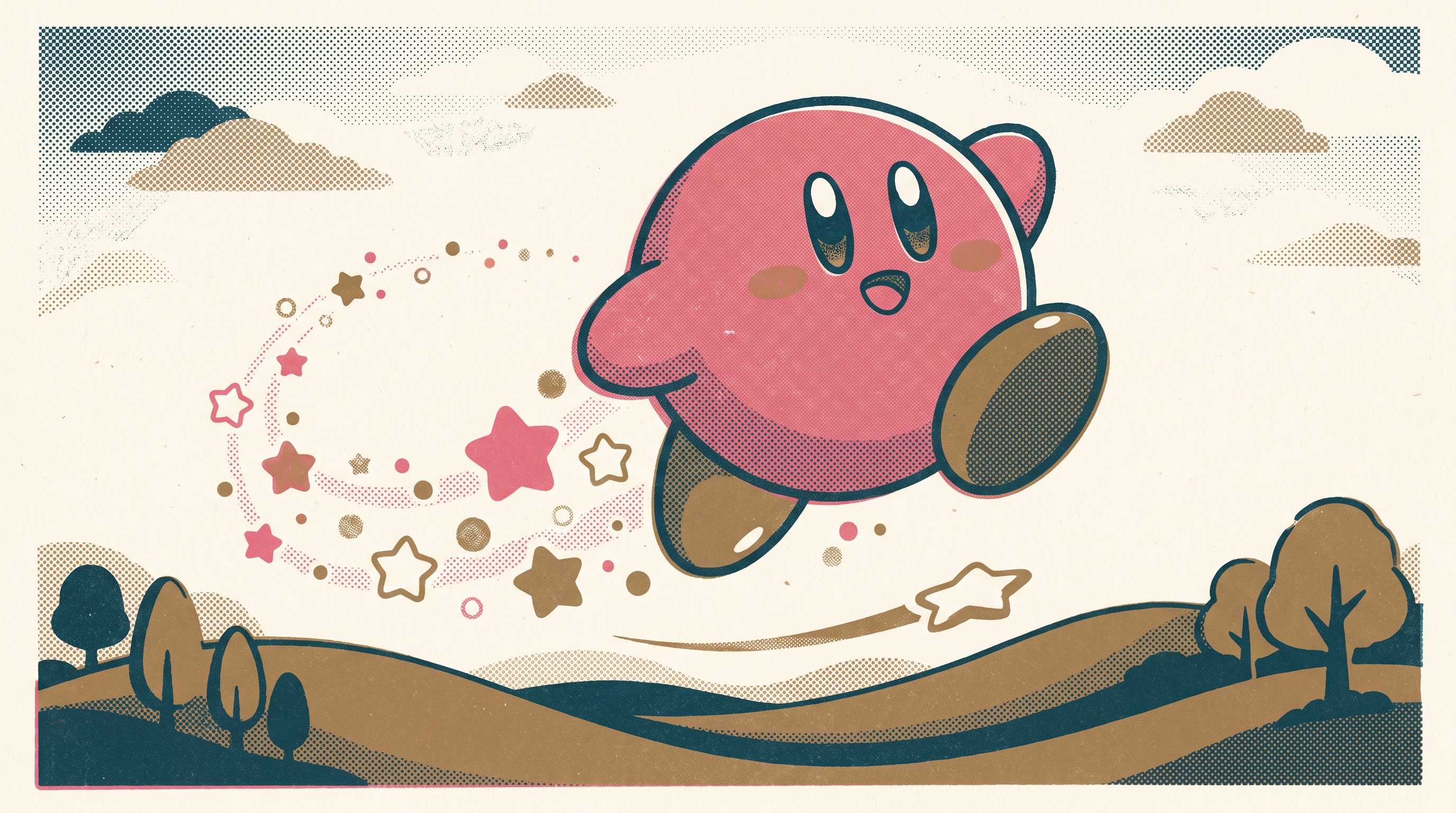
HAL Laboratory, Inc. is a Japanese video game developer established in 1980. It is best known for developing the Kirby and Super Smash Bros. series. Super Smash Bros. Melee (2001) was developed by HAL Laboratory under the direction of Masahiro Sakurai and became the best-selling title on the Nintendo GameCube.
History
HAL Laboratory's story begins on February 21, 1980, in the Kanda district of Chiyoda, Tokyo — born not from a corporate boardroom, but from a chance encounter at a Seibu Department Store computer corner in Ikebukuro. A store clerk noticed a group of university students who kept coming back to tinker with the machines on display, and that spark of mutual recognition led to the founding of a company. Backed by Iwasaki Technical Engineering, the nascent studio launched with a single full-time employee and six part-time workers from a single room in an Akihabara apartment building. The company's name, 'HAL,' was chosen with deliberate ambition: shift each letter of 'IBM' one step back in the alphabet, and you get H, A, L — a quiet declaration that HAL intended to be one step ahead of the industry giant. The name also echoed HAL 9000, the iconic computer from Stanley Kubrick's 2001: A Space Odyssey, lending the young studio an air of technological mystique.
Among those early volunteers was Satoru Iwata, then a student at the Tokyo Institute of Technology, who joined as a part-time programmer. After graduating in 1982, he became HAL's fifth full-time employee — a fact that would prove consequential for the entire history of Japanese game development. HAL's initial work was largely contract programming, building software for early personal computers at a time when the Japanese games industry was still finding its footing. The studio's first breakthrough came through a connection to Nintendo: via its relationship with Iwasaki Technical Engineering, HAL was engaged to assist with development on first-party Famicom titles including Pinball and Golf, giving the young company its first taste of console game production and its first sustained relationship with the company that would define its future.
Through the second half of the 1980s, HAL grew steadily, building a reputation as a technically capable studio willing to push hardware boundaries. The company's headcount climbed, ambitions expanded, and in 1989 a young new hire named Masahiro Sakurai walked through the door. Sakurai was nineteen years old and brimming with ideas; he would go on to conceive and design two of the most beloved franchises in Nintendo history. The late 1980s also saw HAL contributing to an increasingly wide range of projects, deepening its ties with Nintendo while simultaneously developing its own creative voice. It was a period of optimism — perhaps too much optimism.
The early 1990s brought expansion and disaster in almost equal measure. By 1990, HAL's staff had grown to roughly ninety people, and in April 1991 the company completed construction of a dedicated development center in Yamanashi Prefecture, largely financed through bank loans. That same year, HAL released Metal Slader Glory on the Famicom — a four-years-in-the-making, eight-megabit visual novel that represented the largest Famicom cartridge ever produced at that point. The timing could not have been worse. The Super Famicom had already begun reshaping the market, and consumers had little appetite for the aging hardware. The game could not even recoup its advertising costs, and a second production run was out of the question. The debt service on the Yamanashi facility compounded the losses. On June 22, 1992, HAL Laboratory filed for wagi — a form of civil rehabilitation — with total liabilities of approximately five billion yen. It was the first bankruptcy among Nintendo's third-party development partners.
Nintendo's president Hiroshi Yamauchi agreed to support HAL's recovery, but his terms were precise: Satoru Iwata must become president. Iwata was thirty-three years old. He accepted the condition without hesitation, took the chair in March 1993, drew up a six-year repayment plan, and then got to work. His approach to the crisis was characteristically direct: he imposed a strict internal policy that HAL would only develop titles expected to reach one million units in sales — no passion projects, no experimental detours until the books were clean. The discipline was severe, but it produced results. HAL's salvation came, in part, from a pink sphere. Kirby's Dream Land, which Sakurai had conceived at the age of nineteen and completed by the time of its April 1992 Game Boy launch, — just weeks before the bankruptcy filing. Its sequel, Kirby's Adventure for the Famicom, arrived in 1993 and sold more than 1.75 million copies worldwide, becoming exactly the kind of commercial anchor the company needed. Iwata kept his promise: the debt was fully repaid in 1999, on schedule.
The years between the bankruptcy and the debt's repayment were also the years in which HAL reached genuine creative maturity. Iwata and Sakurai collaborated on MOTHER 2: Giygas Strikes Back (released internationally as EarthBound) in 1994, co-developed with Ape Inc. — a project where Iwata famously stepped in to rescue a foundering codebase and rebuilt critical sections of the program in a matter of months. Then, in 1998, the two men embarked on perhaps their most audacious project: working nights and weekends, entirely in secret, they built a prototype fighting game using no Nintendo IP at all, calling it Dragon King: The Fighting Game. When they finally showed it to Nintendo management, the response was immediate. With Nintendo characters added to the roster, the game became Super Smash Bros., released in Japan on January 21, 1999 — a million-seller at home and the beginning of one of gaming's most enduring franchises.
By the turn of the millennium, HAL's two defining figures had both moved on from the studio, carrying its legacy into new institutions. Satoru Iwata transferred to Nintendo in 2000 as head of corporate planning, and in May 2002 he became the company's fourth president — the first person outside the Yamauchi family to hold the position. Masahiro Sakurai departed HAL in August 2003, unwilling to spend the rest of his career producing sequels on demand, and eventually established his own company, Sora Ltd., in September 2005. The losses were immense in terms of talent, but HAL had by this point built something durable: a pipeline of franchises, a skilled second generation of creators, and a relationship with Nintendo that had grown from contractor to trusted creative partner. Super Smash Bros. Melee, released for the GameCube in 2001 and the last Smash title developed directly by HAL, sold more than seven million copies — the highest-selling GameCube software of all time.
In the decades since, HAL has continued to define its identity through the Kirby franchise above all others. Shinya Kumazaki, who joined the company in 2002 and became a director in 2021, has led the series into bold new territory: Kirby and the Forgotten Land (2022) marked the franchise's first fully three-dimensional adventure and sold approximately eight million copies, the best-performing entry in the series' history. HAL also participates in the broader Nintendo ecosystem through its joint venture Warpstar, Inc. — established in July 2001 to manage Kirby's global merchandising — though in April 2025 Nintendo acquired HAL's fifty-percent stake to make Warpstar a wholly owned subsidiary, subsequently renamed Nintendo Stars Inc. in August 2025. Today, operating from its Yamanashi development center and from within Nintendo's Tokyo building, HAL Laboratory employs around 242 people. The studio that nearly vanished under a mountain of debt in 1992 has become one of the most stable and beloved creative institutions in Japanese game development — a testament to the choices made by the people who refused to let it die.
Timeline & Works
Corporate milestones and all 21 games in the museum this studio developed — in the order they happened.
- 1980 02
HAL Laboratory Founded
HAL Laboratory is established on February 21 in Kanda, Chiyoda, Tokyo, with backing from Iwasaki Technical Engineering. Operations begin from a single apartment room in Akihabara with one full-time employee and six part-time staff.
founding - 1982
Satoru Iwata Joins as Fifth Full-Time Employee
Satoru Iwata, having joined as a part-time programmer while studying at the Tokyo Institute of Technology, graduates and joins HAL as its fifth full-time employee.
leadership - 1984
Partnership with Nintendo Begins
Through its connection with Iwasaki Technical Engineering, HAL begins working with Nintendo on Famicom first-party titles including Pinball and Golf, forging the relationship that will define the studio's future.
collaboration - 1986
- 1987
- 1987
- 1988
- 1989
Masahiro Sakurai Joins HAL Laboratory
Masahiro Sakurai joins HAL Laboratory at the age of nineteen, beginning a tenure that will see him conceive and design both the Kirby franchise and the original Super Smash Bros.
leadership - 1989
- 1991 04
Yamanashi Development Center Opens
HAL completes construction of a dedicated development center in Yamanashi Prefecture, largely financed through bank loans — a capital investment that will contribute to the financial crisis that follows.
corporate - 1991 08
Metal Slader Glory Released — commercial failure
Metal Slader Glory launches on the Famicom on August 30, a four-year project using the largest Famicom cartridge ever produced at the time. Released during the Super Famicom transition era, it fails to recoup even its advertising costs.
product - 1992 04
Kirby's Dream Land Released on Game Boy
Kirby's Dream Land launches on the Game Boy on April 27. Masahiro Sakurai had conceived the character at nineteen and completed the game by the time of its release, aged twenty. Built around the principle that games should be accessible to beginners, it introduces a character who will sustain the studio for decades.
product - 1992 06
HAL Files for Civil Rehabilitation — ¥5 billion in debt
On June 22, HAL Laboratory files for wagi (civil rehabilitation) with total liabilities of approximately five billion yen — the first Nintendo third-party developer to go bankrupt. Nintendo's president Hiroshi Yamauchi agrees to support the company's recovery under the condition that Satoru Iwata becomes president.
corporate - 1992
- 1993
Kirby's Adventure Sells 1.75 Million Copies Worldwide
Kirby's Adventure (Hoshi no Kirby: Yume no Izumi no Monogatari) launches on the Famicom and sells more than 1.75 million copies worldwide, becoming a cornerstone of HAL's financial recovery and introducing the series' iconic Copy Ability for the first time.
product - 1993 03
Satoru Iwata Becomes President at Age 33
Satoru Iwata assumes the presidency of HAL Laboratory in March at the age of thirty-three. He immediately sets a six-year debt repayment plan and institutes a policy of only developing titles projected to sell one million copies.
leadership - 1993
- 1993
- 1994
MOTHER 2 Co-Developed with Ape Inc.
MOTHER 2: Giygas Strikes Back is released for the Super Famicom, co-developed by HAL and Ape Inc. with Satoru Iwata as producer. Iwata is credited with rescuing the project by rebuilding critical sections of the codebase in a matter of months when development had stalled.
product - 1994
- 1994
- 1995
- 1995
- 1996
- 1996
- 1997
- 1997
- 1998
Smash Bros. Prototype Created in Secret
Working nights and weekends outside of their regular duties, Masahiro Sakurai and Satoru Iwata secretly build a prototype fighting game using no Nintendo IP, internally titled Dragon King: The Fighting Game. When shown to Nintendo management, the project is greenlit with Nintendo characters added to the roster.
product - 1999
HAL Fully Repays Its Debts — on schedule
Satoru Iwata fulfills his six-year repayment plan, clearing all debts from the 1992 crisis on schedule.
corporate - 1999 01
Super Smash Bros. Released in Japan
Super Smash Bros. launches in Japan on January 21, developed by HAL Laboratory. It becomes a million-seller domestically and launches one of gaming's most enduring franchises.
product - 1999
- 1999
- 2000
- 2001
Super Smash Bros. Melee Released; Warpstar Inc. Founded
Super Smash Bros. Melee launches for the GameCube, becoming the console's best-selling software with over seven million copies — the last Smash title developed directly by HAL. In July 2001, HAL and Nintendo co-found Warpstar, Inc. as a 50/50 joint venture to manage Kirby's global merchandising.
product - 2001
- 2002 05
Satoru Iwata Becomes Nintendo's Fourth President
Satoru Iwata, who transferred to Nintendo in 2000 as head of corporate planning, is named the company's fourth president — the first person outside the Yamauchi family to hold the position.
leadership - 2003 08
Masahiro Sakurai Leaves HAL Laboratory
Masahiro Sakurai departs HAL Laboratory on August 5, citing the pressure to perpetually produce sequels. He later establishes his own independent studio, Sora Ltd., in September 2005.
leadership - 2003
- 2022
Kirby and the Forgotten Land — series-best 8 million copies
Kirby and the Forgotten Land launches as the series' first fully three-dimensional adventure, selling approximately eight million copies — the best-performing entry in Kirby series history.
product - 2025 04
Nintendo Acquires Warpstar; Renamed Nintendo Stars Inc.
Nintendo acquires HAL's fifty-percent stake in Warpstar, Inc. in April 2025, making it a wholly owned subsidiary. The company is renamed Nintendo Stars Inc. (任天堂スターズ株式会社) on August 27, 2025.
corporate
Connections
- parent nintendo (1993–present)
Nintendo provided financial support during HAL's 1992 bankruptcy crisis under the condition that Satoru Iwata become president, establishing a deep operational relationship that has defined HAL's creative and business direction ever since.
- collaborated with nintendo-ead (1984–present)
HAL collaborated closely with Nintendo EAD on Famicom first-party titles in the mid-1980s and maintained ongoing creative cooperation across Kirby and Smash Bros. development in the following decades.
Rooms their games live in
Sources
- HAL Laboratory Official Company History
- HAL Laboratory — Wikipedia (English)
- ハル研究所 — Wikipedia(日本語版)
- The Famicom Failure That Almost Bankrupted HAL but Shaped Nintendo's Future
- Metal Slader Glory — Wikipedia
- Satoru Iwata — Wikipedia
- Masahiro Sakurai — Wikipedia
- Super Smash Bros. (series) — Wikipedia
- Super Smash Bros. Developer Interview (1999)
- Shinya Kumazaki — Wikipedia
- Mother (video game series) — Wikipedia
- Kirby Series Sales Data — VGSales Fandom Wiki
- Kirby and the Forgotten Land — Wikipedia
- Warpstar, Inc. — NintendoWiki (Niwa Network)
- Nintendo Stars Inc. Establishment Announcement