In the autumn of 2001, the game industry was racing toward the living room. Sony's PlayStation 2 had arrived the year before with a DVD player inside it, and millions of people bought it as much to watch films as to play. Microsoft's Xbox came with a hard drive and a vision of the console as a networked entertainment hub. The machine was becoming a home for everything. Into this, Nintendo released a small purple cube that did almost none of it.
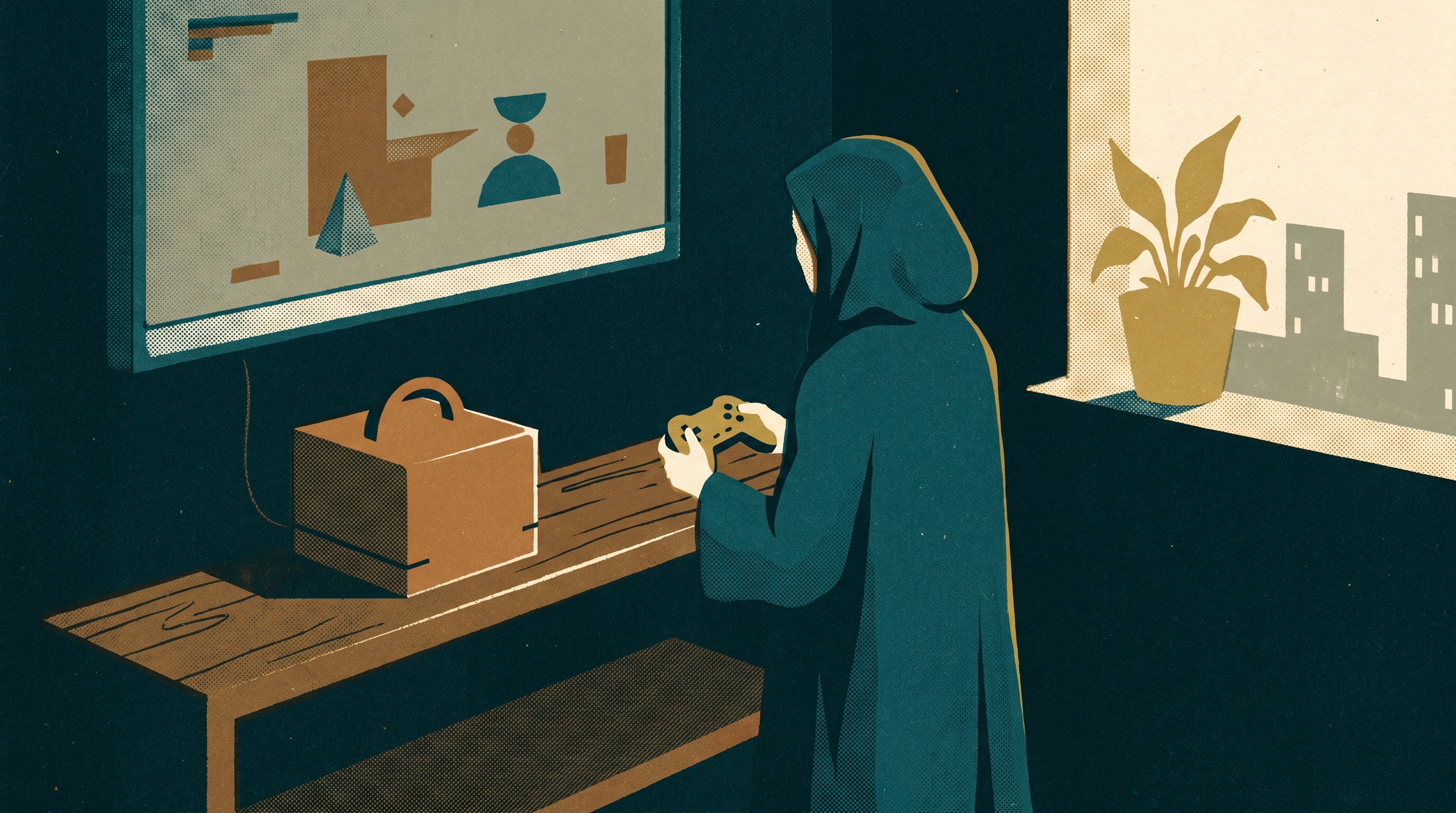
The GameCube would not play DVDs. It would not play CDs. It used a proprietary disc barely eight centimetres across, holding a fraction of what its rivals' discs could. It had no online service at launch. Every feature the competition was adding, Nintendo quietly declined. What it had instead was a handle moulded into the top — as if the machine were meant to be picked up and carried to a friend's house — and four controller ports on the front, an unspoken insistence that games are best played by people in the same room.
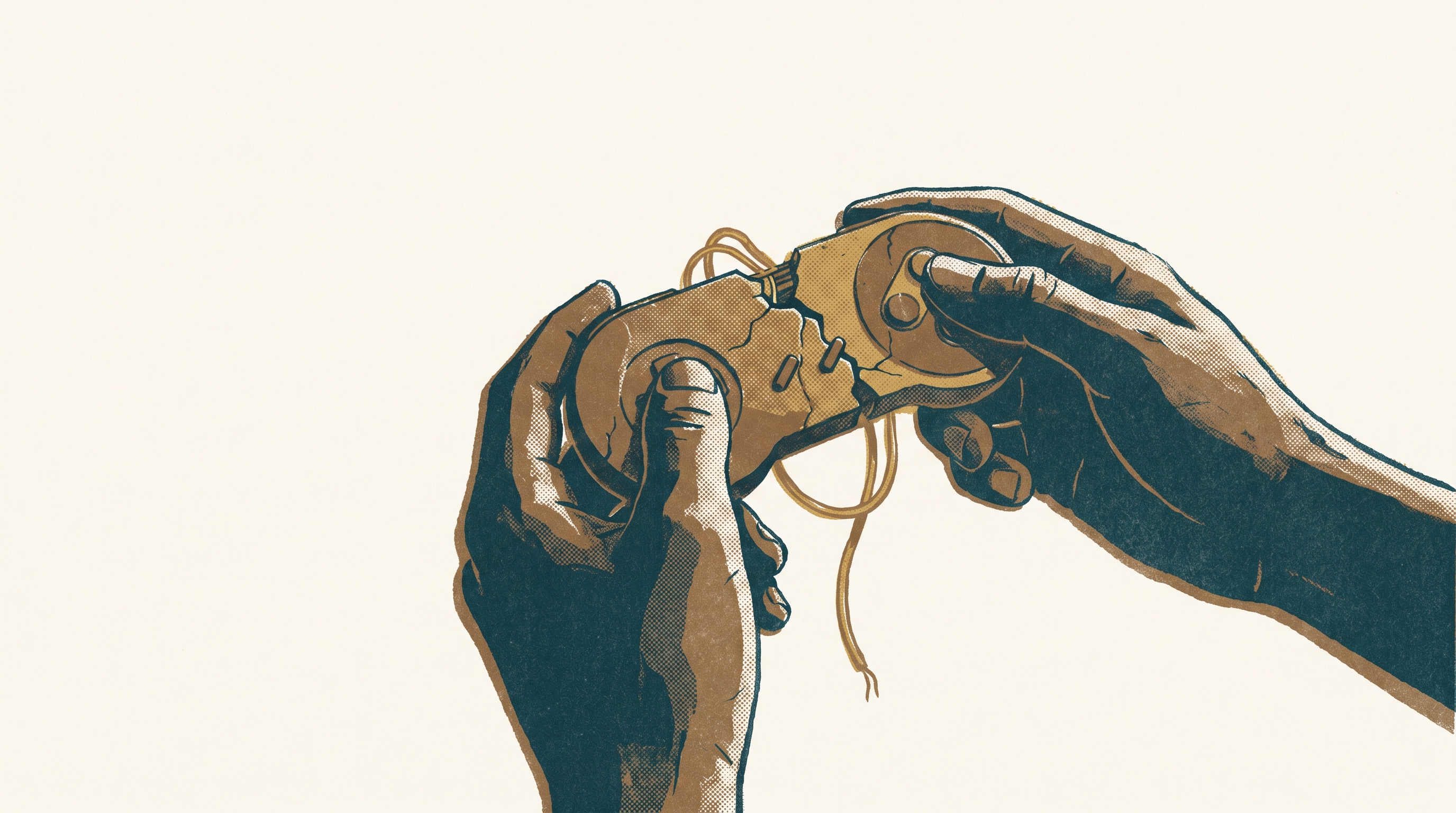
The controller was the clearest statement. Shigeru Miyamoto had felt that the other machines did not feel good in the hands. So the GameCube's pad was built around the hand instead of a feature list: an oversized green button under the thumb where it naturally rests, shoulder triggers that travelled through a soft analogue range before clicking, a shape that fit without being learned. It was designed for a feeling that no specification sheet has a column for.
The market did not reward any of this. The GameCube sold 21.74 million units. The PlayStation 2 sold more than 155 million. By the numbers the industry kept, Nintendo had finished last in its generation, and it was hard, in 2003 or 2004, to read the result as anything but a defeat.
And yet the games it asked for were unlike anything a cautious company would greenlight. Pikmin asked you to command a hundred tiny creatures and grieve the ones you lost. Luigi's Mansion launched the console not with a hero but with the frightened brother, armed with a vacuum cleaner. Metroid Prime turned an exploration series into a first-person world without losing its loneliness. These were not safe bets. They were experiments in what a game could make you feel.
Nintendo studied the loss with unusual honesty. Satoru Iwata, who became president the year after the launch, did not ask how to win the next round on the same terms. He asked a stranger question: who isn't playing games, and why not? The answer became the Wii, and the Wii sold over a hundred million. The company's escape was built on lessons the GameCube had paid for.
But that is the business story. The other story is quieter, and you only hear it now. Two decades on, the GameCube is among the most loved machines its makers ever built. People talk about the click of the disc lid, the weight of it, the little handle, the four ports and the friends who sat at them. They remember the way it felt in the hands long after the sales charts have been forgotten.
There is something in that worth keeping. The GameCube lost on every measure the industry was counting, because it spent itself on the things the industry wasn't: the hand, the same room, the joy of the thing itself. Those choices didn't show up on the scoreboard. They showed up later, in memory, which keeps a different ledger.
Maybe that is the question the little cube leaves on the shelf. When the scores are added up and you have come in last, what did you refuse to give up — and will that, in the end, be the part anyone remembers?