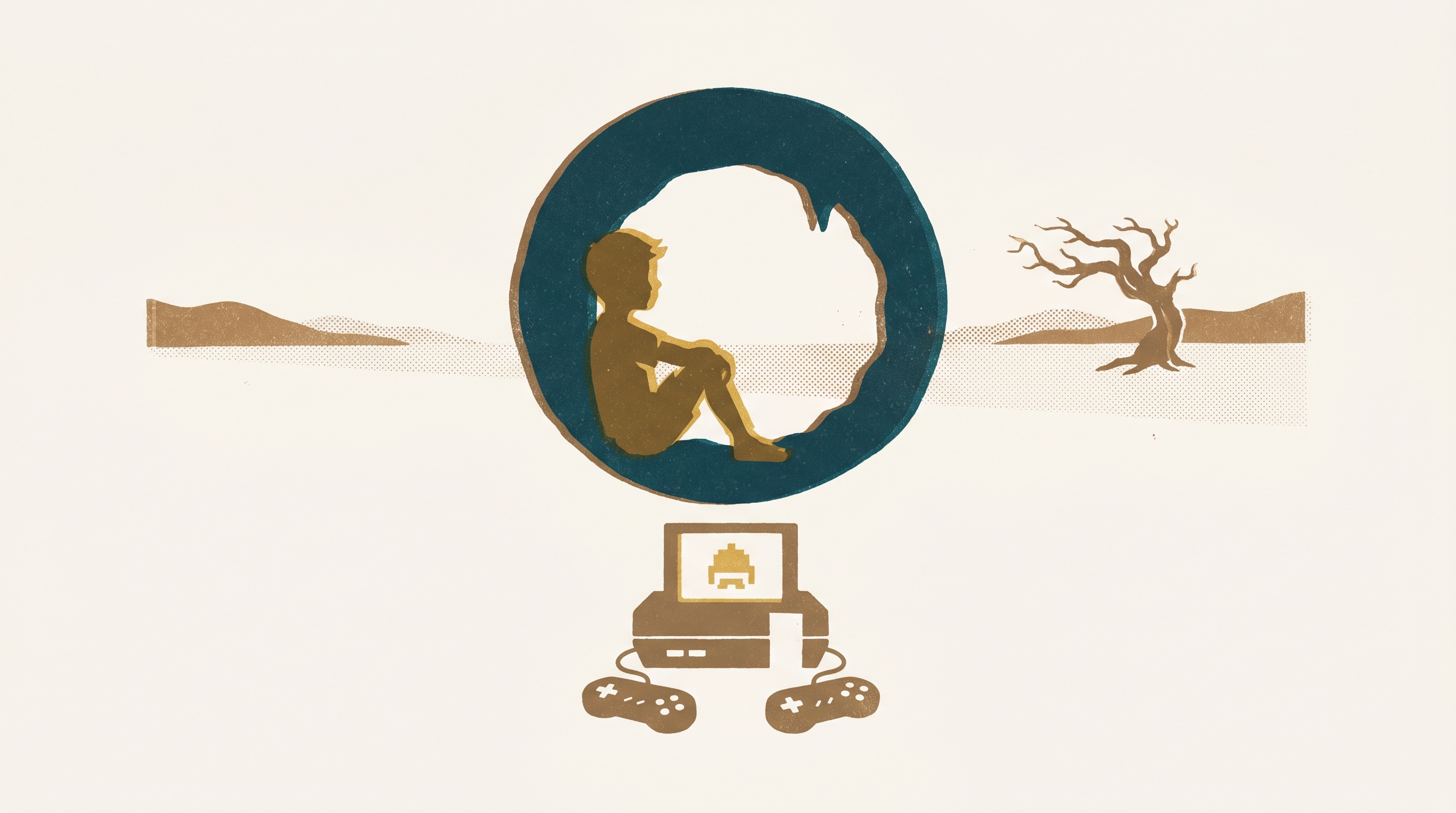
Shigeru Miyamoto was born on November 16, 1952, in the small town of Sonobe in Kyoto Prefecture, a rural area of hills and rice fields northwest of the city. There was no television in the house for much of his early childhood. He spent a great deal of time outside — in the fields around the town, in the woods, along the streams. This was ordinary for a child of that time and place, but Miyamoto later spoke of it as something that formed him in a specific way.
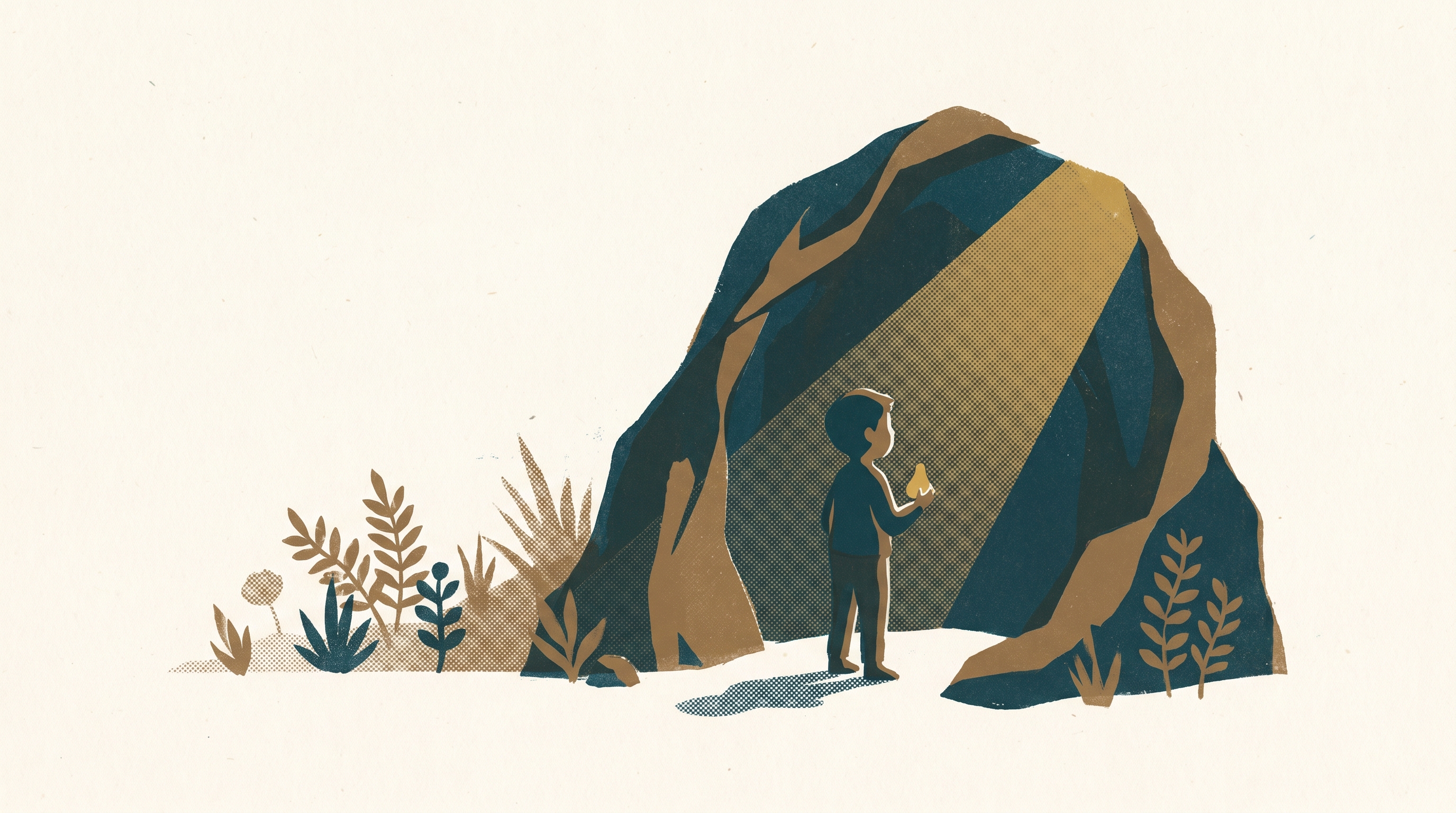
When he was around eight or nine years old, he discovered a cave in the hills near his home. He went inside with a lantern he had built himself. What he found was that one opening led to another, and that another led to somewhere unexpected. He spent most of a summer going back. Each visit was different from the last. He later described the experience as a feeling of discovery that kept renewing itself — the anticipation just before you turned a corner, the moment when the darkness opened into a room you had not seen before.
He was also interested in puppetry, manga, and making things with his hands. He studied industrial design at Kanazawa College of Art — not computer science, not engineering. He wanted to make things that people could hold and interact with. In 1977, through an introduction arranged by his father, he visited Hiroshi Yamauchi, the president of Nintendo. Yamauchi had no immediate opening for someone with a background in art and design. Miyamoto persuaded him to create one.
His first significant project at Nintendo was a game that had already been designed by someone else and was not selling. The company needed it to work in North America. The original premise — a generic action game — was replaced. Miyamoto built a story around a carpenter, a gorilla, and a woman in danger. He named the carpenter Jumpman. The gorilla was Donkey Kong. The game, released in arcades in 1981, became one of the highest-earning arcade machines of its period.
A few years later he began working on two games at the same time: a running and jumping game built around Jumpman — now renamed Mario — and an exploration game that was structurally different from anything then on the market. The exploration game had no score. There was no time limit pressing the player forward. It had a world that could be entered in any direction, full of rooms connected by paths that led in unexpected ways. The memory of childhood wanderings — including but perhaps not limited to that cave — seems to have remained with him.
The Legend of Zelda was released in Japan in February 1986 and in North America in 1987. Super Mario Bros. had already been released in Japan in September 1985. The two games together helped define what home video games could be for a generation of players. In interviews, Miyamoto said that the feeling he had tried to build into Zelda was the same feeling he had experienced as a child hiking without a map — stumbling onto a lake he had not known was there, the surprise of finding something that had not been promised.
He continued designing games for the next four decades. Pikmin grew from his practice of gardening. Wii Sports grew from thinking about what it would feel like to actually swing an arm. He gave interviews in which he described his method as beginning with a feeling — not a story, not a mechanic — and building backward to find the structure that would produce it. The childhood observations had not been stored away and left behind. They were still being used.
Miyamoto became a representative director at Nintendo and in 2015 was designated as a Fellow — a title created specifically for him, meaning he would continue contributing to game development without the administrative obligations of his former role. At seventy-three, as of this writing, he remains active at Nintendo. What the boy from Sonobe put inside those games — the sense that the world is larger than it first appears, that a corner turned could lead somewhere completely new — has been played by hundreds of millions of people who have never heard of the cave.