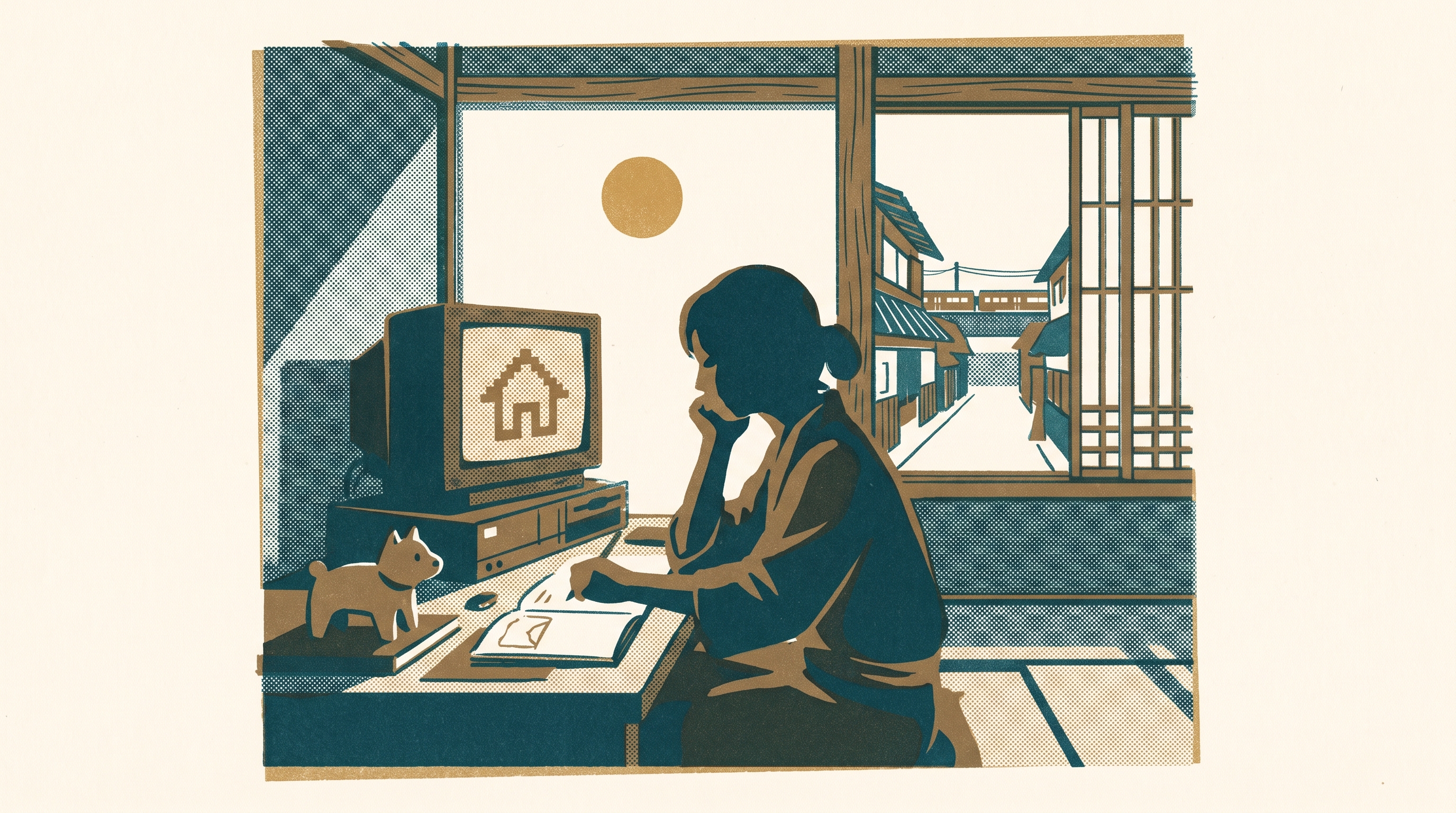
Katsuya Eguchi was twenty-one years old when he left Chiba, three hundred miles east of Kyoto, and arrived at Nintendo in 1986. He had graduated and been hired for promotional artwork. He had no friends waiting at the station. No family lived nearby. He went to work, went home, and repeated the cycle.
He had left behind the closeness of daily life — the meals shared with family, the unplanned visits from friends, the rhythm of people who knew his name without needing an introduction. Kyoto was where his career began, but it was also where he felt the cost of that beginning most clearly. The solitude pressed on him in a way he had not expected.
Over the next fifteen years, he worked on many projects. He was a designer on Super Mario Bros. 3, a director on Star Fox. He contributed to the design of Wave Race 64 and Yoshi's Story. These were successful projects, but the idea that stayed with him came from a different place — from the quiet hours after work, when no one was there to talk to.
He wanted to recreate what he had lost. Not the place, but the feeling: the warmth of being around people who knew you, the ease of routine connection. Three themes held steady in his mind — family, friendship, and community. Not grand gestures, but small acts: a letter arriving in the mailbox, a neighbor stopping to talk, a shared celebration that expected nothing in return.

In 2001, working with Hisashi Nogami and designer Takashi Tezuka, Eguchi directed Dōbutsu no Mori — translated as Animal Forest — for the Nintendo 64. Released on April 14, 2001, it was the final first-party title for the system. The game had no winning condition. No ending. The player arrived in a village, met neighbors, sent letters, collected objects, and shaped the space slowly, over time, through small daily rituals.
The game was quiet, slow, and structured entirely around waiting and repetition — a design philosophy that ran counter to what most games valued at the time. It was later localized as Animal Crossing for the GameCube in 2002 and became the foundation of a series that has sold hundreds of millions of copies across decades.
Eguchi built the game not from nostalgia, but from recognition. He had lived the experience of arriving somewhere unfamiliar, alone, and far from everyone who had known him. He had learned that distance reveals the shape of what you had — and that you can carry some of it with you, if you rebuild it quietly, day by day, in a form that asks for nothing but your presence.
The village in Animal Crossing exists because someone once stood in an empty apartment in Kyoto and asked what loneliness feels like — and then asked whether a game could hold the opposite.