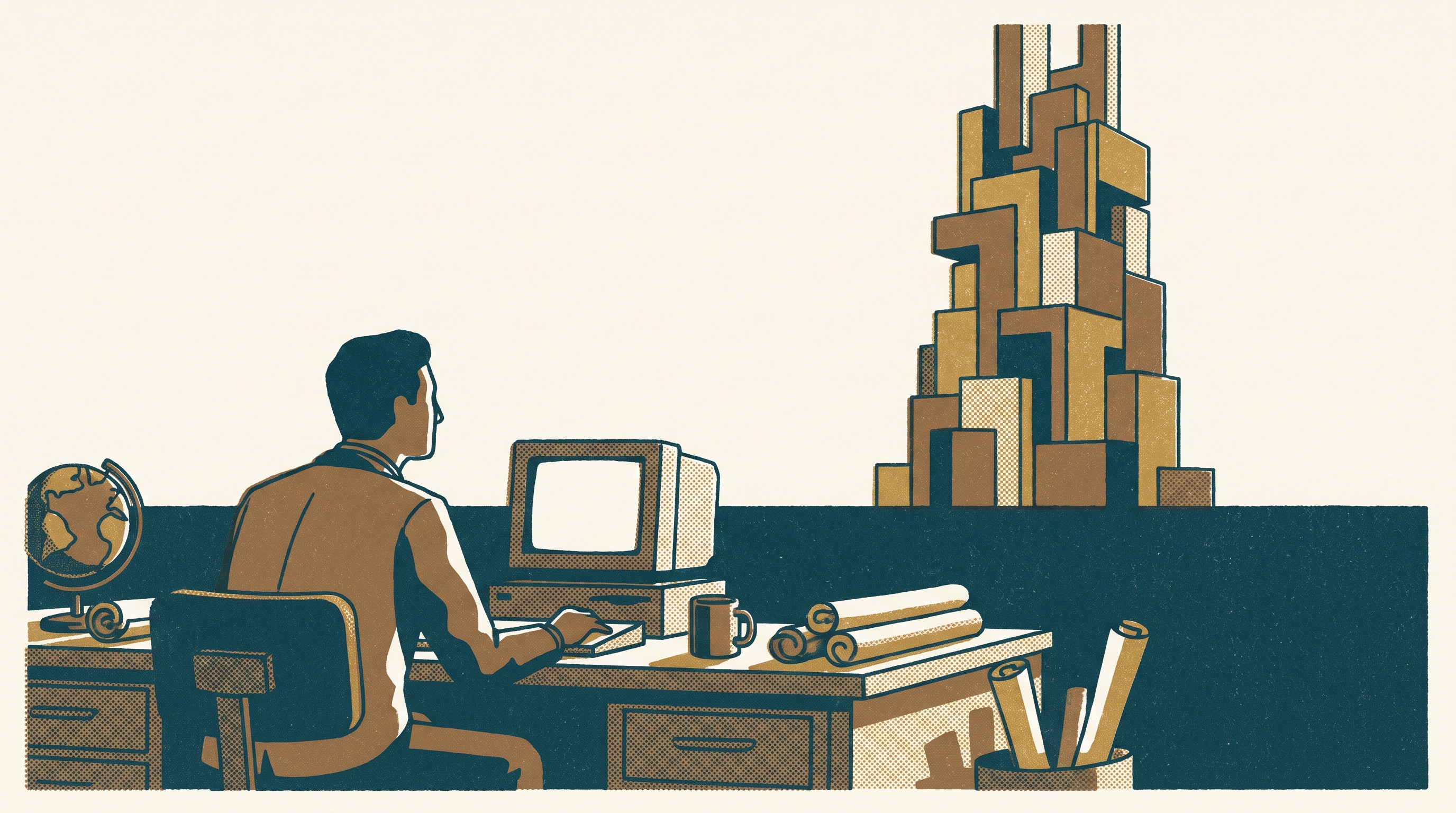
In 1989, when Akitoshi Kawazu sat down to design the first SaGa game for the Game Boy, he had two worlds in mind. In one, the player would descend underground to face a demon. In the other, they would climb a tower to meet God. The Game Boy's memory and cost would allow only one of them to exist. Kawazu chose the tower. The vertical world that became the series' signature was, in part, simply the shape that a limitation left behind.
He has spent the decades since making games that people argue about. SaGa titles are called unreasonable, punishing, too open, too strange. Players get lost. Difficulty arrives without warning. The systems reward experiments the manual never mentions, and quietly punish the habits that every other RPG spent years teaching you. For some players, this is exactly the reason to love them. For others, it is the reason to set the cartridge down and not pick it up again.
Kawazu does not seem especially interested in settling that argument. Asked what runs through the whole of SaGa, he answered, in a published interview, that it is about letting players play in their own way — the designers interfering as little as they can, so that the player is free to carry the game wherever they want to take it.
It sounds generous. In practice, it is also hard. A game that interferes very little is, by the same measure, a game that will not catch you when you fall.
In an interview about a later SaGa, Kawazu explained why his battles so often have no simple healing. Healing, as he described it, drags fights out and steals the player's time; it also freezes a party into one safe shape and, little by little, takes the player's freedom away. He has compared the experience of SaGa to a session of tabletop role-playing — the kind of game where the character and the person holding the dice change each other as they go.
Read one way, taking away the player's safety net is a kind of cruelty. Read the other way, it is closer to the opposite. He does not hand you the answer, because somewhere along the line he decided that you are the one who can find it. The difficulty is not contempt. It may be the nearest thing a designer has to trust.
The tower was never the easier path. It was the one that asked more of whoever chose to climb it.
— The road you are on right now, the one where no one is holding your hand: is it unkindness? Or did someone, somewhere, decide to trust that you would find the way?