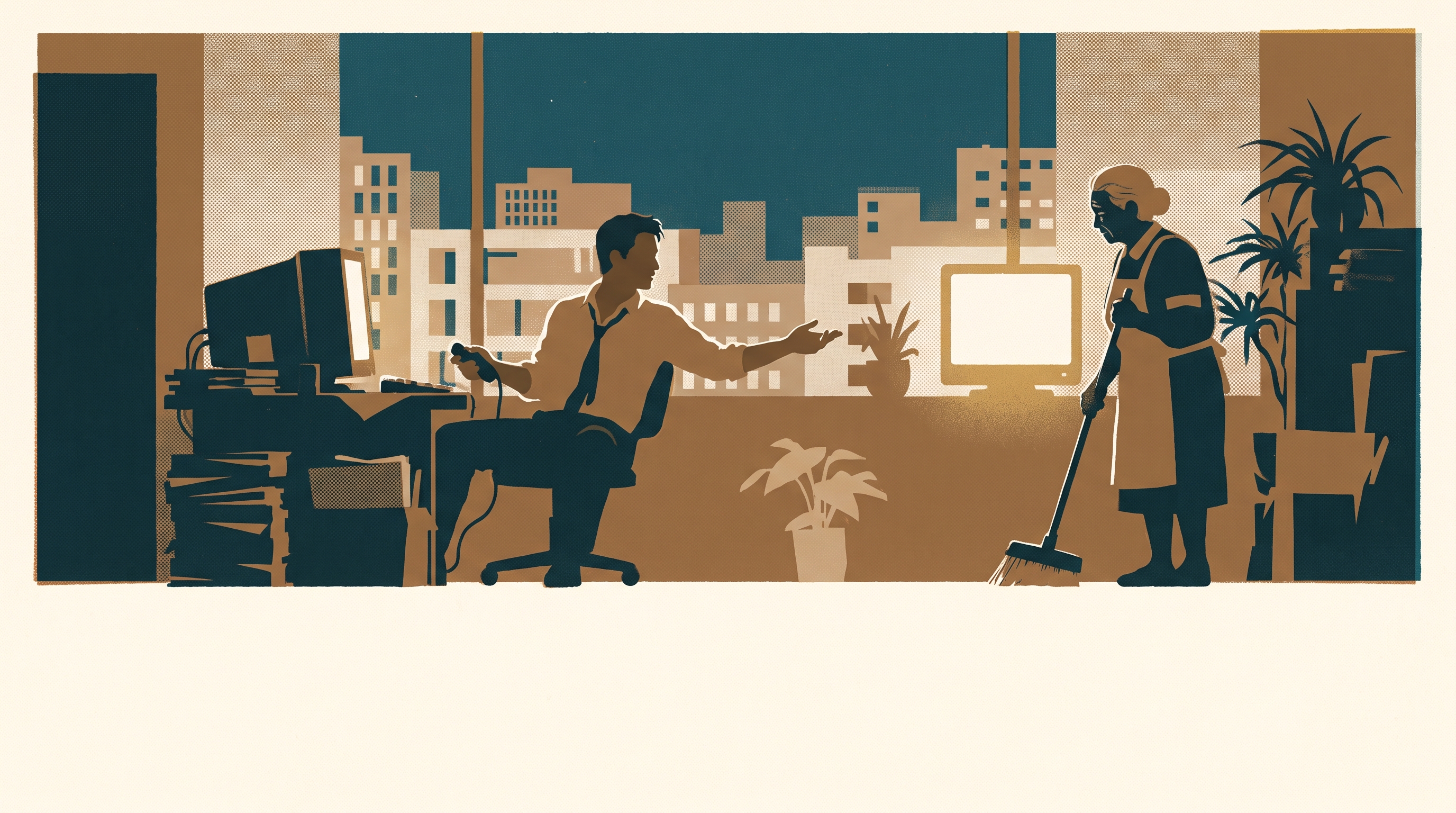
There is a story about how Virtua Fighter came to be what it was. Yu Suzuki had built the first 3D fighting game — polygons instead of sprites, real depth instead of the illusion of it. The technology worked. The team was proud. But Suzuki wanted to know something the technology could not tell him.
He asked the office cleaning lady to sit down and play it. Not a tester. Not a gamer. The woman who emptied the trash bins. He gave her the controls and watched. If she could not understand how to play within a few minutes, the game was not finished. That was the rule he set. Not 'simple enough for beginners.' Simple enough for someone who had never thought about games at all.
She played. The team watched. And based on what she did — what confused her, what she grasped immediately — they adjusted the design. This was not a PR stunt. No cameras were there. It was simply how Suzuki thought about his work: the person least like you is the one who tells you if what you made actually works.

Years later, when he began planning Shenmue, he set out to build something no game had attempted before. A town that lived. Where the sun rose and set, where rain fell on schedule, where every shopkeeper went home at night, where a drawer could be opened just to see what was inside. He wanted players to feel not that they were playing a game, but that they were in a place. That they could choose to do nothing and the world would go on without them. This was the vision. The cost was forty-seven million dollars. The console it was built for would be discontinued within a few years. The arithmetic said it could never work.
But Suzuki built it anyway. He did not cut corners. He recorded the voices of hundreds of townspeople. He programmed weather systems, daily schedules, functional vending machines. There were mechanics in the game that most players would never see, because they were tucked into side alleys or required decisions most people would not make. He put them in anyway. Not because they would sell more copies. Because the town would not be real without them.
Shenmue released in December 1999. It sold 1.2 million copies — a number that would have been a success for almost any other game. For Shenmue, it was a commercial failure. The money was never recovered. Sega left the hardware business. The story Suzuki had planned to tell across five chapters stopped at two. The rest remained unfinished for almost two decades.
And yet, the things he invented became the standard. The day-night cycle. The weather. The townspeople with routines. The freedom to ignore the plot and just exist. These are now in nearly every large game made. Suzuki even named one of the mechanics he created for it: the Quick Time Event. The bet that lost money became the blueprint. Game by game, the medium grew into the shape he had drawn first.
In 2015, sixteen years after the first Shenmue, fans funded the third chapter themselves through Kickstarter. It set a crowdfunding record for video games. Suzuki returned to finish what he had started. The game arrived in 2019, twenty years after he began. The vision had outlived the console, the company, and the math.
Some visions are not built to succeed in their own time. They are built to show what is possible. To prove that someone cared enough to make the drawer open even when no one asked for it. To ask the cleaning lady if she understood, because her understanding mattered as much as anyone's.
—The thing you are building now, the one that makes no sense on paper — who will it be for, in the end? And twenty years from now, will someone open a drawer you made, just to see what you left inside?