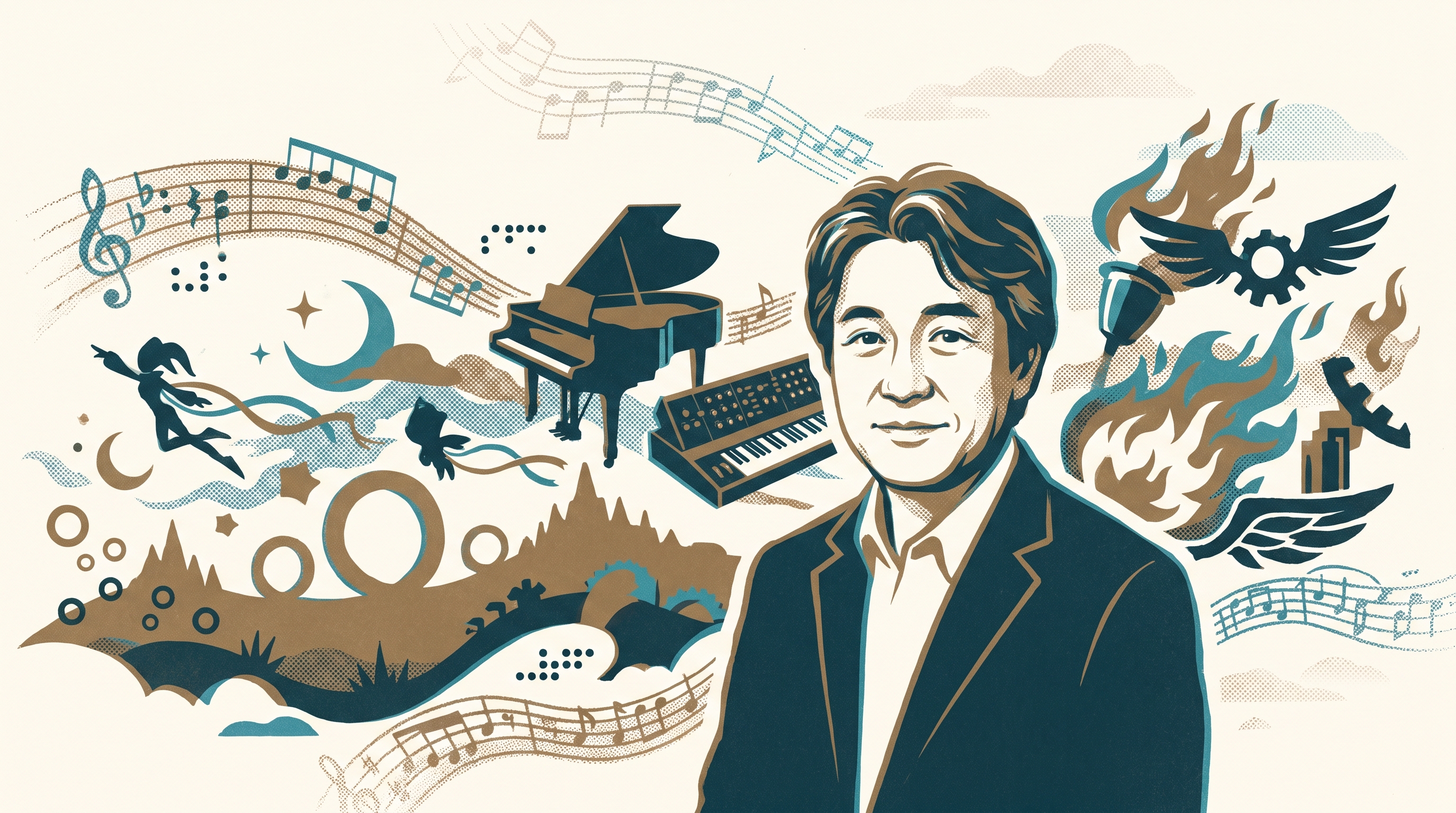
composer
Naofumi Hataya
畠山直史
Our mission as composers is to try and assist and enhance the game however we can. Making the experience as immersive as possible is our job.
About
Naofumi Hataya is a Japanese video game composer, born November 13, 1966 in Saitama, Japan. He joined Sega in 1990 as a sound designer and has composed music for some of the company's most distinctive games, including the Japanese soundtrack for Sonic the Hedgehog CD (1993), NiGHTS into Dreams (1996), and Burning Rangers (1998). A graduate of Rikkyo University, Hataya initially did not plan a music career but sought the job to improve his skills. Over thirty years later, he continues to create sound and music for games, affiliated with Wave Master Inc., Sega's audio company.
History
Naofumi Hataya was born on November 13, 1966, in Saitama, Japan. He graduated from Rikkyo University and, though he did not initially intend to pursue music as a career, he wanted to improve his skills. So he sought a job at a music-related company. In 1990, at the age of twenty-three, he joined Sega's home console sound department. The industry was still small enough that one person's direction could change what a game sounded like entirely.
His early work at Sega included composing for the 8-bit version of Sonic the Hedgehog 2, where he was credited as 'Nao Chan,' and Golden Axe II. These projects established him as a capable sound designer, but his first major showcase came in 1993. Sega was preparing Sonic the Hedgehog CD for the Sega CD console — a platform that could store and play CD-quality audio, a luxury unavailable to cartridge-based games. Sega allocated a large audio budget specifically to demonstrate the new hardware's capabilities.
Hataya composed the Japanese soundtrack for Sonic CD alongside Masafumi Ogata. Their first demos were rejected by designer Naoto Ohshima, who wanted something bolder and more experimental. So they drew on the rising popularity of house and techno music sweeping through Japan at the time. Hataya and Ogata cited influences including C+C Music Factory, Frankie Knuckles, and the KLF. The result was a soundtrack that felt like a club — fast, bright, synthetic, unapologetically electronic. Tracks like 'Palmtree Panic,' 'Quartz Quadrant,' 'Stardust Speedway,' and 'Metallic Madness' became iconic within the Sonic series and helped establish a new direction for video game music in the 1990s.
In 1996, Hataya co-composed the soundtrack for NiGHTS into Dreams alongside Tomoko Sasaki. The collaboration marked a shift from the high-energy sound of Sonic CD toward something more atmospheric and dreamlike. The partnership with Sasaki became a recurring one, and the two worked together again on the Christmas variant of the game. Their work on NiGHTS is remembered for capturing the feeling of flight and surrealism that defined the game's world.
Two years later came Burning Rangers, a 1998 Saturn game about firefighters in a futuristic city. In a developer interview, Hataya explained his approach: the music needed to convey the immediacy of being surrounded by fire while also highlighting the human drama. Because much of the emotional narrative was carried through voice recordings, he chose not to make the music overly insistent. Instead, he created an atmospheric layer that supported the tension without overwhelming it. 'Our mission as composers is to try and assist and enhance the game however we can,' he said. 'Making the experience as immersive as possible is our job.'
Hataya continued working with Sega into the 2000s, contributing to titles such as Sonic Heroes (2003) alongside Jun Senoue and other projects across different platforms. He is currently affiliated with Wave Master Inc., Sega's dedicated audio production company. Over thirty years after joining Sega, he remains active in the industry, a composer whose early work helped define what game music could sound like when freed from the constraints of chip-based audio.
His career is a reminder that the role of a composer in games is not to take the spotlight, but to build the world from behind. The sound of fire. The feeling of speed. The texture of a dream. These are the tools a composer uses to make a player believe they are somewhere else — somewhere the screen alone cannot take them.
Timeline & Works
Career milestones and all 4 games in the museum they worked on — in the order they happened.
- 1966 11
Born in Saitama, Japan
Naofumi Hataya was born on November 13, 1966, in Saitama Prefecture. He would later graduate from Rikkyo University before entering the game industry.
people - 1990
Joined Sega as sound designer
At the age of twenty-three, Hataya joined Sega's home console sound department. Though he had not initially planned a music career, he sought the job to improve his skills in a music-related field.
people - 1992
Composed for Golden Axe II
Hataya contributed music to Golden Axe II, one of Sega's major action franchises for the Mega Drive. This further established him as a capable composer within the company.
productgolden-axe-ii - 1992
Composed for Sonic the Hedgehog 2 (8-bit)
Hataya's first work in the Sonic series was for the 8-bit version of Sonic the Hedgehog 2, where he was credited as 'Nao Chan.' This marked his entry into one of Sega's flagship franchises.
product - 1993
Composed Sonic the Hedgehog CD (Japan)
Hataya co-composed the Japanese soundtrack for Sonic CD with Masafumi Ogata. Inspired by house and techno music, the soundtrack became iconic for its bold, experimental sound, including tracks like 'Palmtree Panic' and 'Stardust Speedway.'
productsonic-cd - 1993
- 1995
- 1996
Composed NiGHTS into Dreams
Hataya co-composed the soundtrack for NiGHTS into Dreams alongside Tomoko Sasaki. The music shifted toward a more atmospheric and dreamlike style, capturing the surreal feeling of flight that defined the game.
product - 1998
Composed Burning Rangers
Hataya composed the atmospheric soundtrack for Burning Rangers, a futuristic firefighting game for the Sega Saturn. He described his goal as conveying the immediacy of fire while highlighting the human drama without overwhelming the voice recordings.
product - 1998
- 1999
- 2003
Composed for Sonic Heroes
Hataya contributed to Sonic Heroes alongside Jun Senoue. The game marked Sonic's transition to multiplatform releases and continued the franchise's evolution into 3D gameplay.
productsonic-heroes - 2020
Continues work with Wave Master Inc.
As of the 2020s, Hataya remains affiliated with Wave Master Inc., Sega's dedicated audio production company. Over thirty years after joining Sega, he continues to create sound and music for games.
people
Connections
- employed sega (1990–present)
Hataya joined Sega in 1990 as a sound designer and has remained with the company for over thirty years, currently affiliated with Wave Master Inc., Sega's audio production subsidiary.
- collaborated with tomoko-sasaki (1996–present)
Hataya co-composed the soundtrack for NiGHTS into Dreams (1996) alongside Tomoko Sasaki. The partnership became a recurring collaboration.
Also connected to
- Fumie Kumatani co-created Burning Rangers / same employer (Sega, 1995–2008)
- Kenichi Tokoi co-created Space Channel 5 / same employer (Sega, since 1996)
- Masato Nakamura co-created Sonic the Hedgehog 2
Explore the work
Each title has its own page — history, trivia, and collector's notes.
Dreamcast · 1999
Space Channel 5
Ulala reports on alien invaders, then dances them into submission. Sega at its m…
Sega Saturn · 1998
Burning Rangers
Naofumi Hataya, who was making the sound for Burning Rangers, asked his Sega col…
Sega Mega Drive / Genesis · 1995
Ristar
The concept predated Sonic. Sonic Team made it in 1995, the month Saturn launche…
Sega Mega Drive / Genesis · 1993
Sonic the Hedgehog CD
The Sonic game that asked you to slow down — to run into the past so you could c…
Rooms their games live in
Sources
- Naofumi Hataya | Sonic Wiki Zone | Fandom — accessed 2026-06-18
- Naofumi Hataya - Wikipedia (English) — accessed 2026-06-18
- Naofumi Hataya - Video Game Music Preservation Foundation Wiki — accessed 2026-06-18
- Burning Rangers – 1997 Developer Interview - shmuplations.com — accessed 2026-06-18
- RocketBaby's video game and anime music journal: Interview with Naofumi Hataya — accessed 2026-06-18
- Sonic CD – Developer Interview Collection - shmuplations.com — accessed 2026-06-18