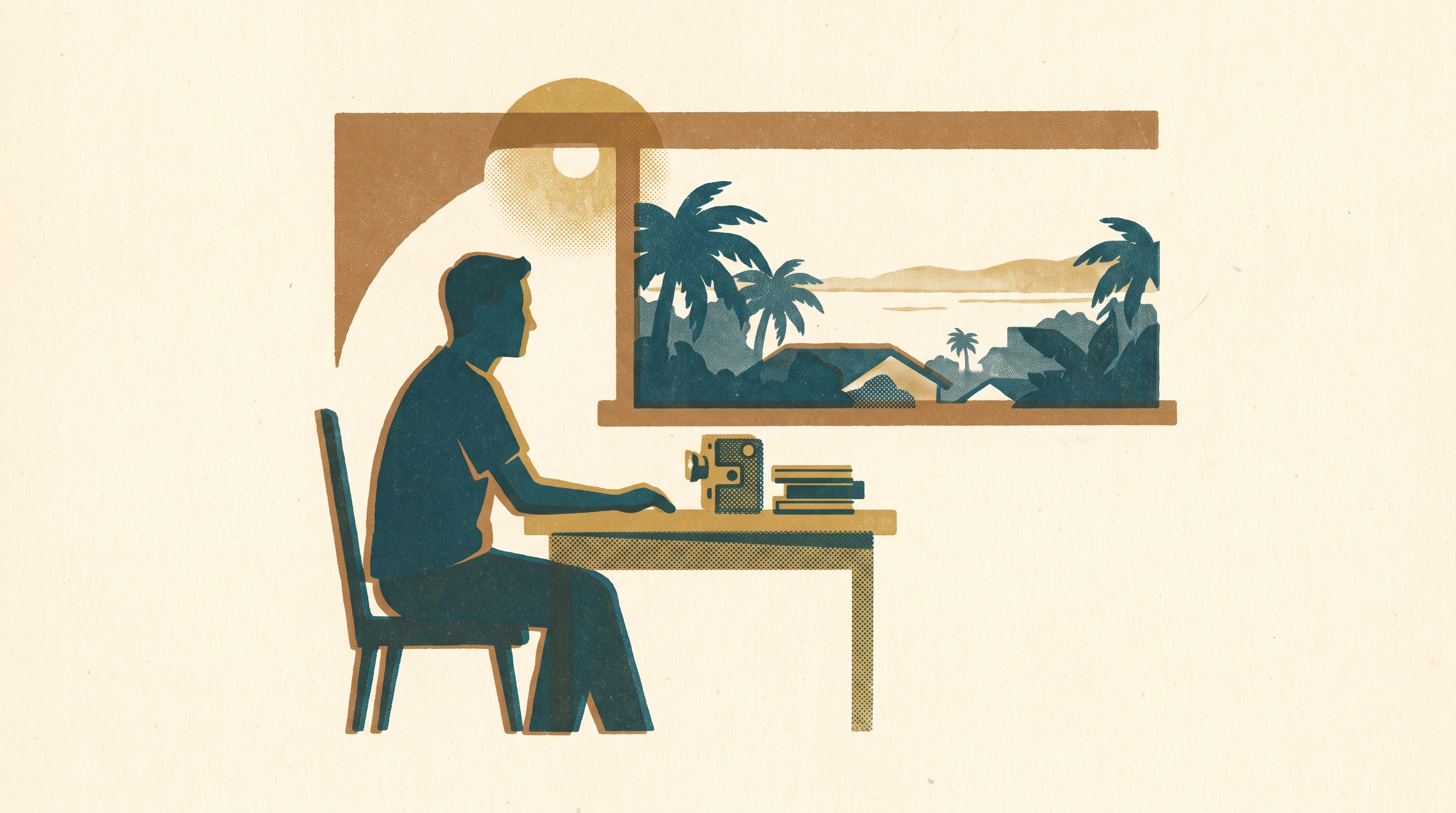
On July 13, 2001, Final Fantasy: The Spirits Within opened in North American theaters. It was the first feature film to attempt photorealistic human characters entirely in computer graphics. The production had taken four years and cost an estimated $137 million. Hironobu Sakaguchi, who had created the Final Fantasy game series in 1987, directed the film. He had moved to Hawaii to oversee the studio Square Pictures built specifically for the project.
The film grossed $85 million worldwide. Against its production and marketing costs, it was a financial failure. Square reported a consolidated operating loss of approximately 17.8 billion yen for the fiscal year ending March 2002 — the company's first loss since going public. In May 2001, Sakaguchi resigned as executive vice president. Square Pictures closed in March 2002. The failure accelerated merger talks between Square and its former rival Enix; the two companies merged in 2003 to form Square Enix.

Sakaguchi remained at the merged company as an executive producer until 2003, when he left. In interviews later, he did not place blame on others. He said plainly that the film had been his responsibility and that the outcome had been his to carry. He was forty-one years old. He had spent twenty years building Final Fantasy into one of the most recognized names in gaming. Now he was outside the company that name had built.
In 2004, Sakaguchi founded a new studio in Honolulu called Mistwalker. The company had no development infrastructure of its own — it partnered with external studios to build games. The first projects were for Microsoft's Xbox 360: Blue Dragon and Lost Odyssey, both traditional role-playing games in the form Sakaguchi had worked with for decades. Blue Dragon sold modestly in Japan; Lost Odyssey received critical respect but did not become a commercial breakthrough.
The pattern that followed was one of small projects, partnerships, and platforms that changed as the industry shifted. Mistwalker released The Last Story for the Wii in 2011. It moved to mobile development in the 2010s with Terra Battle, a puzzle-strategy hybrid that found a dedicated audience but did not grow beyond it. The studio remained small — fewer than twenty people at most points. Sakaguchi was no longer directing blockbuster productions with orchestra-recorded soundtracks and million-dollar budgets. He was making games again, on a scale that allowed him to be involved in every decision.

In 2021, Mistwalker released Fantasian for Apple Arcade. Sakaguchi described it in interviews as potentially his last major game. The game used physical dioramas photographed and composited into 3D environments — a technique that required building miniature sets by hand, the opposite of the photorealistic CG rendering that had defined The Spirits Within. The soundtrack was composed by Nobuo Uematsu, who had written the music for the first Final Fantasy in 1987. The game was modeled on Final Fantasy VI in structure and tone. It was, in several senses, a return.
Fantasian was well-received by critics and players who found it. It did not sell millions of copies — Apple Arcade operates on a subscription model, and download figures are not public. But the game existed. It was finished. Sakaguchi had written its story, overseen its design, and seen it released. Twenty years after the collapse of Square Pictures, he was still making the kind of game he had always made, on his own terms, with a small team that trusted him.
The light he kept burning was not the brightest in the industry. It was not meant to be. It was steady, and it was his, and he never let it go out. — What keeps you making something, when the world has already decided you don't need to?