both
Sony Computer Entertainment
ソニー・コンピュータエンタテインメント
Japan
About
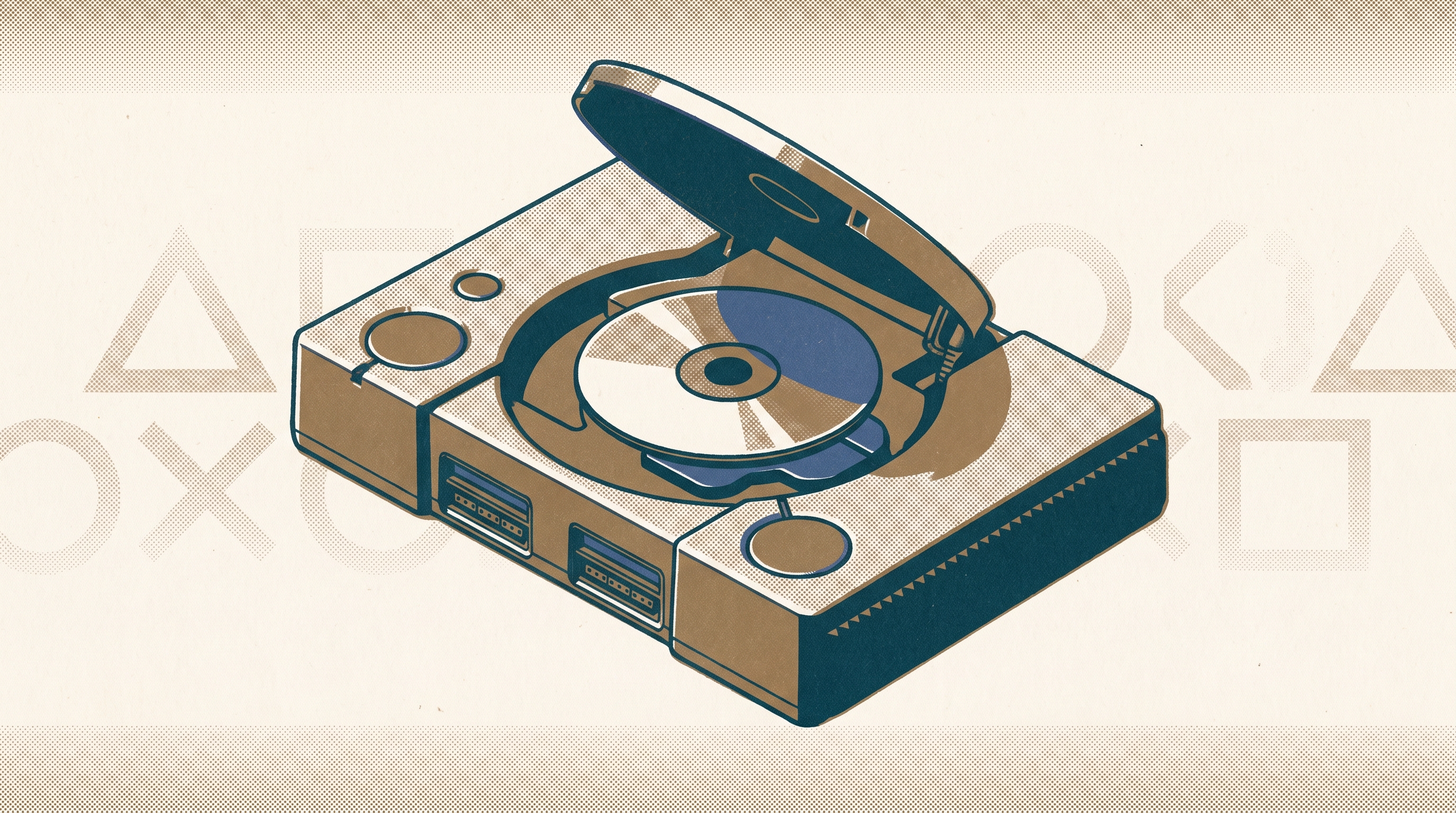
Sony Computer Entertainment (SCE) was a Japanese video game company established in November 1993, a subsidiary of Sony Corporation, responsible for the PlayStation brand. Under Ken Kutaragi — known as "The Father of the PlayStation" — SCE developed and launched the original PlayStation in December 1994. The company published Crash Bandicoot and Gran Turismo, and oversaw the PlayStation platform through successive generations. SCE was restructured as Sony Interactive Entertainment (SIE) in 2016.
History
Sony Computer Entertainment's origins trace back to a partnership that collapsed. In 1988, Sony had assisted Nintendo in developing the audio chip used in the Super Famicom, and the companies entered a joint venture to build a CD-ROM add-on for the system. The partnership was officially announced in 1990. At the 1991 Consumer Electronics Show, Sony revealed the project's name: the 'Play Station.' The next day, Nintendo announced it was terminating the contract and partnering with Philips instead. The core issue was control: Sony's 1988 contract granted it licensing rights over all CD-based games for the system, and Nintendo president Hiroshi Yamauchi chose to exit rather than surrender that authority. Sony president Norio Ohga was infuriated. He instructed Ken Kutaragi — the engineer who had championed the Nintendo partnership — to develop a Sony-owned console that would compete directly.
Ken Kutaragi had joined Sony in 1975 as an electrical engineer. He had worked quietly on several projects, including designing a sound-processing chip for Nintendo's systems, which many Sony executives considered beneath the company's dignity. When the Nintendo partnership dissolved, most of Sony's leadership wanted to abandon the consumer gaming market entirely. Kutaragi argued that Sony could succeed on its own and reportedly threatened to leave the company if it did not pursue the project. Norio Ohga, who had supported Kutaragi's Nintendo work, gave him the authority to proceed. On November 16, 1993, Sony Computer Entertainment Inc. was formally incorporated in Tokyo as a joint venture between Sony Corporation and Sony Music Entertainment Japan, with Kutaragi as executive deputy president. The company was tasked with developing hardware, software, and network services for a new home console that would use CD-ROM as its primary storage medium.
The original PlayStation was released in Japan on December 3, 1994, priced at ¥39,800. It launched in North America on September 9, 1995, and in Europe on September 29, 1995. The console used CD-ROM storage — offering vastly greater capacity than the cartridges used by Nintendo and Sega — and was positioned as a platform for games aimed at older players, not children. Sony pursued third-party developers aggressively, offering better royalty terms and simpler licensing agreements than its competitors. The strategy worked. Namco, Capcom, Konami, and Square all committed major projects to the platform. Final Fantasy VII, released for PlayStation in 1997 after years of development for the Nintendo 64, became a cultural phenomenon and validated the CD-ROM format as the future of console gaming. The PlayStation became the first home console to ship over 100 million units worldwide, ultimately selling 102.49 million units and defining a generation.
The PlayStation 2 launched in Japan on March 4, 2000, at ¥39,800. Demand was extraordinary: all one million launch units sold out over the first weekend, with approximately 980,000 units sold in the first 24 hours. By March 31, 2000, the entire inventory of 1.4 million units had been sold. The console launched in North America in October 2000. The PlayStation 2's backward compatibility with PlayStation games, its inclusion of a built-in DVD player at a time when standalone DVD players were still expensive, and an extensive library of exclusive titles made it the fastest-selling console in history to that point. It ultimately became the best-selling home console ever made, with 160 million units sold worldwide — a record that still stands as of 2026.
Ken Kutaragi was promoted to president and CEO of Sony Computer Entertainment in 2000, then to chairman and group CEO in 2003. Under his leadership, SCE expanded into handheld gaming with the PlayStation Portable (2004) and developed the PlayStation 3, which launched in November 2006 at a retail price of $599 in North America — the highest launch price for any major console to that point. The PlayStation 3's complex Cell processor architecture, Blu-ray drive, and production costs resulted in estimated losses in the billions for Sony during the console's early years. Kutaragi retired from his position as SCE chairman and group CEO on June 19, 2007, shortly after the PlayStation 3's troubled launch, and was succeeded by Kazuo Hirai. Kutaragi remained as honorary chairman and advisor to Sony.
On April 1, 2016, Sony Computer Entertainment and Sony Network Entertainment International were reorganized and merged into a new entity: Sony Interactive Entertainment LLC, headquartered in San Mateo, California. Unlike SCE, which had been based in Tokyo, the new structure consolidated Sony's global gaming operations under a single US-based leadership. The restructuring reflected the PlayStation brand's global scale — by that point spanning four console generations, a successful handheld platform, and an expanding network services business. The SCE name was retired after twenty-three years, but the foundation it had built — CD-ROM as standard, third-party partnerships as strategy, and games for adults as the center of gravity — remained defining principles of the PlayStation platform.
Timeline & Works
Corporate milestones, in the order they happened.
- 1988
Sony-Nintendo partnership begins
After assisting Nintendo with the Super Famicom audio chip, Sony enters a partnership to develop a CD-ROM add-on for the SNES. The agreement grants Sony licensing rights over all CD-based games.
collaboration - 1991
Nintendo terminates partnership at CES; 'Play Station' revealed and cancelled
At the 1991 Consumer Electronics Show, Sony announces the 'Play Station' project. The following day, Nintendo publicly terminates the contract and announces a partnership with Philips instead.
corporate - 1993 11
Sony Computer Entertainment incorporated
Sony Computer Entertainment Inc. is formally incorporated in Tokyo on November 16, 1993, as a joint venture between Sony Corporation and Sony Music Entertainment Japan, with Ken Kutaragi as executive deputy president.
founding - 1994 12
PlayStation launches in Japan
The original PlayStation is released in Japan on December 3, 1994, priced at ¥39,800. It will become the first home console to ship over 100 million units worldwide.
hardware - 1995 09
PlayStation launches in North America
PlayStation launches in North America on September 9, 1995, beginning its assault on the Nintendo-dominated Western market.
hardware - 2000
Ken Kutaragi becomes president and CEO of SCE
Ken Kutaragi is promoted to president and CEO of Sony Computer Entertainment in 2000, consolidating his authority over the PlayStation platform.
leadership - 2000 03
PlayStation 2 launches in Japan — sells out in 24 hours
PlayStation 2 launches in Japan on March 4, 2000. Approximately 980,000 units sell in the first 24 hours; the entire 1.4 million unit inventory sells out by March 31.
hardware - 2004 12
PlayStation Portable launches
SCE enters the handheld gaming market with the PlayStation Portable (PSP), launching in Japan on December 12, 2004.
hardware - 2006 11
PlayStation 3 launches at $599
PlayStation 3 launches in November 2006 at $599 in North America — the highest launch price for any major console to that point. The complex Cell architecture and Blu-ray drive result in billions in losses for Sony.
hardware - 2007 06
Ken Kutaragi retires
Ken Kutaragi retires from his position as SCE chairman and group CEO on June 19, 2007, shortly after PlayStation 3's troubled launch. Kazuo Hirai succeeds him.
leadership - 2016 04
SCE restructured as Sony Interactive Entertainment
On April 1, 2016, Sony Computer Entertainment and Sony Network Entertainment International merge to form Sony Interactive Entertainment LLC, headquartered in San Mateo, California. The SCE name is retired after 23 years.
corporate
Connections
- parent nintendo (1988–1991)
Sony partnered with Nintendo from 1988 to develop a CD-ROM add-on for the Super Famicom. Nintendo terminated the partnership in 1991, leading directly to the creation of the PlayStation.
- subsidiary polyphony-digital (1998–present)
Polyphony Digital was formally incorporated as a Sony subsidiary on April 2, 1998, after developing the original Gran Turismo as an internal team. The studio remains SCE/SIE's primary racing game developer.
- subsidiary naughty-dog (2001–present)
Sony Computer Entertainment America acquired Naughty Dog in 2001, making the studio responsible for Crash Bandicoot SCE's first wholly-owned Western developer. The studio has since produced the Uncharted and The Last of Us franchises.
- collaborated with capcom (1996–present)
Capcom's partnership with SCE included the PlayStation-exclusive launch of Resident Evil in 1996 and the development of the RE Engine in tandem with PlayStation VR support.
Also connected to
- Konami joint development track record (1997–) (reverse)
Sources
- Sony Computer Entertainment — Wikipedia — accessed 2026-06-13
- Ken Kutaragi — Wikipedia — accessed 2026-06-13
- PlayStation (console) — Wikipedia — accessed 2026-06-13
- PlayStation 2 — Wikipedia — accessed 2026-06-13
- Super NES CD-ROM — Wikipedia — accessed 2026-06-13
- Norio Ohga — Wikipedia — accessed 2026-06-13
- PlayStation 2's chaotic Japanese launch was 20 years ago today — accessed 2026-06-13
- "Father of the PlayStation" Ken Kutaragi Retires — accessed 2026-06-13
- Sony Merges: SCE & SNE Merge Into Sony Interactive Entertainment — accessed 2026-06-13